The Future of Digital Signage CMS Technology
From AI-driven automation to sensor-based interactivity, transforming static screens into intelligent communication hubs
Digital signage is entering a new era. Traditional Content Management Systems (CMS) focused primarily on scheduling and distributing content. The next generation, however, is becoming an intelligent experience engine—where personalization, automation, and measurable engagement take center stage.By 2025 and beyond, CMS platforms will not just manage screens—they will dynamically optimize audience interactions in real time.
Written by
Sidharth Gaikwad
Read Time
6 minutes
Posted on
03-15-2025
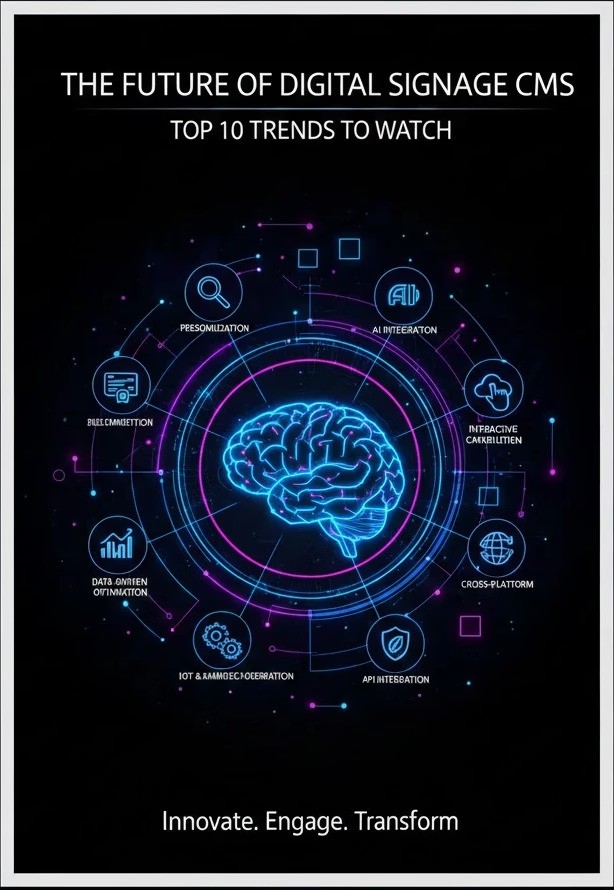
1. Extreme Personalization
Future CMS platforms will leverage behavioral data, demographics, and contextual triggers to deliver hyper-relevant content.
What This Means
Audience-based messaging
Context-aware promotions
Adaptive creative formats
Improved engagement metrics
Personalization ensures content resonates with viewers instead of broadcasting generic messages.
2. Artificial Intelligence Integration
AI will fundamentally reshape how content is created, managed, and optimized.
AI Capabilities
Automated content generation
Predictive scheduling
Real-time performance analytics
Dynamic content adaptation
AI-powered moderation systems will also ensure content remains contextually appropriate based on location and audience type.
3. Interactive and Immersive Experiences
Digital signage is moving beyond passive viewing.
Emerging Interactions
Touchscreen engagement
Gesture recognition
QR and mobile integrations
Augmented reality overlays
These features convert screens into interactive brand experiences rather than static displays.
4. Cloud-Native Scalability
Cloud infrastructure is becoming the foundation of modern CMS platforms.
Key Advantages
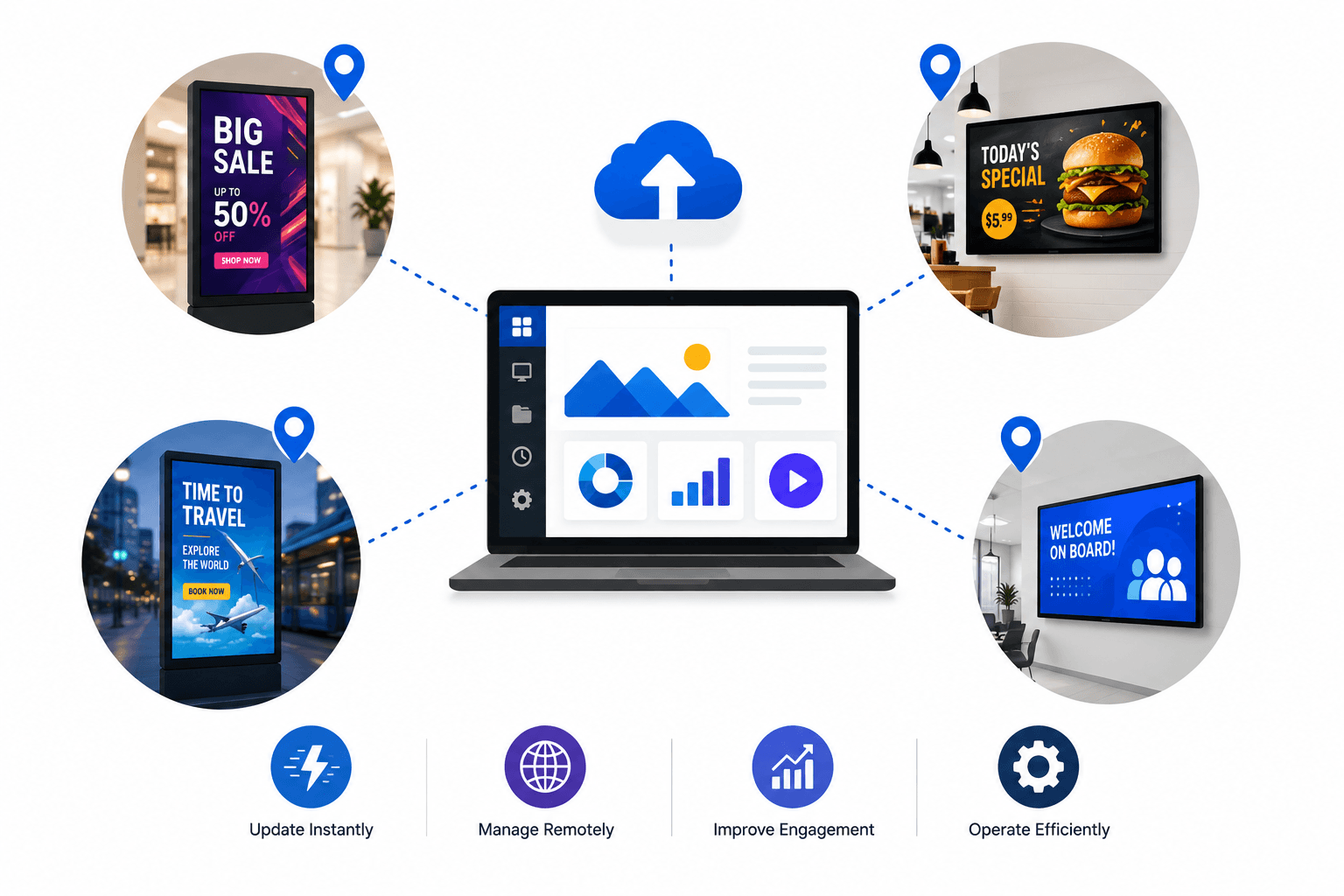
Remote content management
Centralized multi-location control
Instant deployment across hundreds of screens
Enterprise-grade scalability
Cloud-native systems allow businesses and municipalities to expand without operational bottlenecks.
5. Real-Time Data Optimization
Data-driven content will define competitive advantage.
Optimization Benefits
Live engagement tracking
A/B testing of creative assets
Automated performance adjustments
ROI-focused campaign measurement
Content will continuously improve based on measurable outcomes.
6. IoT and Sensor-Based Interactivity
Integration with IoT devices will enable contextual responsiveness.
Practical Applications
Motion-triggered content activation
Environmental data-driven messaging
“Lift and Learn” retail interactions
Proximity-based promotions
Screens will react to real-world activity, bridging digital content with physical environments.
7. Seamless Third-Party Integrations
Future CMS platforms will integrate effortlessly with:
POS systems
Inventory management tools
CRM platforms
Transit and municipal data systems
This creates a unified communication ecosystem powered by real-time information.
8. Advanced Security and Compliance
As signage networks grow, security becomes critical.
Enhancements Include
Encrypted cloud infrastructure
Role-based access controls
Secure remote updates
Compliance monitoring tools
Enterprise-grade security will be a standard expectation.
9. Sustainable and Energy-Efficient Systems
Sustainability will influence hardware and software innovation.
Eco-Focused Developments
Smart brightness adjustments
Energy usage analytics
Remote power management
Reduced print waste through digital transformation
Environmental responsibility will become part of CMS value propositions.
10. Experience-Centric Design Philosophy
The ultimate evolution of digital signage CMS is experience-first design. Instead of simply pushing content, platforms will orchestrate meaningful, data-informed interactions.
Solutions like Flickerwall are leading this transition by combining AI analytics, sensor integrations, and cloud scalability into a unified ecosystem that transforms screens into measurable engagement channels.
Conclusion
The future of digital signage CMS lies in intelligence, adaptability, and measurable performance. From AI automation and IoT interactivity to cloud-native scalability and data-driven optimization, the next generation of platforms will redefine how organizations communicate visually.
Businesses that adopt forward-thinking CMS technology today will be positioned to deliver personalized, responsive, and high-impact visual experiences tomorrow.
Ready to explore the next horizon of digital signage innovation? Start your free trial with Flickerwall and experience the evolution of intelligent content management.