Building a Future-Ready Digital Signage Ecosystem
From hardware selection to cloud CMS deployment—designing scalable visual communication for 2025 and beyond
Transitioning from static displays to a connected digital signage network is a strategic business decision. It impacts marketing execution, IT infrastructure, operations, and customer engagement. In 2025, digital signage is no longer just about screens—it is about creating a centralized communication ecosystem powered by real-time data and scalable cloud software. This blueprint outlines how businesses can plan, deploy, and optimize a high-performance digital signage strategy.
Written by
Sidharth Gaikwad
Read Time
7 minutes
Posted on
03-16-2025

Understanding the Core Components
A modern digital signage system includes three foundational elements:
Displays
Commercial-grade LCD or LED screens
Video walls for high-impact environments
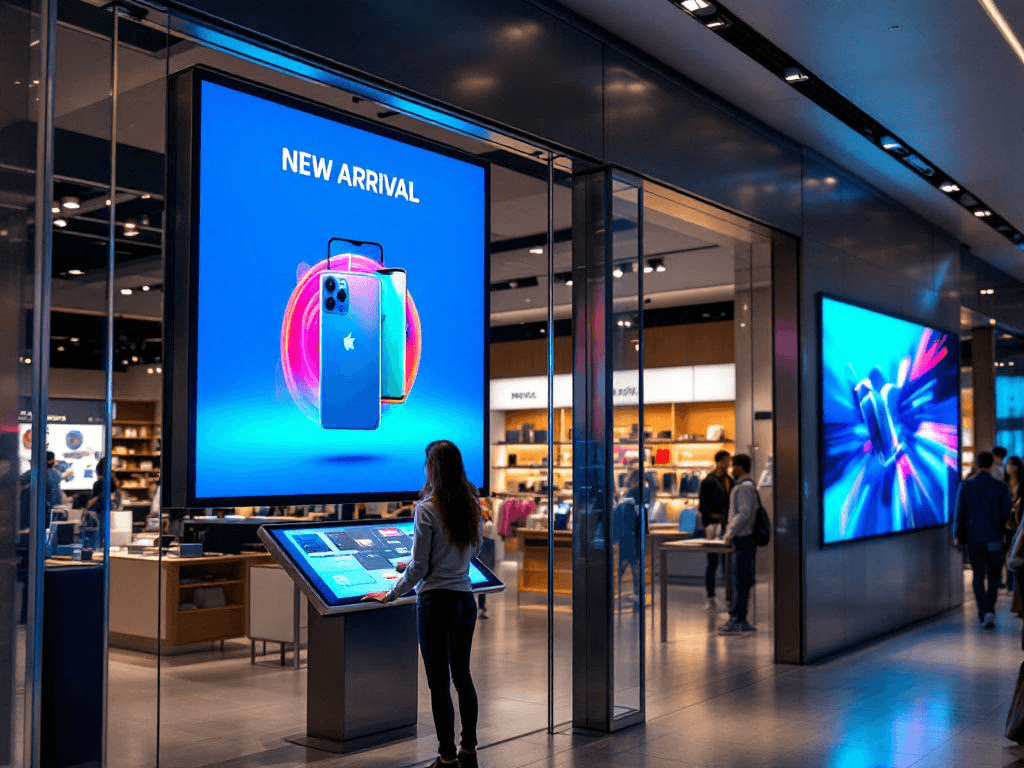
Interactive kiosks for self-service engagement
Mobile or tablet-based displays
Hardware selection should align with environment, brightness requirements, and usage intensity.
Software (CMS)
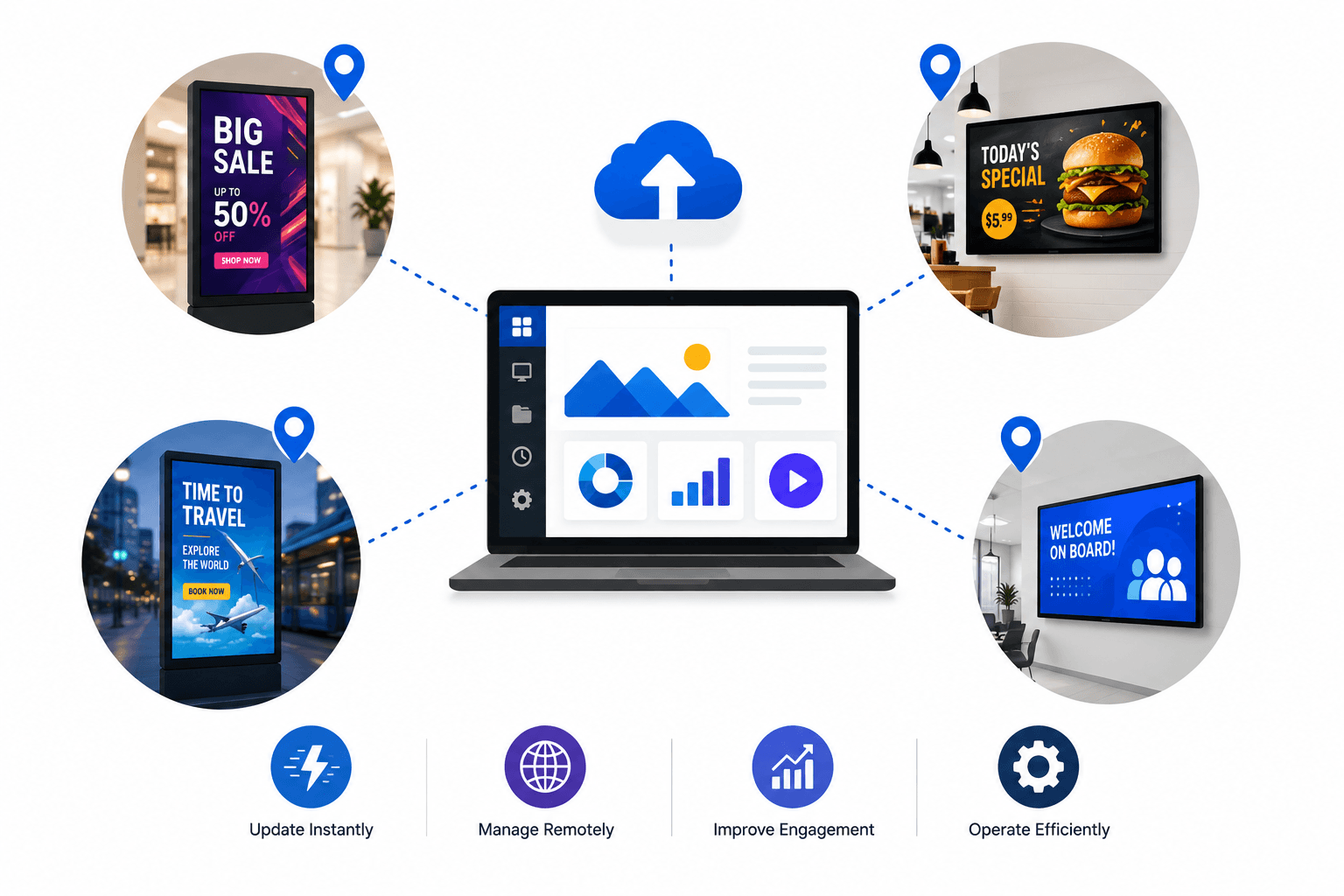
The Content Management System is the control center of your network. It enables:
Content creation and scheduling
Real-time updates
Multi-location management
Data integrations and automation
A cloud-based CMS ensures flexibility and remote accessibility.
Hardware Infrastructure
Media players or system-on-chip displays
Secure network configuration
Optional on-premise servers for compliance-heavy industries
Reliable hardware ensures uninterrupted content delivery.
Defining Clear Communication Goals
Before deployment, businesses must establish measurable objectives. Examples include:
Increasing in-store conversion rates
Reducing perceived wait times
Improving employee engagement
Enhancing brand consistency across branches
Clear goals guide content strategy and performance tracking.
Integrating Real-Time Data for Impact
Static messaging limits effectiveness. Integrating live data enhances relevance.
Examples include:
POS-based promotions in retail
Queue management updates in banking
Appointment schedules in healthcare
KPI dashboards in corporate offices
Real-time integration transforms screens into dynamic decision-making tools.
Industry-Specific Applications
Retail and Banking
Promote offers and financial products
Reduce perceived wait times
Deliver localized marketing campaigns
Corporate Environments
Strengthen internal communications
Display performance dashboards
Reinforce employer branding
Healthcare
Share patient instructions and wellness tips
Display doctor schedules
Provide emergency alerts
Hospitality
Welcome guests with personalized messaging
Promote on-site services
Enhance overall guest experience
Industry alignment maximizes strategic value.
Planning and Deployment Best Practices
Successful implementation requires structured execution.
Identify stakeholders from IT and Marketing
Define content governance policies
Choose scalable software with integration capabilities
Conduct a pilot before full rollout
Train staff on content management
This reduces risk and ensures adoption across departments.
Key Questions Before Selecting Software
When evaluating digital signage platforms, consider:
Is the interface intuitive for non-technical users?
Does it support real-time data integration?
Can it scale across multiple locations?
Are analytics available to measure performance?
What security standards are in place?
Selecting the right CMS determines long-term success.
Measuring and Optimizing ROI
To maximize return on investment:
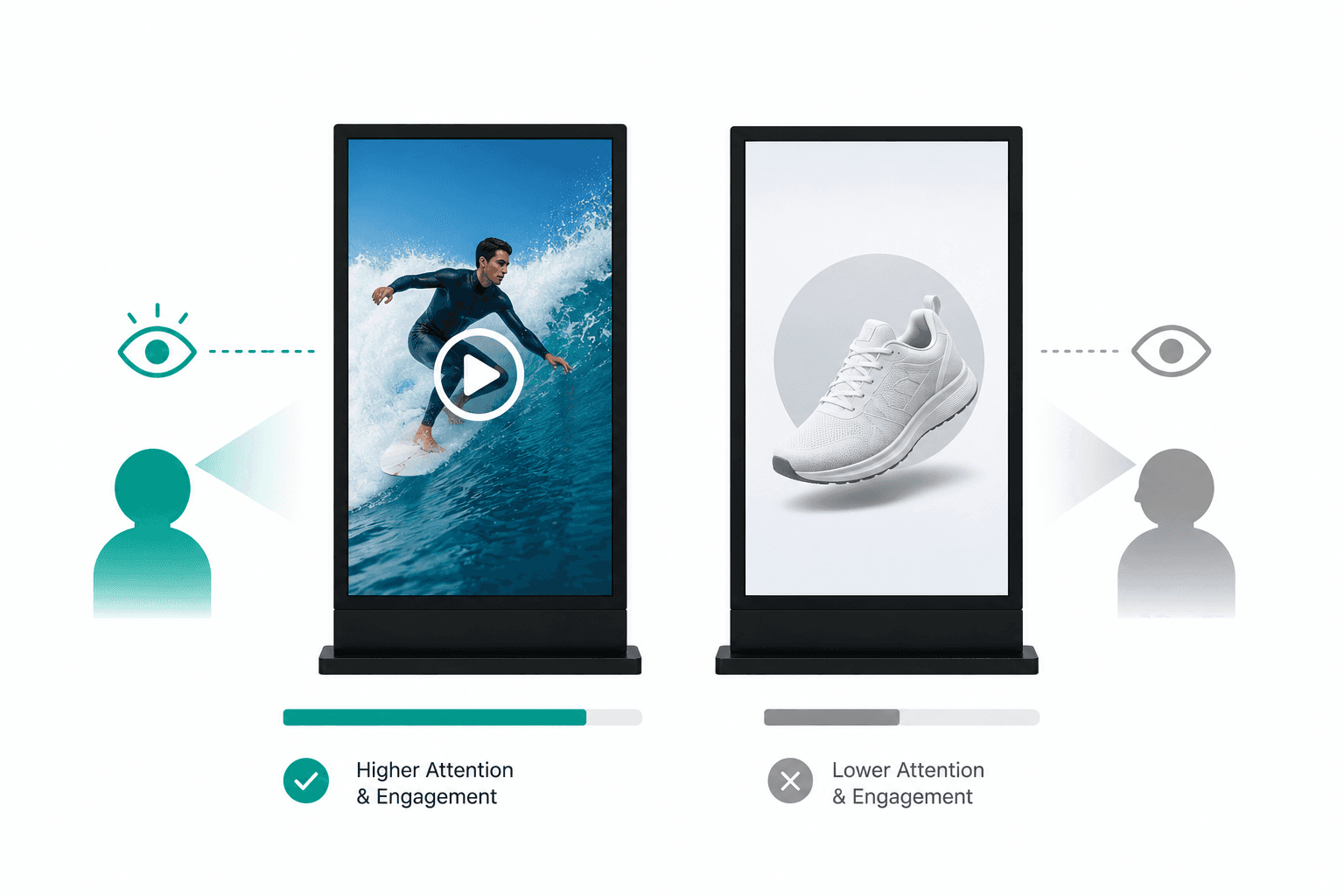
Track engagement metrics
Analyze content performance
Optimize scheduling based on peak hours
Test promotional strategies
Continuously refine messaging
Data-driven optimization sustains long-term value.
Conclusion
Digital signage in 2025 is a strategic communication infrastructure—not a standalone marketing tool. Businesses that invest in integrated hardware, cloud-based CMS platforms, and real-time data capabilities gain operational efficiency, stronger brand presence, and measurable ROI.
Flickerwall provides an enterprise-ready digital signage solution designed for scalability, security, and seamless deployment across industries.
If your organization is ready to move beyond static displays and build a future-ready digital ecosystem, now is the time to implement a strategic digital signage blueprint.