How Motion Influences Attention on Digital Signage Screens
Understanding why movement captures attention and how to use it effectively
Digital signage stands out because moving visuals naturally draw the human eye faster than static media. However, effective motion is not about making screens busier—it’s about using movement strategically. Public environments are highly competitive for attention. People are constantly surrounded by movement, sounds, notifications, and visual distractions.
Written by
Sidharth Gaikwad
Read Time
4 minutes
Posted on
05/12/2026
Human Attention Naturally Responds to Movement
From a behavioral perspective, humans are wired to notice movement quickly.
This is especially important in:
Retail environments
Transportation hubs
Malls and public spaces
High-footfall commercial areas
Motion interrupts passive scanning behavior and increases the likelihood of someone noticing a screen.
👉 This is one of the key content rules that work on public screens.
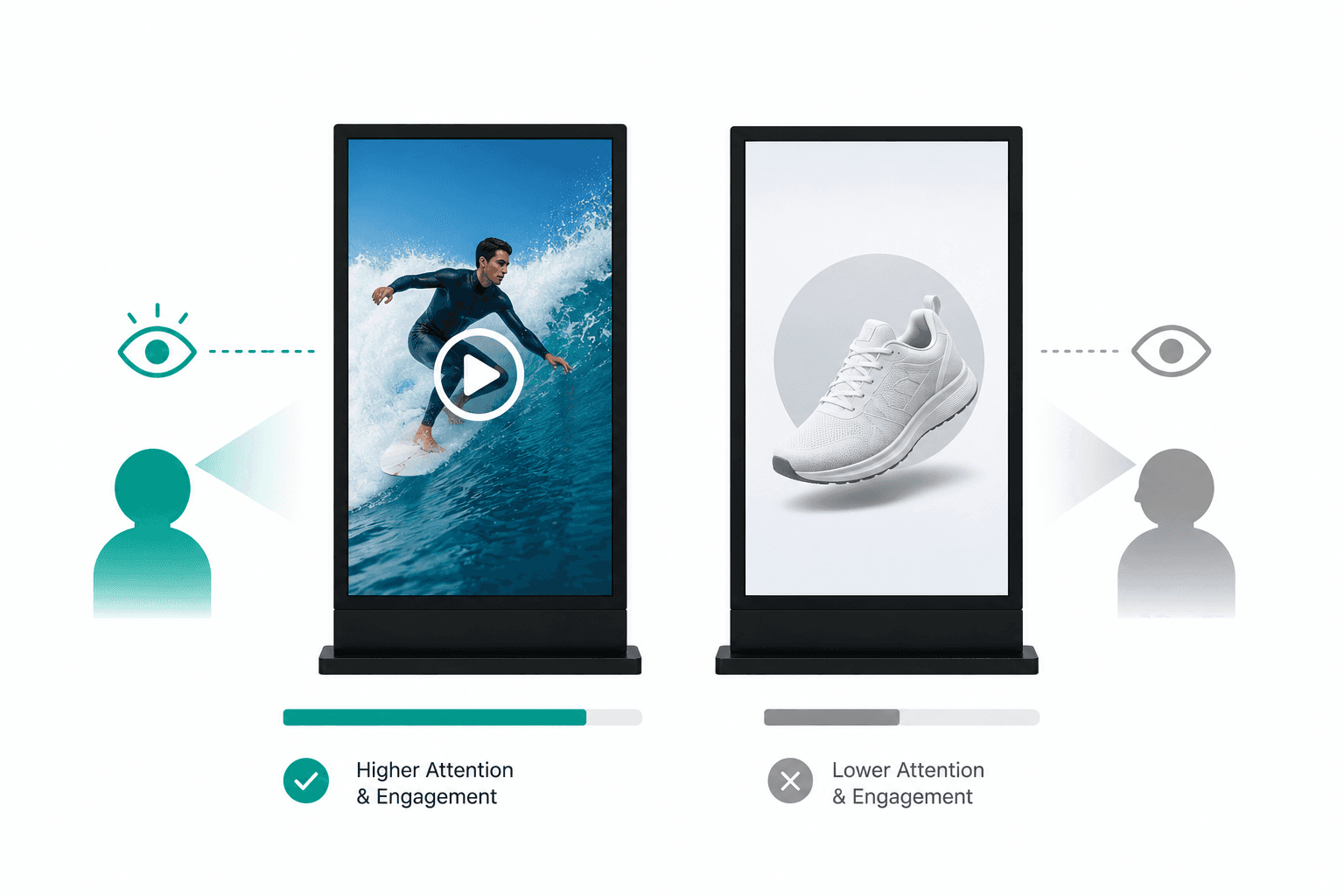
Video Content Creates Stronger Visual Engagement
Compared to static images, video content:
Feels more dynamic
Communicates faster
Creates stronger visual focus
Even subtle movement can improve visibility significantly.
👉 This is why businesses often compare image vs video performance on digital screens when optimizing content.
Motion Helps Highlight Important Information
Strategic movement can direct attention toward:
Promotions and offers
Product launches
Announcements
Calls-to-action
This makes motion useful for guiding viewer focus without requiring large amounts of text.
Too Much Motion Reduces Clarity
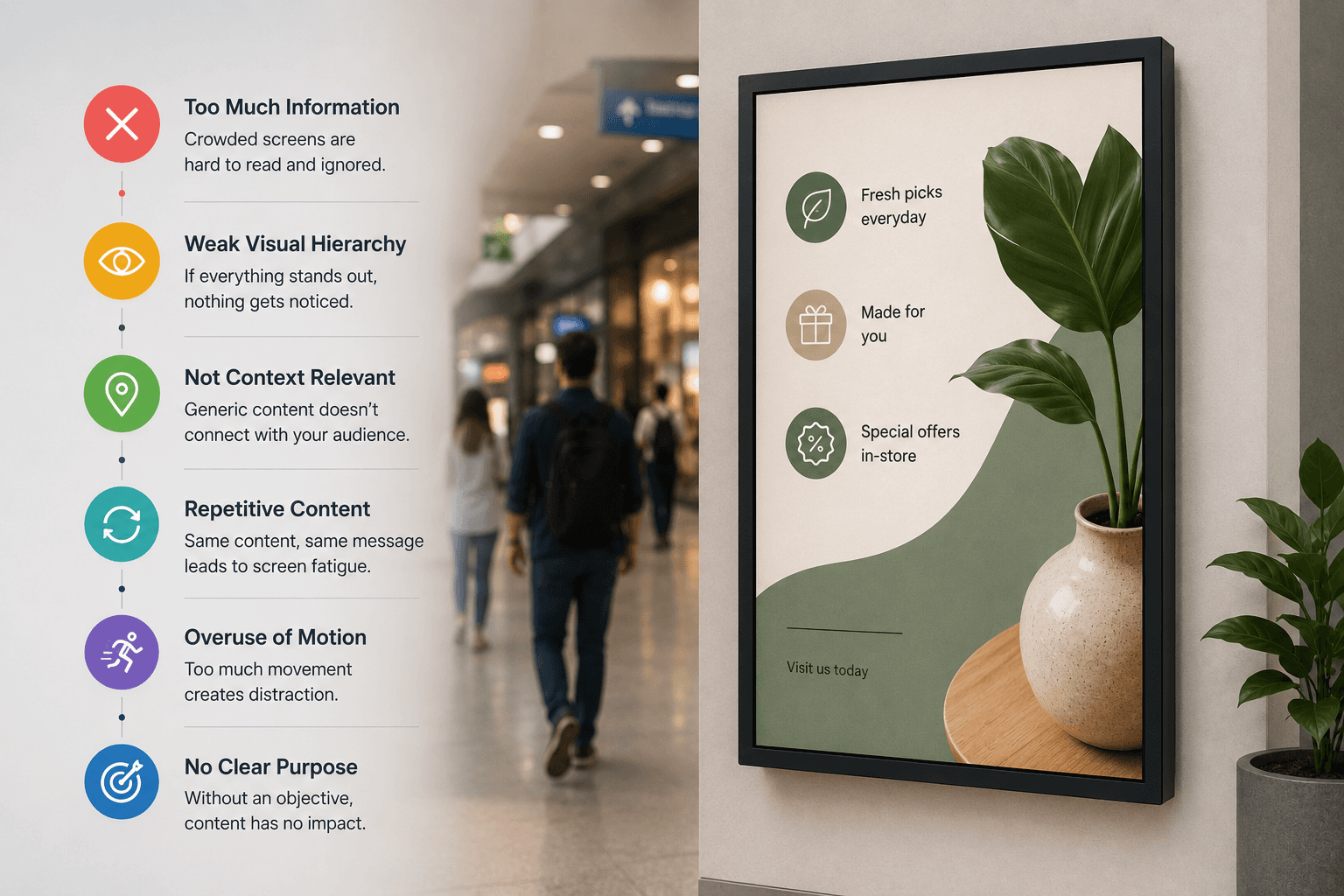
While motion attracts attention, excessive movement creates distraction.
Common mistakes include:
Fast transitions
Constant animations
Multiple moving elements simultaneously
When everything moves, viewers struggle to identify what matters most.
Subtle motion is usually more effective than aggressive animation.
Timing and Context Matter
Not every environment requires high-motion content.
For example:
Fast-paced retail spaces may benefit from video
Corporate environments often require cleaner and calmer visuals
Informational screens may prioritize clarity over animation
Effective digital signage adapts motion based on audience behavior and context.
Motion Works Best with Strong Content Structure
Movement alone does not create effective content.
For motion to work:
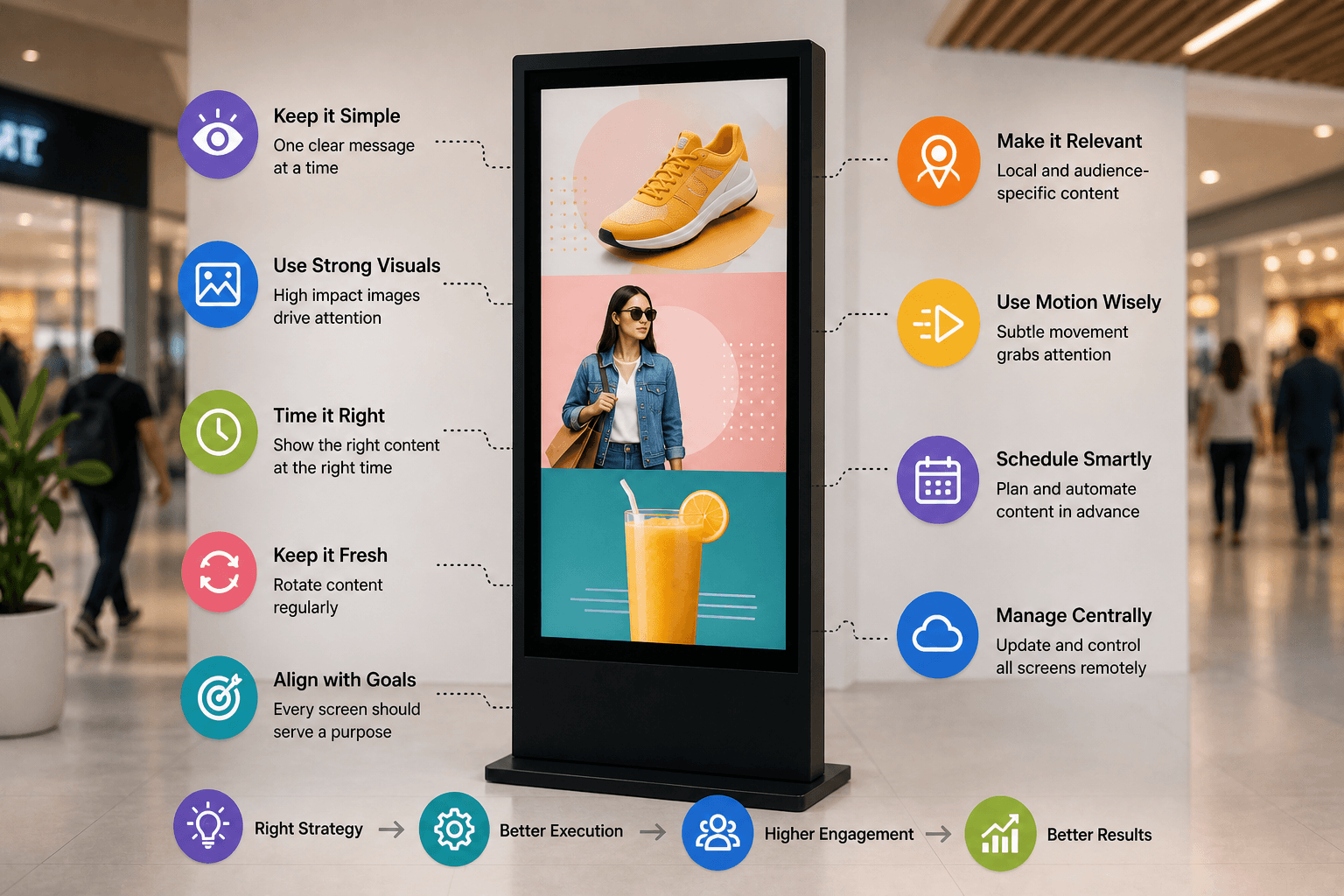
Messaging must remain simple
Visual hierarchy must stay clear
Content should be easy to process quickly
👉 This is why strong digital signage content strategy matters more than animation alone.
Managing Motion-Based Content at Scale
As businesses use more video and animated content, management becomes more complex.
This includes:
Scheduling content properly
Optimizing playback performance
Managing updates across screens
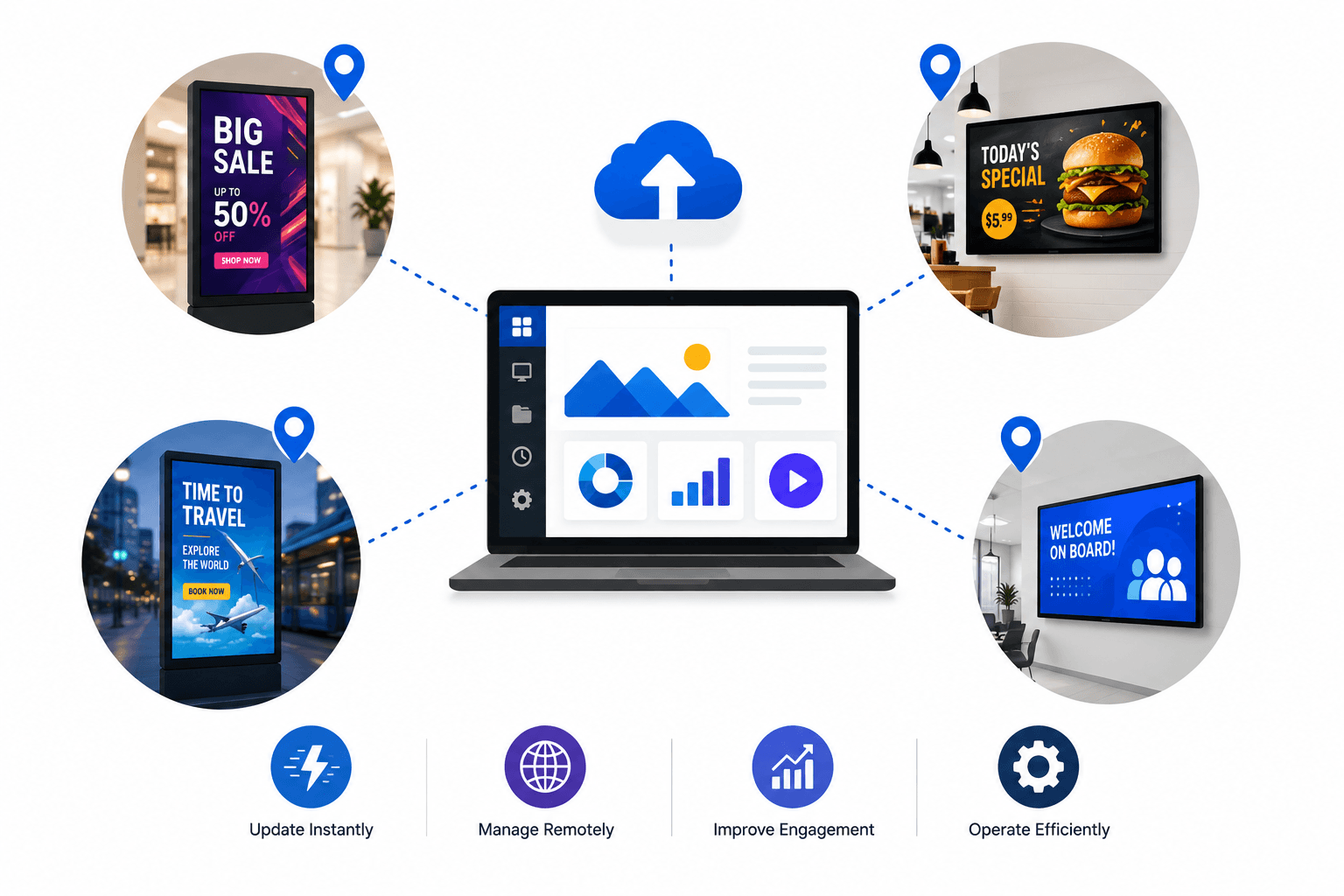
👉 A digital signage CMS helps businesses manage motion-based content more efficiently across locations.
Conclusion
Motion is one of the biggest advantages digital signage has over static media. It naturally attracts attention and improves visibility in busy public environments.
However, effective motion is strategic—not excessive.
Businesses that combine subtle movement with strong content structure create digital signage experiences that are more engaging, memorable, and effective.