Why More Businesses Are Expanding Digital Screen Networks
Understanding the operational and market factors driving global digital signage growth
Digital screens are becoming a standard part of modern business environments. From retail stores and restaurants to corporate offices and transportation hubs, organizations are investing heavily in digital signage networks. This growth is not being driven by hardware alone.
Written by
Sidharth Gaikwad
Read Time
4 minutes
Posted on
05/13/2026
Real-Time Communication Has Become Essential
Modern businesses operate in fast-moving environments where information changes constantly.
Digital screens allow organizations to:
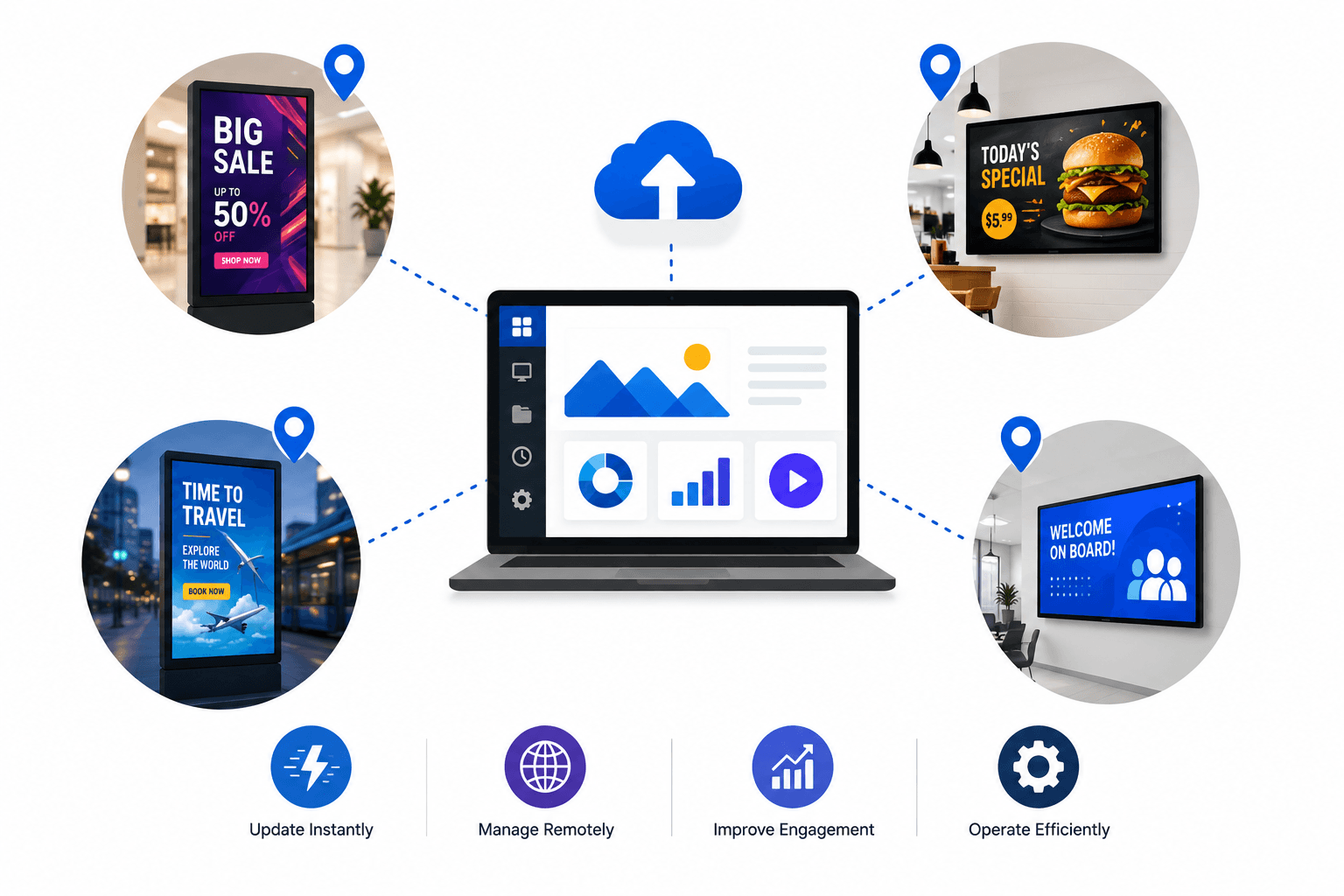
Update messaging instantly
Promote time-sensitive campaigns
Respond quickly to operational changes
👉 This is one reason screen networks are growing globally across industries.
Digital Screens Are More Flexible Than Static Media
Traditional printed signage requires:
Reprinting
Manual replacement
Longer campaign turnaround times
Digital signage removes these limitations.
Businesses can:
Schedule content remotely
Rotate campaigns instantly
Manage multiple messages dynamically
This flexibility improves both marketing and operational efficiency.
Cloud Technology Has Accelerated Adoption
One of the biggest drivers of growth is cloud-based digital signage.
Cloud platforms allow businesses to:
Manage screens remotely
Control multiple locations centrally
Scale without heavy infrastructure investment
👉 This is why cloud digital signage has become the industry standard for modern screen networks.
Multi-Location Businesses Need Centralized Control
As organizations expand, managing screens manually becomes inefficient.
Retail chains, restaurants, and enterprise businesses require:
Consistent messaging
Centralized content management
Remote updates across locations
Cloud-based CMS platforms solve these challenges by simplifying screen operations at scale.
Digital Signage Improves Customer Engagement
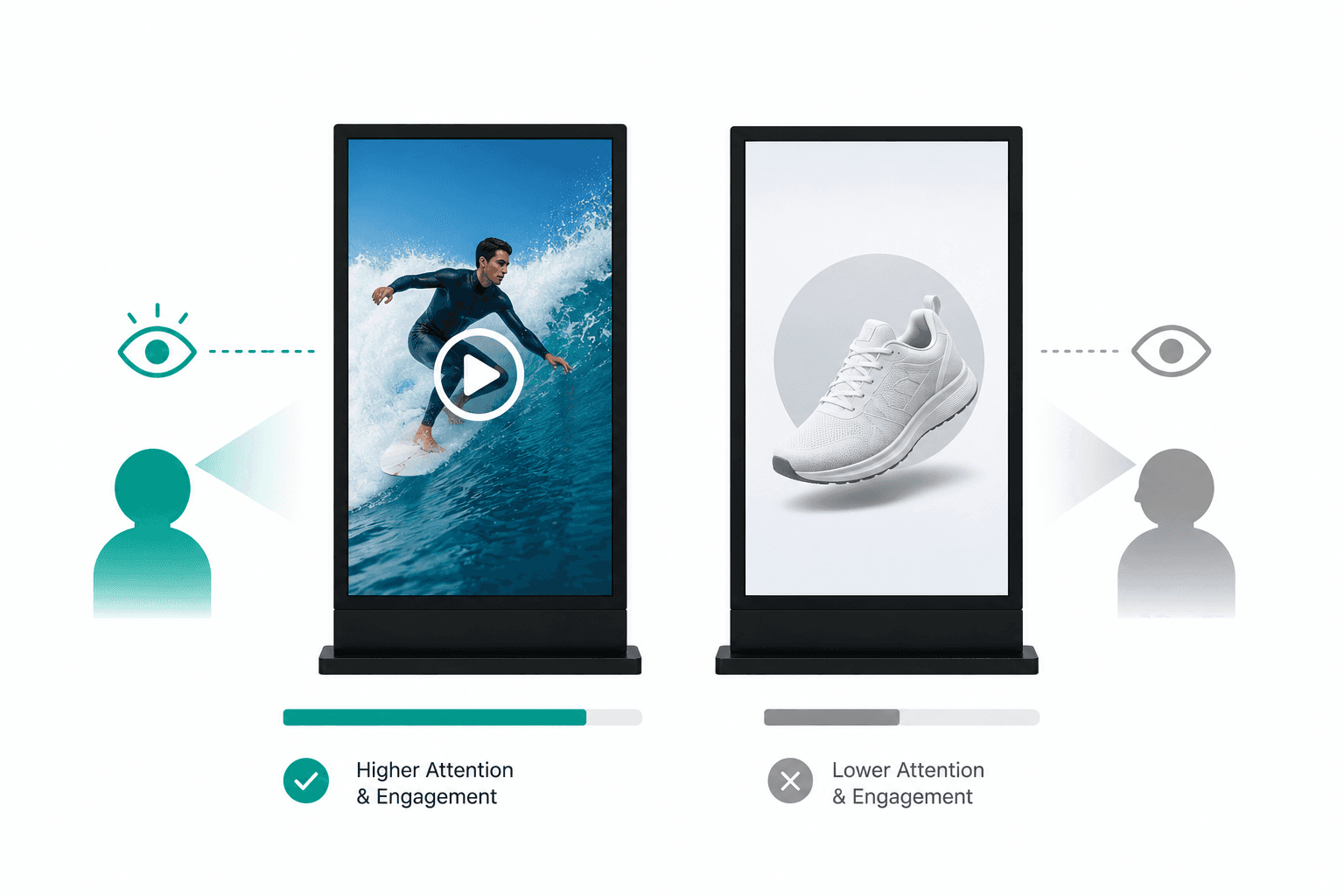
Businesses are also investing because digital screens attract more attention than static displays.
Benefits include:
Higher visibility
Better engagement
Dynamic visual communication
👉 Motion, video, and real-time content play a major role in improving screen performance.
Hardware and Infrastructure Have Become More Accessible
The cost of screens, media players, and cloud software has become significantly more accessible over time.
Businesses now have:
Lower entry barriers
Flexible deployment options
Easier scalability
This has accelerated adoption across both large enterprises and small businesses.
Screen Networks Support More Than Advertising
Modern digital signage is no longer limited to promotions.
Businesses use screen networks for:
Internal communication
Operational updates
Wayfinding and navigation
Real-time announcements
Customer engagement
This broader use case increases the long-term value of digital signage investments.
Conclusion
Businesses are investing more in digital screens because modern communication requires flexibility, speed, and scalability.
Digital signage provides operational advantages that static media cannot match—especially when combined with cloud-based management systems.
As technology becomes more accessible and businesses continue scaling across locations, digital screen networks will continue to grow globally.