Best Content Strategies That Make Digital Signage Effective
How to create, manage, and optimize content for better engagement and results
Digital signage is only as effective as the content it displays. While many businesses invest in screens, the real impact comes from how content is planned, structured, and delivered. Without a clear strategy, screens quickly become ignored background elements. A strong content strategy ensures your messaging captures attention, communicates clearly, and drives measurable outcomes.
Written by
Sidharth Gaikwad
Read Time
4 minutes
Posted on
05/08/2026
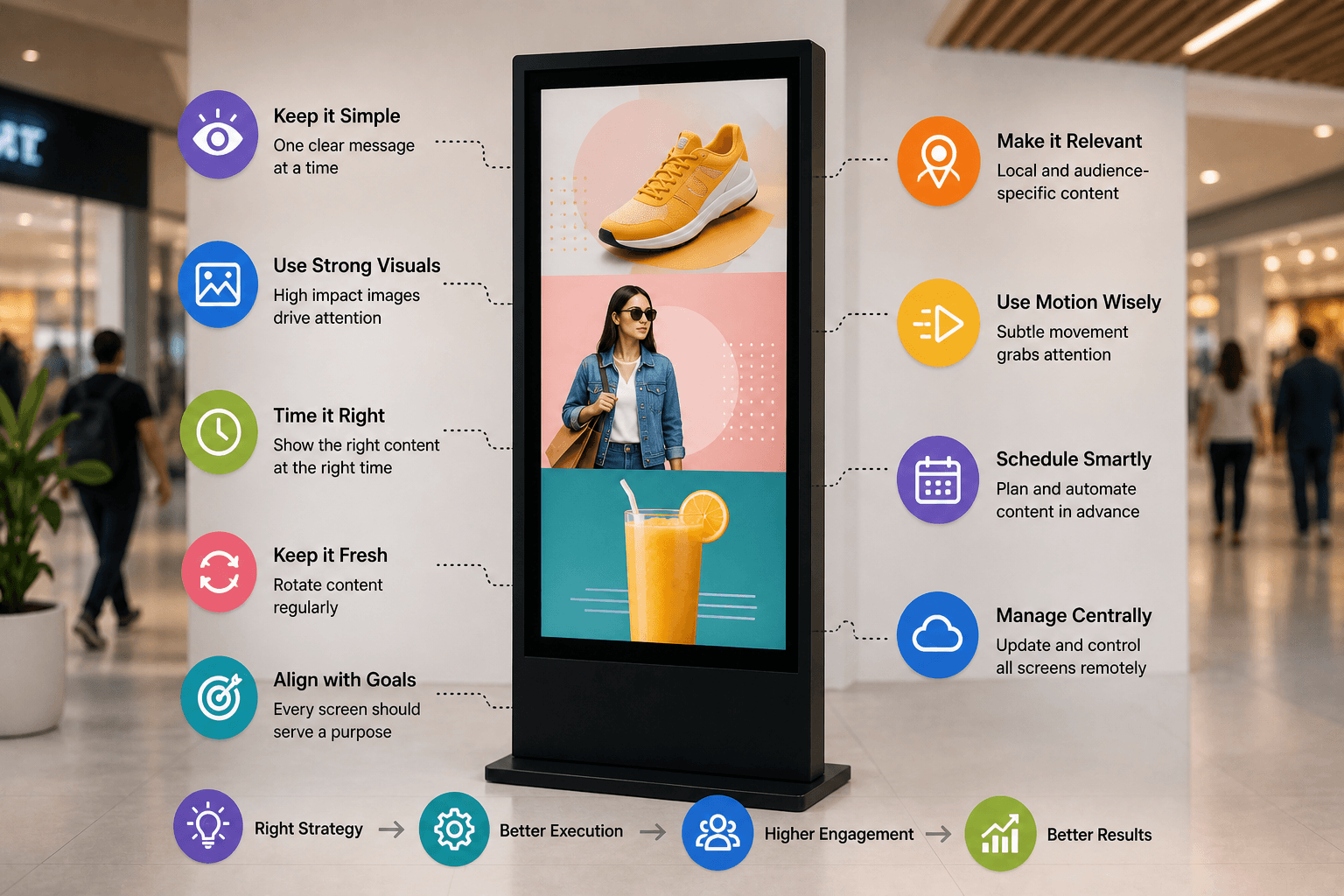
Keep Content Simple and Easy to Understand
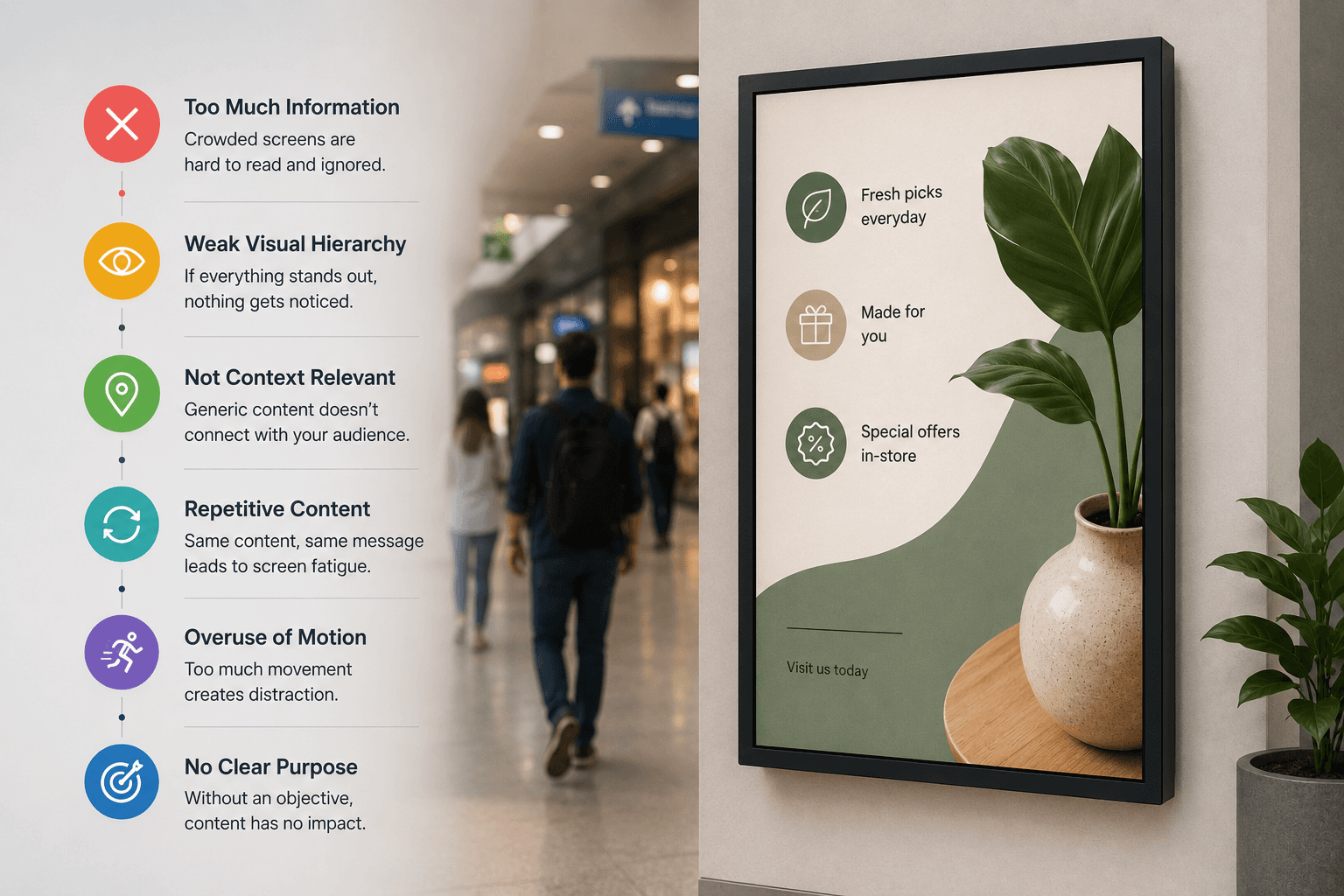
Public screens compete for limited attention.
To improve visibility:
Use short and clear messaging
Avoid cluttered layouts
Focus on one key idea per screen
Simple content is easier to process and more likely to be remembered.
👉 This aligns with core principles of content rules that work on public screens.
Use High-Impact Visuals
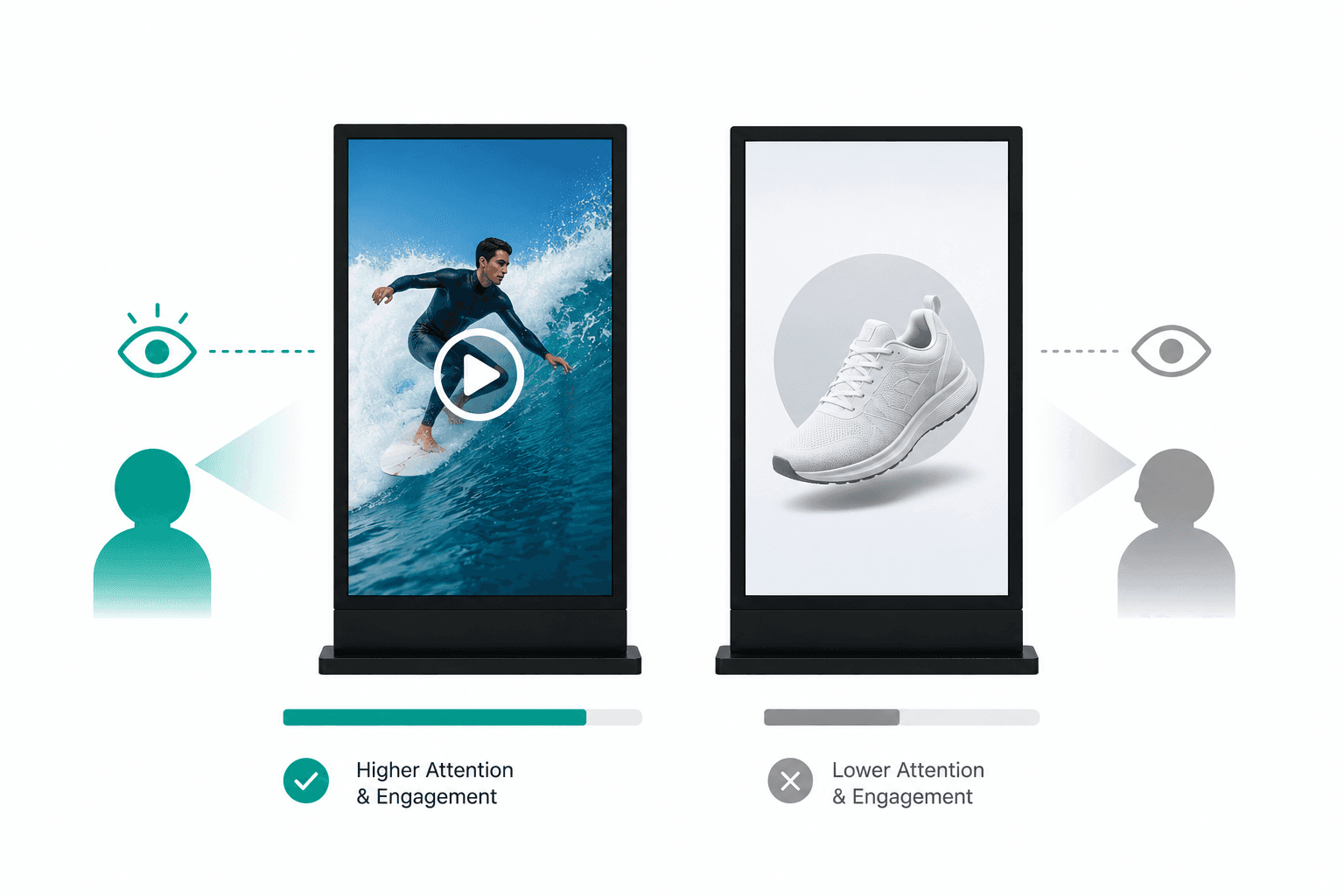
Visuals drive attention faster than text.
Best practices include:
High-quality images and videos
Bold contrast for readability
Minimal text with strong visuals
Well-designed visuals increase engagement and message retention.
Leverage Time-Based Content
Timing plays a major role in performance.
Examples:
Morning menus for cafés
Lunch offers during peak hours
Evening promotions for retail
👉 This is where content scheduling for digital signage becomes critical.
Rotate Content to Avoid Fatigue
Repetition reduces effectiveness over time.
To keep screens engaging:
Rotate creatives regularly
Introduce new campaigns
Refresh visuals frequently
Dynamic content maintains audience interest.
Align Content with Business Goals
Every screen should serve a purpose.
Content should support:
Sales and promotions
Brand awareness
Customer information
👉 This directly impacts digital signage ROI, especially for growing businesses.
Localize Content for Better Relevance
For multi-location businesses:
Adapt content based on location
Use region-specific messaging
Highlight local offers
Relevant content performs better than generic messaging.
Use Motion Carefully
Motion attracts attention—but overuse can distract.
Best practices:
Use subtle animations
Avoid excessive movement
Focus on key elements
Balanced motion improves visibility without overwhelming viewers.
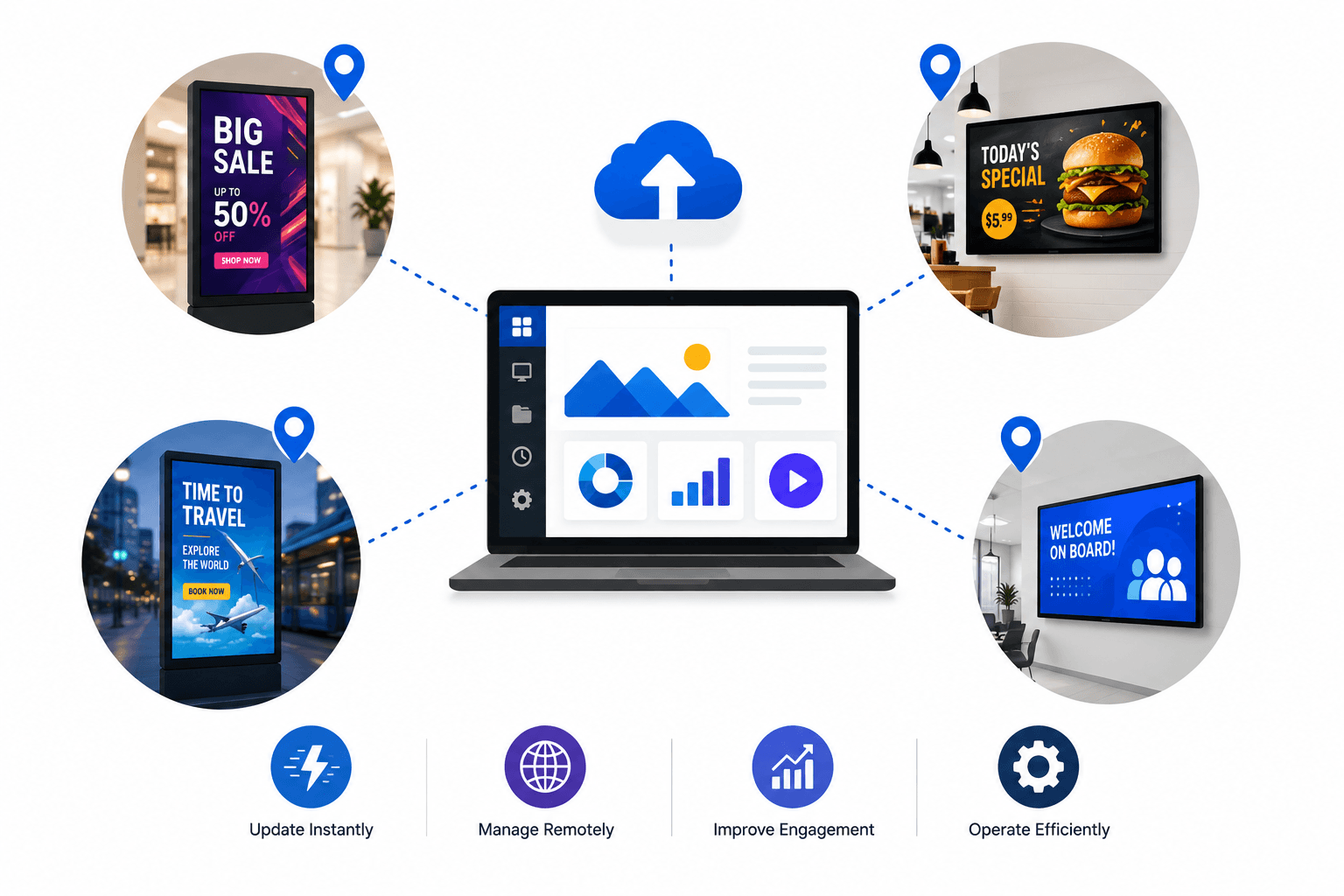
Enable Centralized Content Management
Managing content manually limits scalability.
With a structured system:
Content can be updated remotely
Campaigns can be scheduled in advance
Multiple screens can be managed consistently
👉 This is enabled through a digital signage CMS, which simplifies content operations.
Conclusion
A strong digital signage strategy goes beyond visuals—it combines simplicity, timing, relevance, and system-driven execution.
Businesses that treat content as a strategic asset see better engagement, stronger communication, and higher returns from their screens.
If you're looking to improve the performance of your digital signage, combining the right content strategy with a scalable management system like Flickerwall can help you deliver consistent and high-impact messaging across all screens.