Choosing Between Cloud and On-Prem Signage Platforms
Key factors businesses should evaluate before selecting a deployment model
Digital signage software can be deployed in two main ways: cloud-based platforms or on-premise systems. Each deployment model affects how businesses manage screens, control data, and scale their digital signage networks.
Written by
Sidharth Gaikwad
Read Time
3 minutes
Posted on
18/03/2026
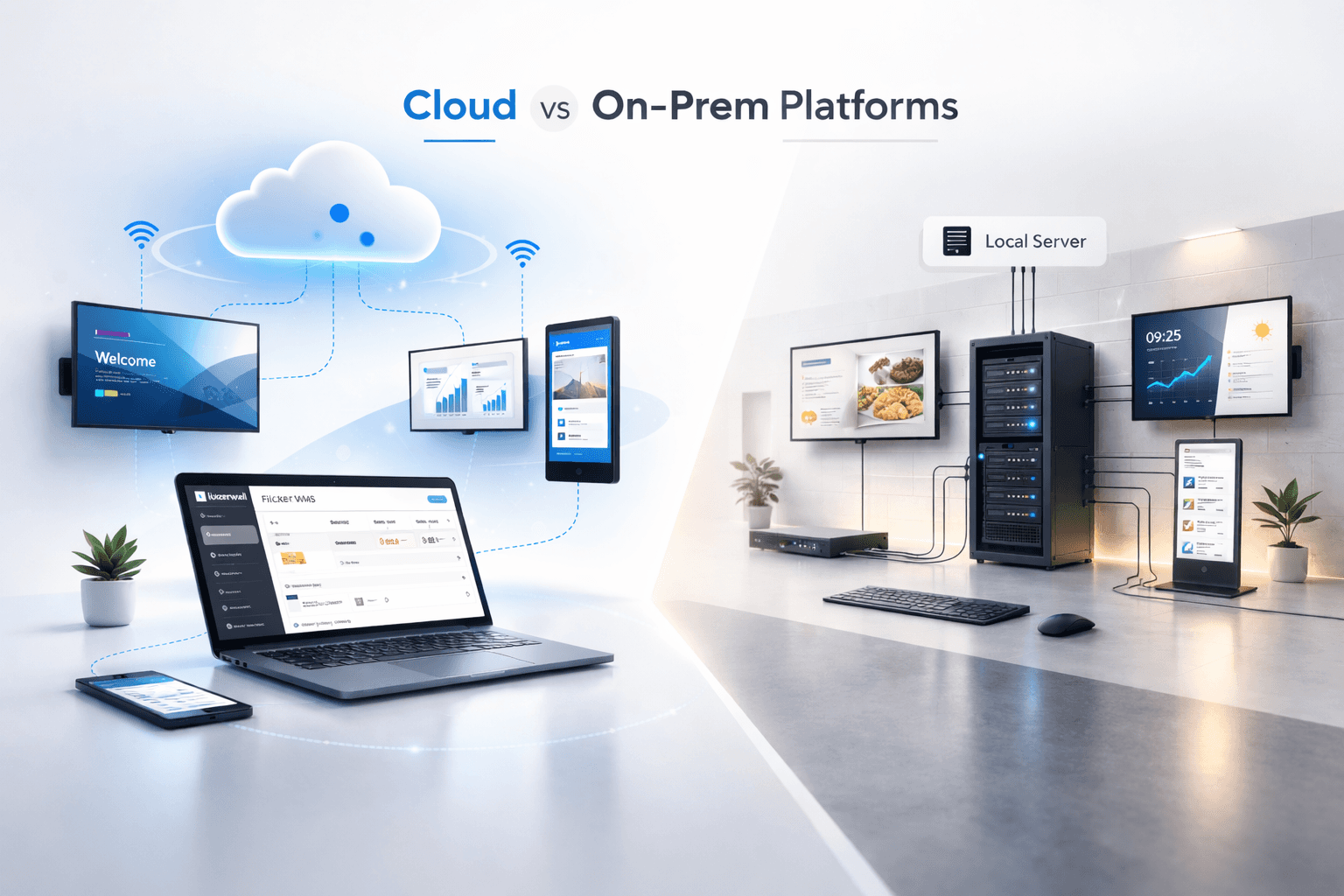
Understanding Cloud Digital Signage
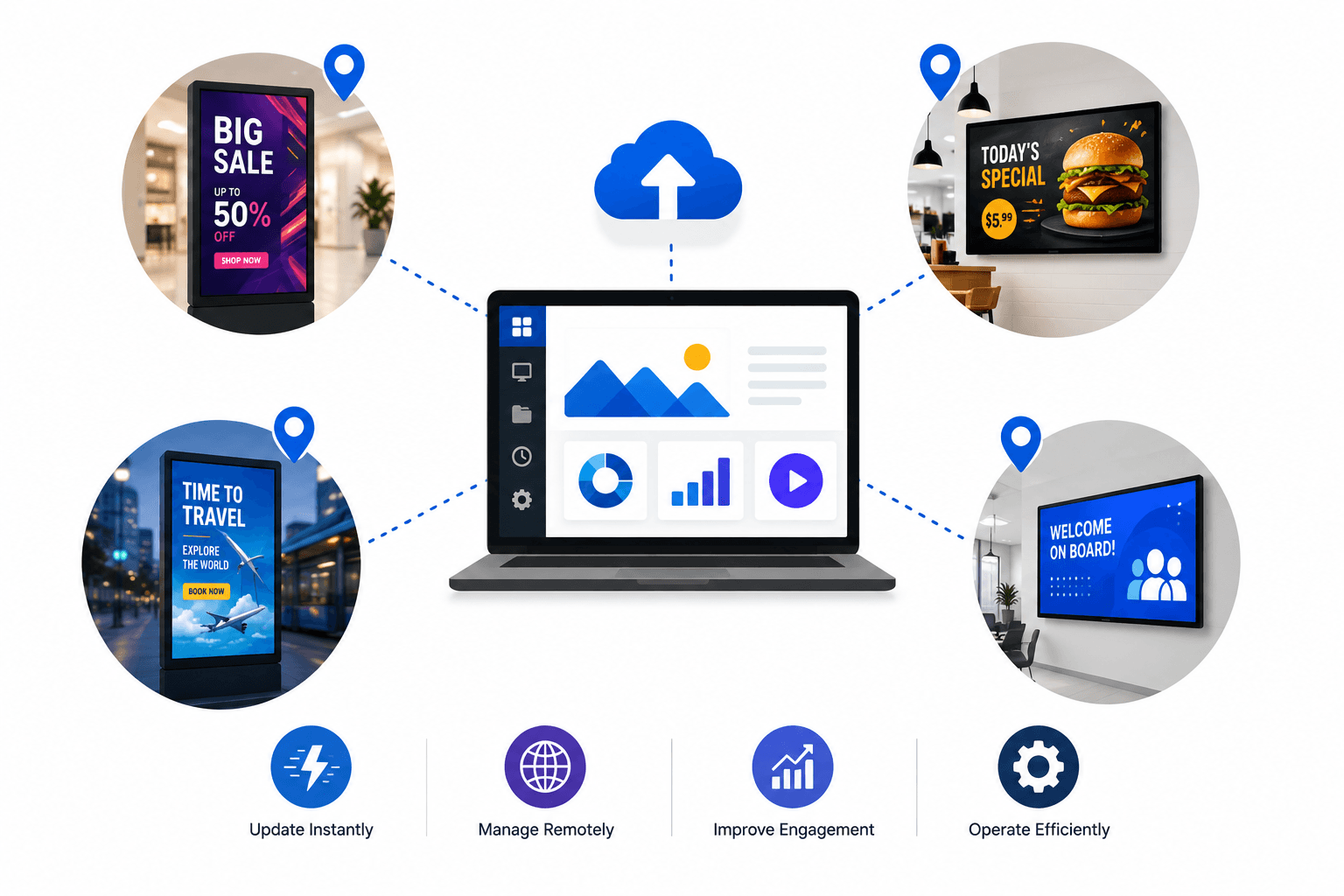
Cloud digital signage software is hosted on remote servers and accessed through a web-based dashboard. Businesses can manage and update screens across multiple locations using a centralized online platform.
Instead of maintaining infrastructure internally, content is delivered over the internet to connected displays.
Key characteristics include:
Remote screen management
Automatic software updates
Subscription-based pricing
No need for internal servers
Because everything is managed online, teams can update screens from anywhere with an internet connection. This makes cloud signage especially useful for businesses operating across multiple locations.
Understanding On-Prem Digital Signage Software
On-prem digital signage software is installed on a company’s local servers and managed within its internal infrastructure.
Unlike cloud solutions, organizations retain full control over the system, including data storage and software configurations.
Typical characteristics include:
Local server infrastructure
Full data ownership
Custom software configurations
Internal IT management
Since all data is stored locally, organizations have greater control over security and customization. However, this also requires dedicated IT resources for maintenance and management.
Key Differences Between Cloud and On-Prem Signage
The two models differ across several operational areas:
Infrastructure
Cloud platforms run on vendor-managed infrastructure with minimal hardware requirements.
On-prem systems require businesses to install and maintain their own servers and networks.
Cost Structure
Cloud solutions follow a subscription-based model with lower upfront costs.
On-prem systems involve higher initial investment for hardware, setup, and licensing.
Scalability
Cloud platforms allow businesses to scale quickly by adding new screens without additional infrastructure.
On-prem systems often require hardware expansion to support growth.
Management
Cloud signage can be managed remotely from any location.
On-prem systems typically require access to internal networks or IT environments.
When Cloud Signage Makes Sense
Cloud-based signage is ideal for modern, fast-moving businesses that need flexibility and ease of use.
It works best for:
Retail chains
Restaurant franchises
Corporate offices with multiple locations
Businesses with limited IT infrastructure
Since the vendor handles updates and system maintenance, teams can focus on content, marketing, and operations instead of technical management.
When On-Prem Signage Is Preferred
On-prem deployments are still relevant for organizations with strict control requirements.
Common use cases include:
Government organizations
Financial institutions
Healthcare systems
Highly regulated industries
These organizations prioritize data control, security, and compliance. On-prem systems can also function with limited dependence on internet connectivity.
Making the Right Decision
Choosing between cloud and on-prem signage depends on your business needs and operational priorities.
Key factors to consider include:
Business size and growth plans
Internal IT capabilities
Data security requirements
Budget and infrastructure resources
Small and mid-sized businesses typically prefer cloud solutions for faster deployment and scalability. Larger enterprises with strict IT policies may lean toward on-prem systems.
Conclusion
Cloud and on-prem digital signage solutions serve different operational needs.
Cloud platforms offer flexibility, remote access, and easy scalability, making them ideal for distributed and growing businesses. On-prem systems provide greater control and customization, which is critical for organizations with strict infrastructure or compliance requirements.
The right choice depends on balancing scalability, cost, control, and operational complexity.
Platforms like Flickerwall help simplify digital signage deployments by offering scalable solutions built for modern screen networks.