Choosing the Right Infrastructure for Digital Signage
Balancing offline simplicity with scalable, cloud-powered control for modern visual communication
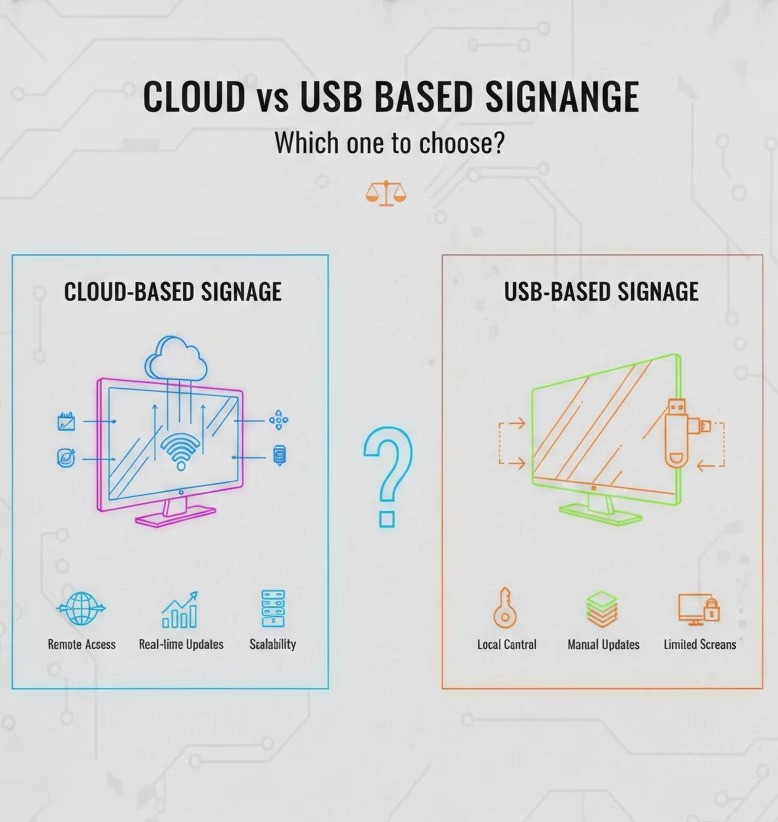
Selecting the right digital signage infrastructure is a foundational decision that impacts marketing agility, operational efficiency, and long-term scalability. Businesses typically choose between two delivery models: USB-based playback or cloud-based management. While USB signage offers simplicity and low upfront cost, cloud-connected systems unlock advanced capabilities that align with modern, growth-focused organizations. Understanding the strengths and limitations of each approach is essential before investing.
Written by
Sidharth Gaikwad
Read Time
6 minutes
Posted on
03-15-2025
Understanding Cloud-Based Digital Signage
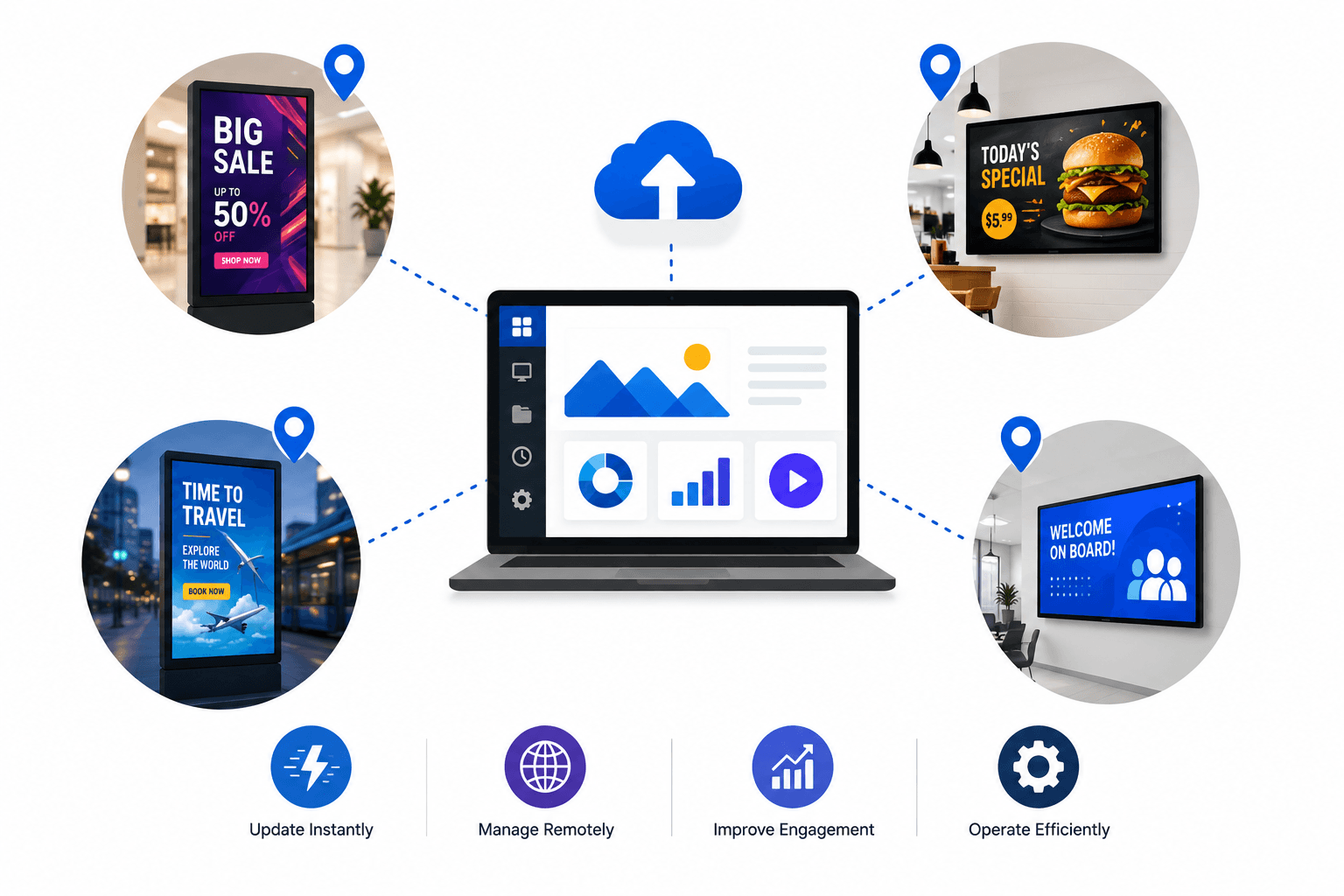
Cloud-based signage uses a web-based Content Management System (CMS) hosted on remote servers. Content can be updated and scheduled from anywhere with internet access.
Key Benefits
Remote content management
Instant updates across multiple locations
Automated scheduling and dayparting
Integration with POS, inventory, or live data feeds
Performance analytics and reporting
This infrastructure supports dynamic, data-driven communication strategies.
Considerations
Requires stable internet connectivity
Ongoing subscription investment
Initial onboarding and training
However, for multi-location businesses, these trade-offs are often outweighed by operational efficiency gains.
Scalability and Operational Efficiency
The biggest differentiator between cloud and USB signage is scalability.
With USB systems:
Each screen must be updated individually
Content consistency is harder to maintain
Expansion requires proportional manual effort
With cloud systems:
Hundreds of screens can be updated instantly
Location-specific campaigns can be deployed centrally
Brand governance remains consistent
Growth does not increase operational burden
For expanding businesses, cloud-based infrastructure significantly reduces long-term management costs.
Cost Comparison: Short-Term vs Long-Term
USB signage may appear more affordable initially due to minimal infrastructure requirements.
However, hidden costs include:
Labor for manual updates
Time delays for campaign changes
Limited promotional flexibility
Reduced ability to optimize performance
Cloud-based solutions involve recurring fees but deliver measurable ROI through automation, improved marketing agility, and centralized control.
When to Choose USB-Based Signage
USB may be appropriate if:
You operate a single screen
Content rarely changes
Internet connectivity is unreliable
Budget constraints limit software investment
It is a practical entry-level solution for basic communication needs.
When to Choose Cloud-Based Signage
Cloud is ideal if:
You manage multiple locations
Promotions change frequently
Real-time updates are critical
Analytics and reporting matter
You plan to scale operations
Enterprise-focused platforms like Flickerwall provide the flexibility and control needed for modern visual communication strategies.
Conclusion
The decision between cloud and USB digital signage ultimately comes down to business ambition. USB-based systems offer simplicity and low upfront cost, but they limit scalability and automation. Cloud-based signage delivers centralized control, operational efficiency, and long-term growth potential.
For businesses focused on expansion, real-time marketing, and data-driven decisions, a cloud-connected digital signage network provides a strategic advantage.
If you are ready to move beyond manual updates and build a scalable communication infrastructure, consider implementing a cloud-based digital signage solution designed for modern enterprise growth.