Transforming Quick Service Restaurants with Intelligent Signage
How cloud-connected displays automate operations, increase sales, and modernize customer experience
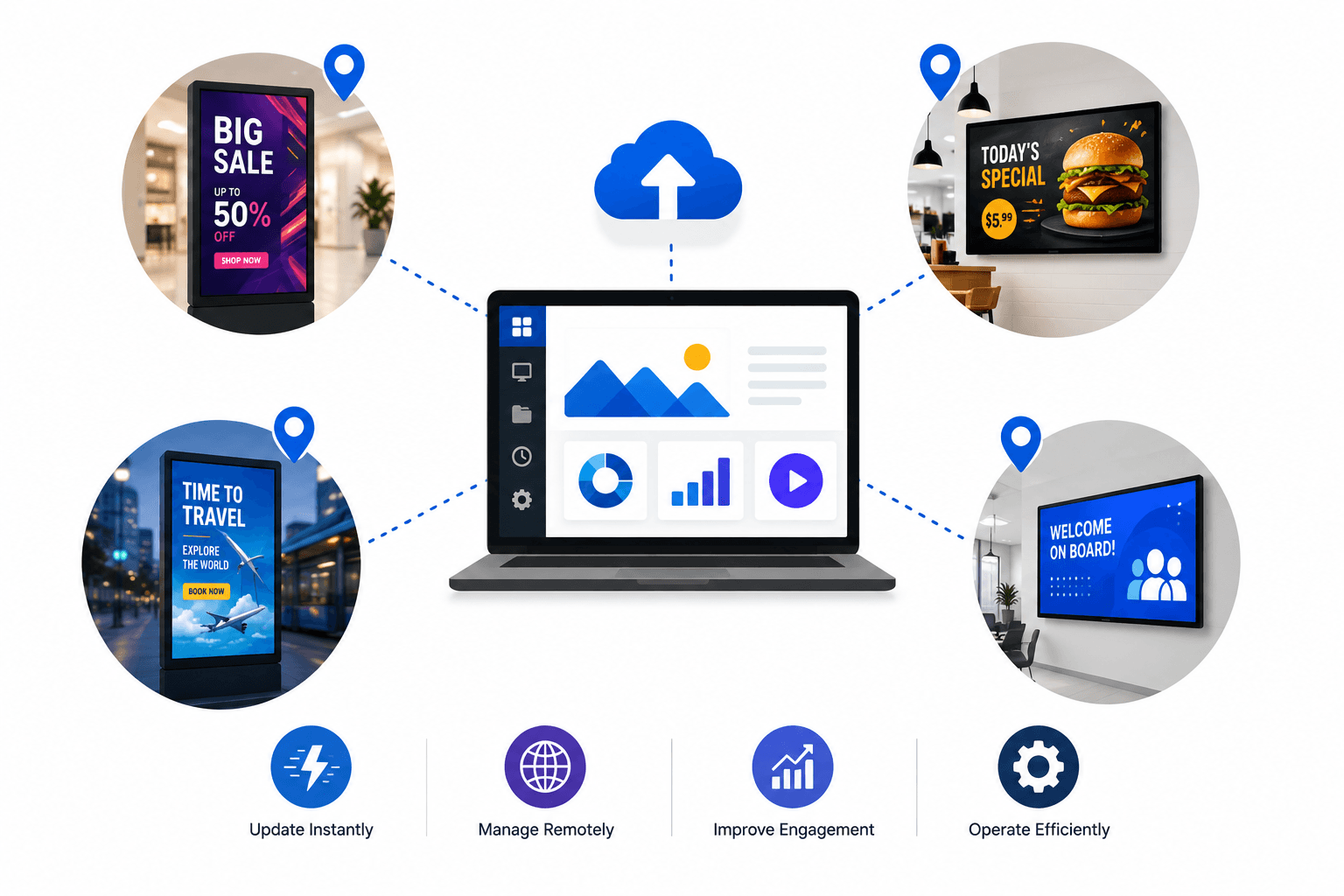
Quick Service Restaurants are under constant pressure to deliver speed, accuracy, and consistency. Static menus and manual processes limit agility in an increasingly digital marketplace. Cloud-connected digital signage provides the operational backbone modern QSRs require. By integrating with POS systems and central dashboards, restaurants can automate updates, reduce friction, and improve overall profitability. Digital signage is no longer a visual enhancement—it is a strategic growth infrastructure.
Written by
Sidharth Gaikwad
Read Time
7 minutes
Posted on
03-17-2025
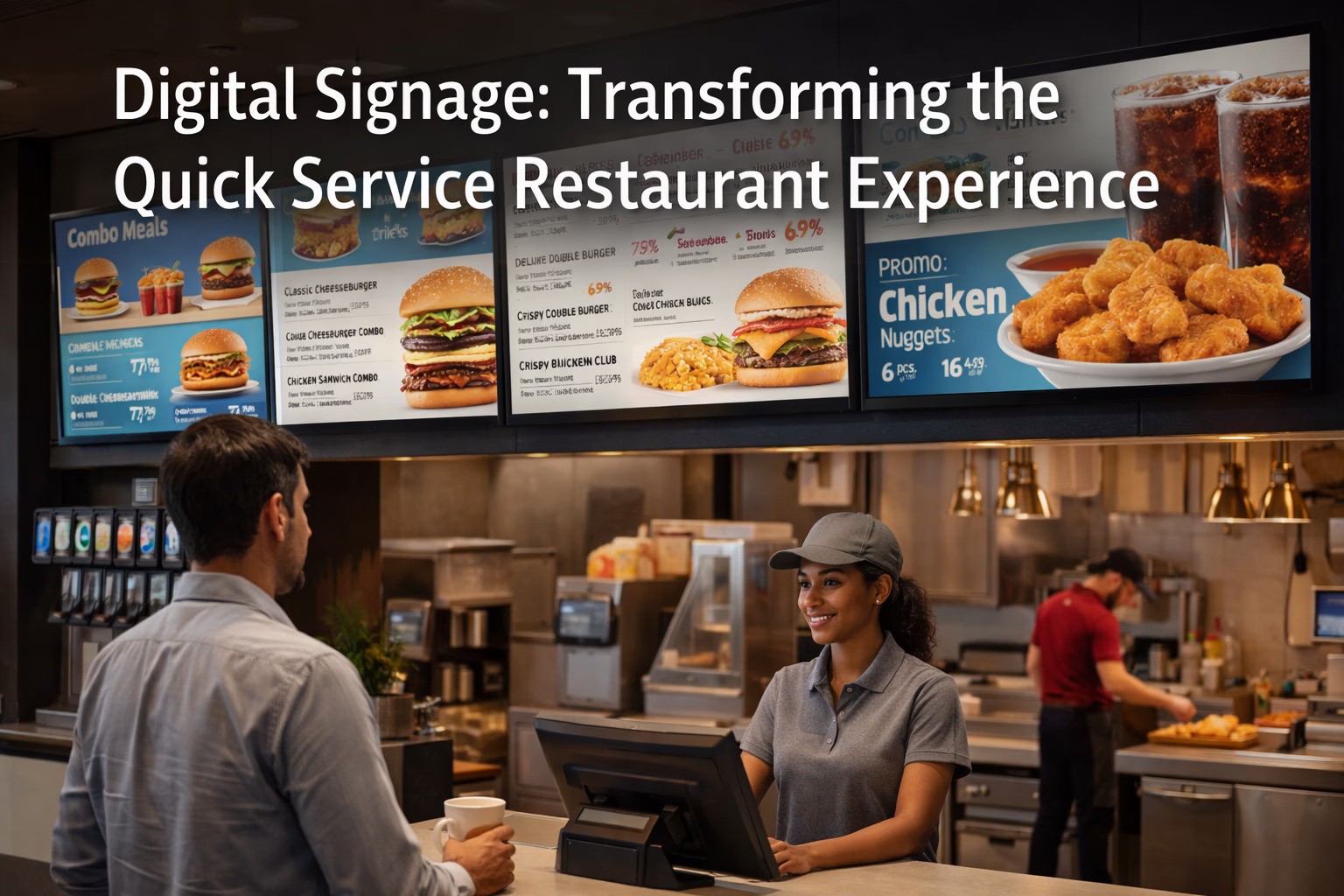
Driving Revenue Through Dynamic Menu Boards
Digital menu boards influence customer decisions at the point of purchase. High-definition visuals and automated promotions create measurable impact.
QSR operators can:
Promote high-margin items dynamically
Launch time-sensitive offers instantly
Adjust pricing without reprints
Personalize upsell suggestions
Studies show digital menu boards can drive significant sales growth when strategically deployed.
Automating Dayparting and Promotions
Manual menu transitions between breakfast, lunch, and dinner slow operations and create inconsistencies.
Cloud-based systems automate dayparting by:
Switching menus instantly based on time
Activating targeted promotions during peak hours
Aligning pricing strategies with demand trends
Maintaining brand consistency across locations
Automation reduces human error and operational delays.
Real-Time POS and Inventory Integration
Disconnected systems create friction, especially when items are out of stock. Integration eliminates this issue.
By connecting digital signage with POS systems, QSRs can:
Sync inventory updates in real time
Remove unavailable items automatically
Adjust promotions based on stock levels
Ensure pricing accuracy across channels
This reduces order errors and improves customer trust.
Reducing Perceived Wait Times
Speed of service directly affects satisfaction. Digital signage improves queue experience by:
Displaying real-time order status
Providing estimated preparation times
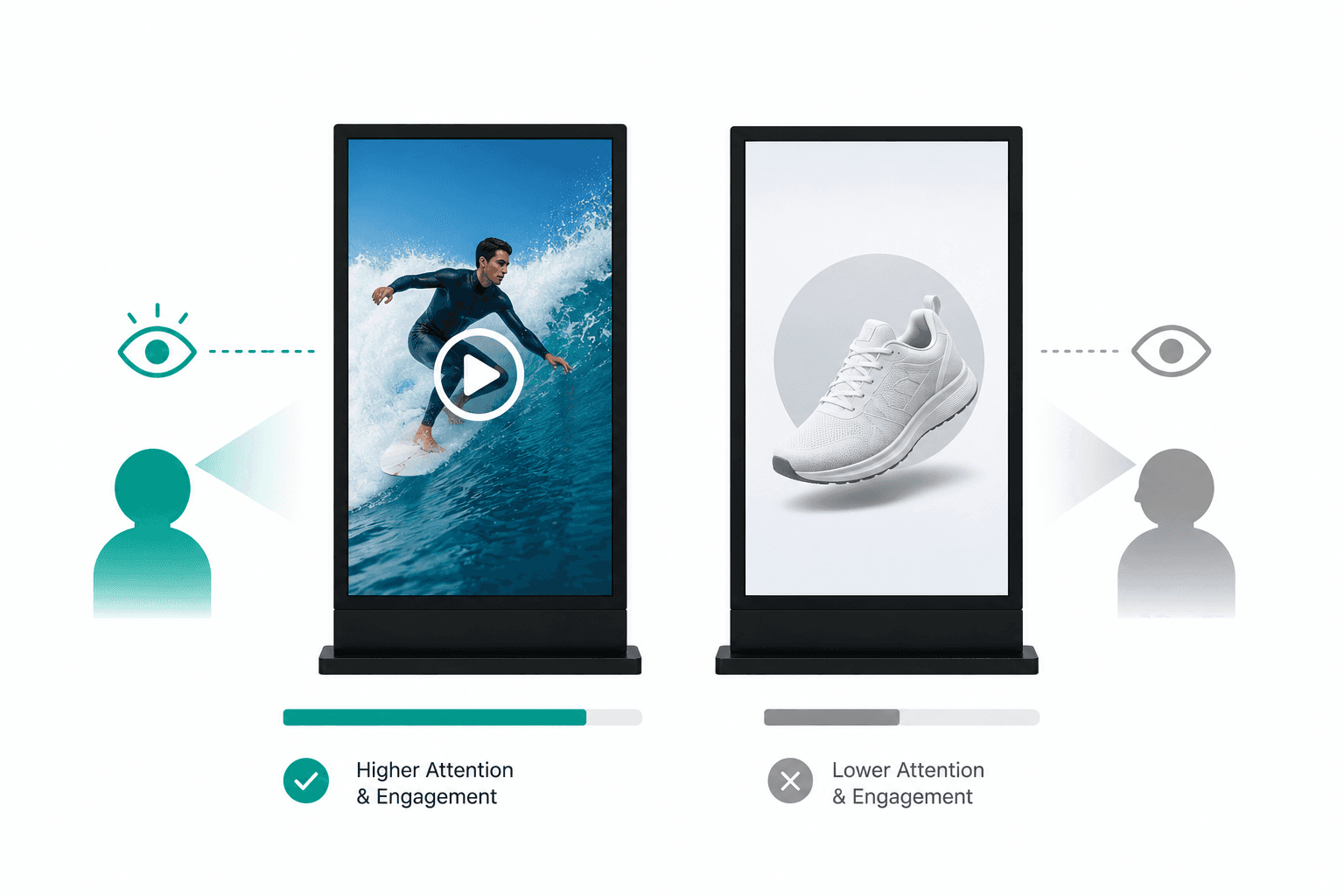
Showing engaging branded content
Offering cross-sell suggestions during wait periods
Strategic use of content can reduce perceived wait times by up to 35 percent.
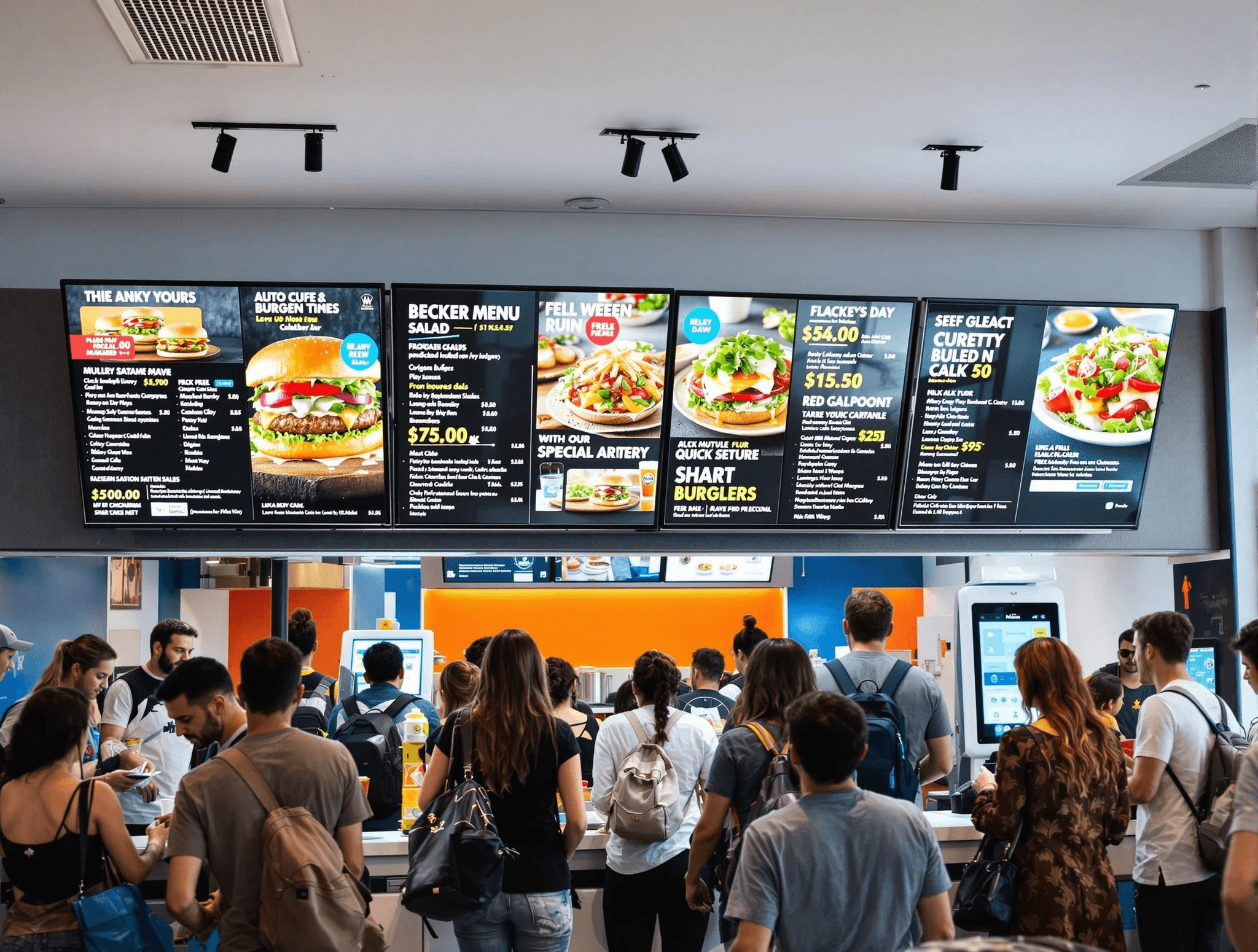
Enhancing Hygiene and Contactless Ordering
Customer expectations now include safer, contactless experiences. Digital signage supports this shift through:
QR code-based ordering
Self-service kiosks
Mobile-integrated menus
Minimal physical interaction
These features increase convenience while reinforcing hygiene standards.
Strengthening Brand Identity at Scale
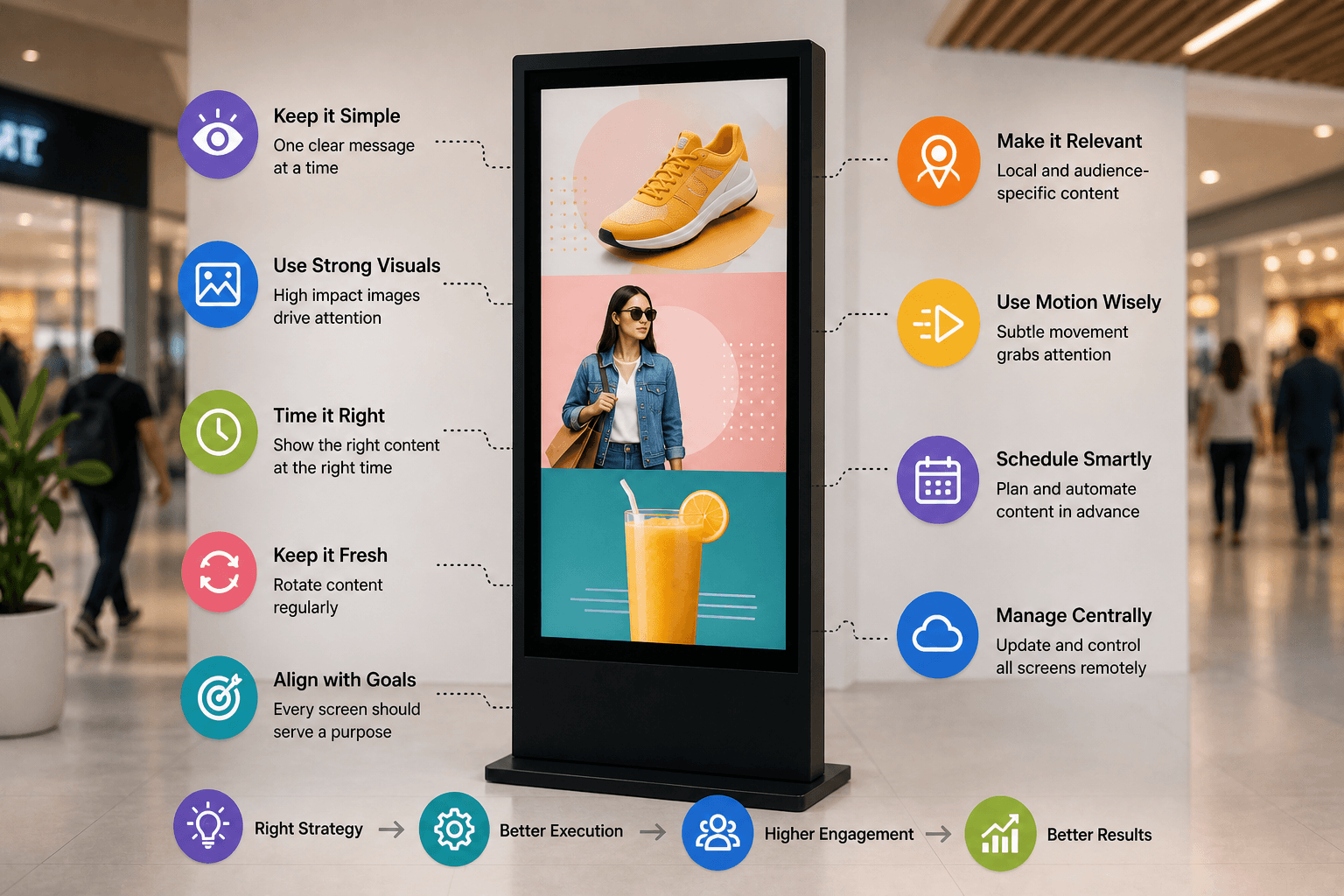
Consistent branding across multiple locations is critical for growth-stage QSRs. Centralized cloud dashboards enable:
Remote content updates
Region-specific campaigns
Standardized visual identity
Performance monitoring across outlets
This ensures brand agility without sacrificing control.
Sustainability and Cost Efficiency
Printed menus generate recurring costs and waste. Digital signage offers a long-term alternative.
Benefits include:
Eliminated printing expenses
Reduced paper waste
Instant content updates
Lower long-term operational overhead
Sustainability and profitability align within a digital-first model.
Conclusion
Digital signage is transforming the Quick Service Restaurant experience by combining automation, integration, and visual impact into one scalable system. From increasing sales potential to reducing perceived wait times and eliminating operational friction, intelligent signage drives measurable business outcomes.
Flickerwall provides end-to-end digital signage solutions designed for modern QSR growth—integrating hardware, software, and POS connectivity into a unified ecosystem.
If your QSR is ready to modernize operations and accelerate revenue, now is the time to implement a cloud-connected digital signage strategy.