How Digital Signage Players Power Modern Display Networks
Hardware Foundations for Scalable, Cloud-Managed Screen Deployments
Digital signage players are the operational engine behind every dynamic display. They transform standard screens into intelligent communication tools capable of delivering multimedia content at scale.
Whether deployed in retail, corporate offices, healthcare facilities, or transportation hubs, signage players ensure content is delivered reliably, securely, and in real time.
With Flickerwall, organizations can move from complex hardware ecosystems to streamlined, plug-and-play deployments powered by cloud-based control.
Written by
Sidharth Gaikwad
Read Time
6 minutes
Posted on
06-03-2025
What Is a Digital Signage Player?
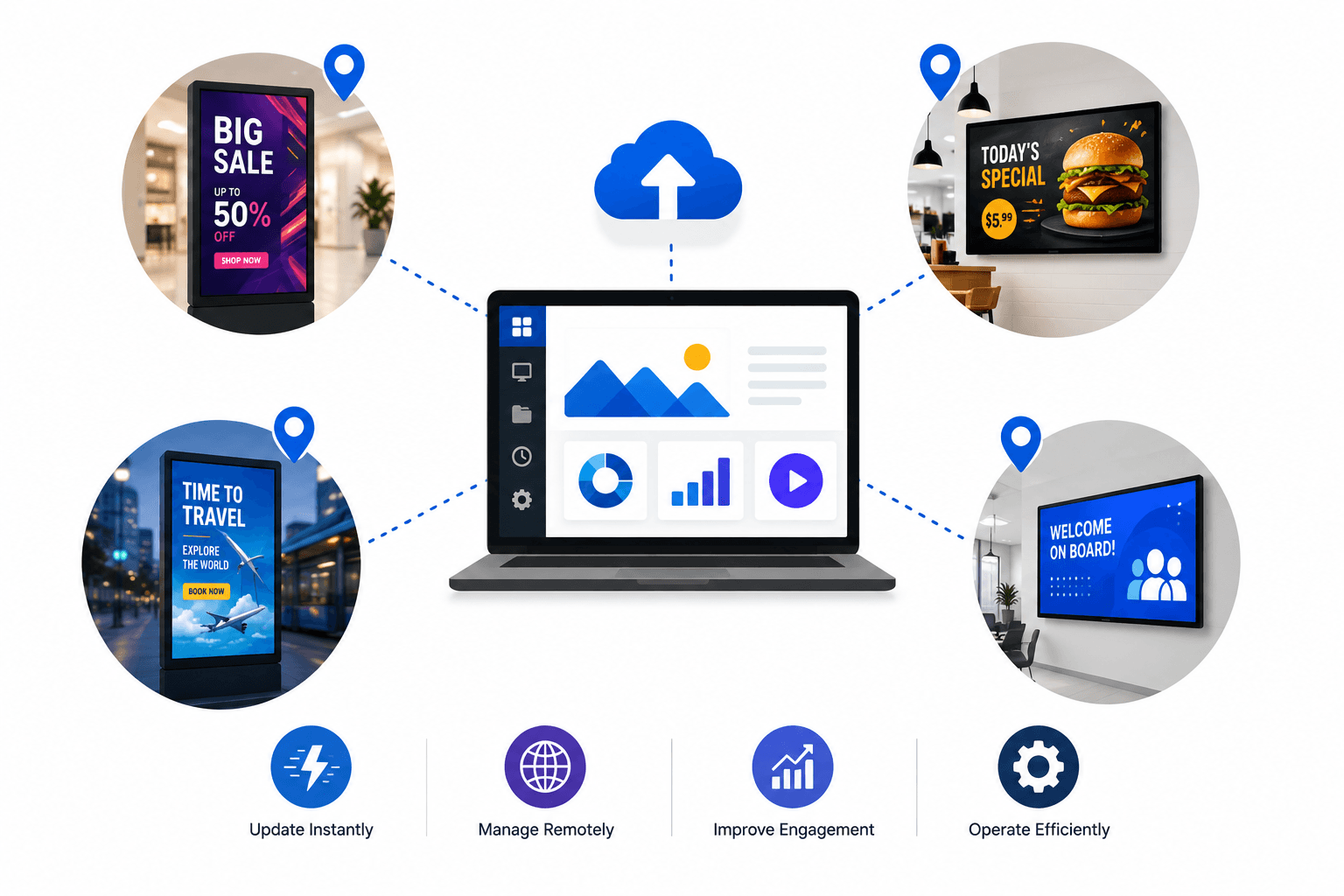
A digital signage player is a dedicated device that connects a display to a Content Management System (CMS). It acts as the bridge between cloud-managed content and the physical screen.
The player decodes and renders multimedia files stored locally or streamed over a network, enabling:
Real-time content updates
Scheduled playback automation
Remote screen management
Dynamic layout rendering
Without a signage player, screens cannot operate as part of a centralized digital signage network.
Types of Digital Signage Players
Selecting the right player depends on deployment size, infrastructure, and performance requirements.
Standalone Players
Operate independently using internal storage or USB-based content.
Best suited for:
Small businesses
Limited connectivity environments
Single-location setups
Networked Players
Connected to centralized servers or cloud platforms for remote updates and monitoring.
Ideal for:
Multi-location enterprises
Retail chains
Corporate networks
System-on-Chip (SoC) Displays
Built directly into the screen hardware, eliminating the need for external devices.
Advantages include:
Reduced installation complexity
Fewer hardware components
Cleaner deployment architecture
Specialized Players
Designed for advanced use cases such as interactive kiosks, outdoor displays, and video walls. These may include:
Touch support
Weather-resistant casing
High-performance graphics processing
Key Features to Consider
When evaluating digital signage players, focus on performance and scalability.
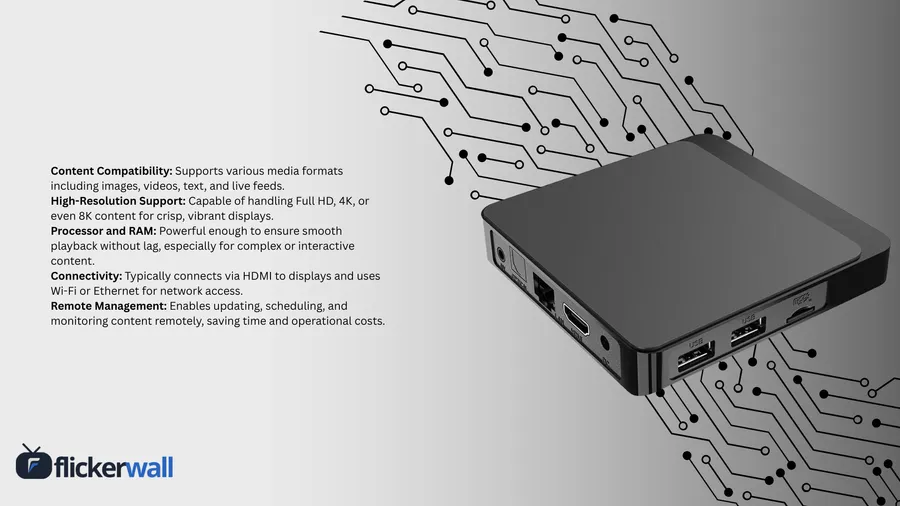
Content Compatibility
Support for images, videos, text overlays, RSS feeds, and live data streams.
High-Resolution Output
Full HD, 4K, or 8K playback capabilities for crisp visuals.
Processing Power and RAM
Ensures smooth playback of complex layouts and interactive content.
Connectivity Options
HDMI output, Wi-Fi, Ethernet, and cloud integration.
Remote Device Management
Centralized monitoring, scheduling, and updates across multiple screens.
Enterprise deployments require hardware that supports both current content needs and future scalability.
Why Businesses Choose Flickerwall
Flickerwall simplifies digital signage infrastructure by combining player compatibility with a robust cloud CMS.
Key advantages include:
QR-based screen onboarding
Remote content publishing
Dynamic layouts and zoned scheduling
Real-time monitoring and reporting
Enterprise-grade encryption and secure cloud storage
Seamless integrations with APIs, social platforms, calendars, and databases
The platform supports deployment across Android devices, Windows systems, and Smart TVs, reducing dependency on proprietary hardware.
How to Launch Your Signage Network
Deploying a digital signage system with Flickerwall follows a streamlined process:
Install the Flickerwall app on your display device.
Connect the screen to your account using secure authentication.
Upload content via the cloud dashboard.
Schedule, publish, and monitor screens remotely.
This approach minimizes IT overhead while enabling enterprise-scale control.
Building a Scalable Signage Infrastructure
Digital signage players determine how efficiently content reaches your audience. The right hardware ensures reliability, security, and seamless integration with your broader technology stack.
By combining flexible device compatibility with cloud-native management, Flickerwall enables organizations to scale signage networks without operational complexity.
Start your free trial today and deploy enterprise-ready digital signage in minutes — secure, scalable, and built for growth.