The Economics of Digital Screens: Cost vs Long-Term ROI
Breaking down investment, savings, and revenue impact of digital signage
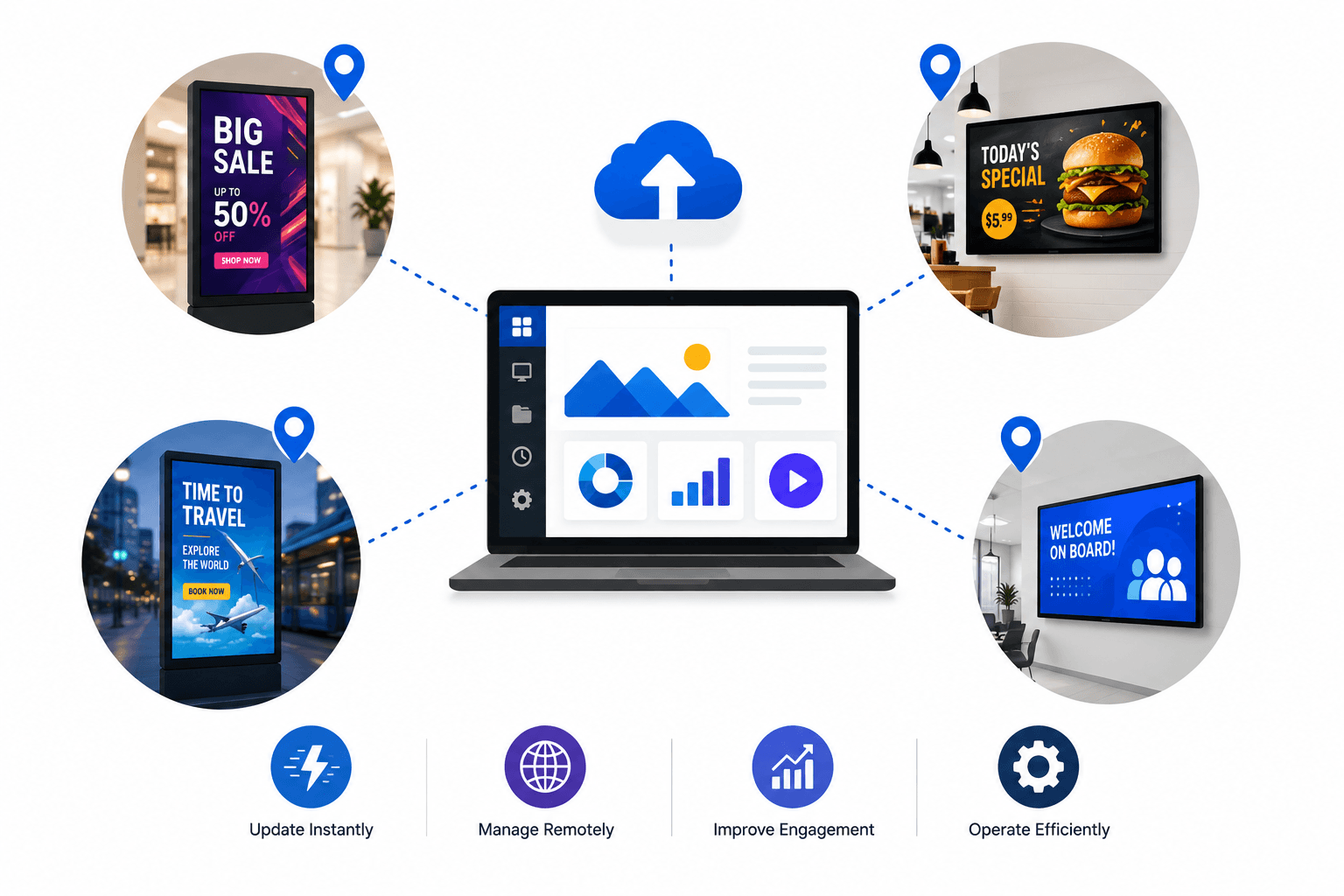
Digital signage is often evaluated purely as a hardware expense. In reality, it is a long-term business asset that influences revenue, engagement, and operational efficiency. Understanding its economics requires looking beyond upfront costs and focusing on measurable returns. This guide simplifies how businesses should approach digital signage ROI.
Written by
Sidharth Gaikwad
Read Time
2 minutes
Posted on
04/16/2026

Understanding the Cost Components
Digital signage investment includes:
Displays and hardware
Software licensing
Installation and setup
Content creation
While upfront costs vary, they are typically one-time or predictable.
Operational Cost Savings
Digital signage reduces recurring expenses.
Key savings include:
Printing costs
Manual updates
Logistics and distribution
Labor effort
Over time, these savings significantly offset initial investment.
Revenue Generation Opportunities
Digital signage directly contributes to revenue.
Examples:
Upselling and cross-selling
Dynamic pricing and promotions
Advertising space monetization
Increased dwell time
Strategic content drives measurable impact.
Measuring ROI Effectively
To evaluate ROI, track:
Sales uplift
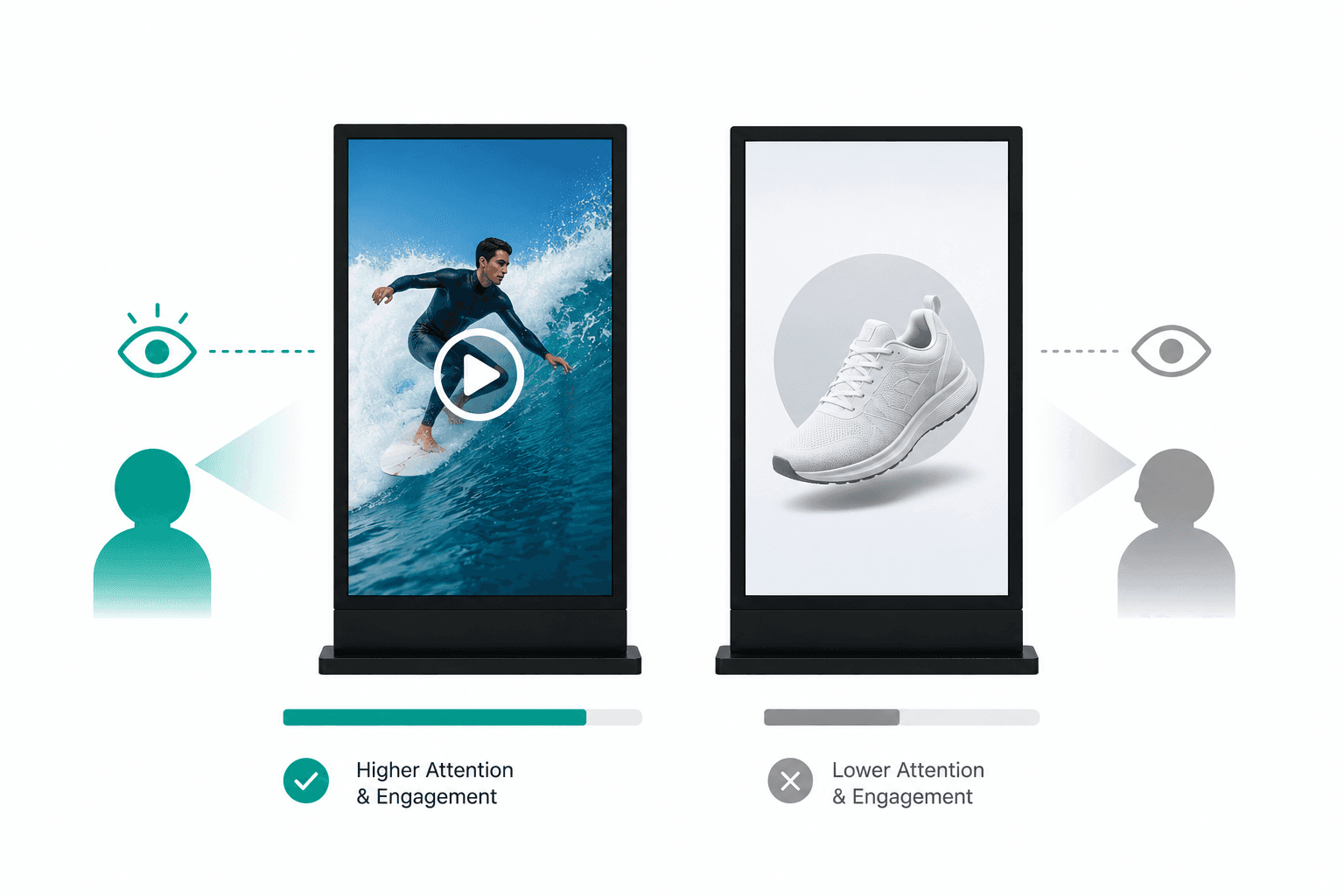
Customer engagement
Content performance
Cost savings
Data-driven insights help optimize performance continuously.
Conclusion
Digital signage should be viewed as a growth investment rather than an expense. When implemented strategically, it delivers both cost efficiency and revenue expansion.