Choosing Between Basic Signage and Enterprise Intelligence
How to evaluate digital signage platforms for scalability, security, and long-term ROI
Selecting the right digital signage platform directly impacts operational efficiency, brand consistency, and revenue performance. While entry-level tools help businesses get started, scaling requires infrastructure built for reliability and integration. PosterBooking and Flickerwall serve different segments of the market. Understanding their capabilities helps organizations align technology decisions with long-term growth goals.
Written by
Sidharth Gaikwad
Read Time
6 minutes
Posted on
05-09-2025
Platform Positioning
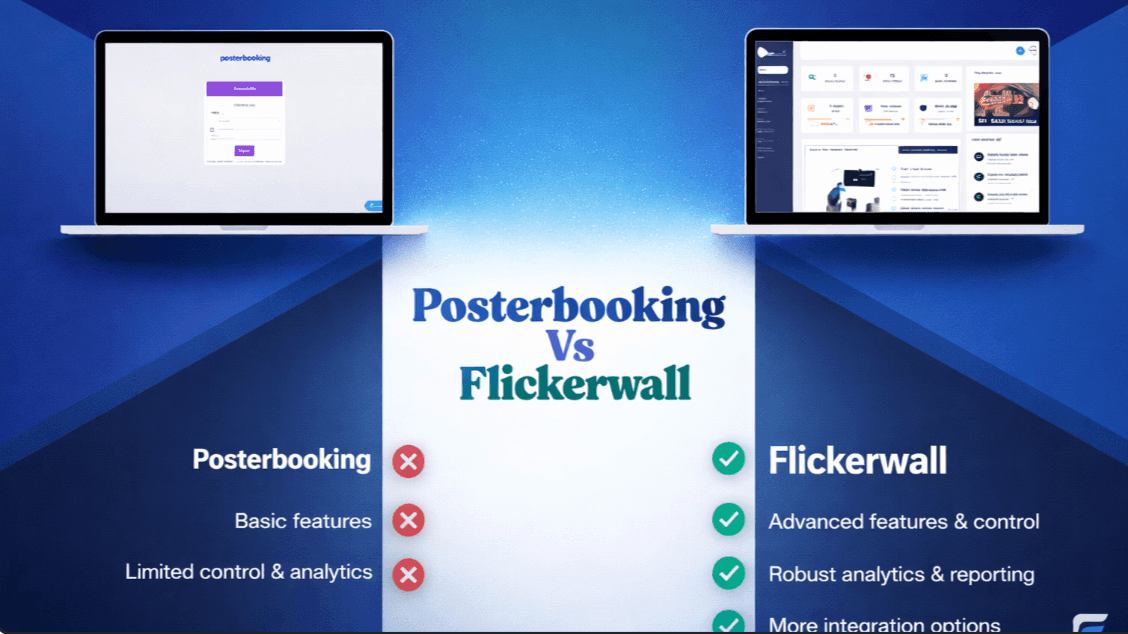
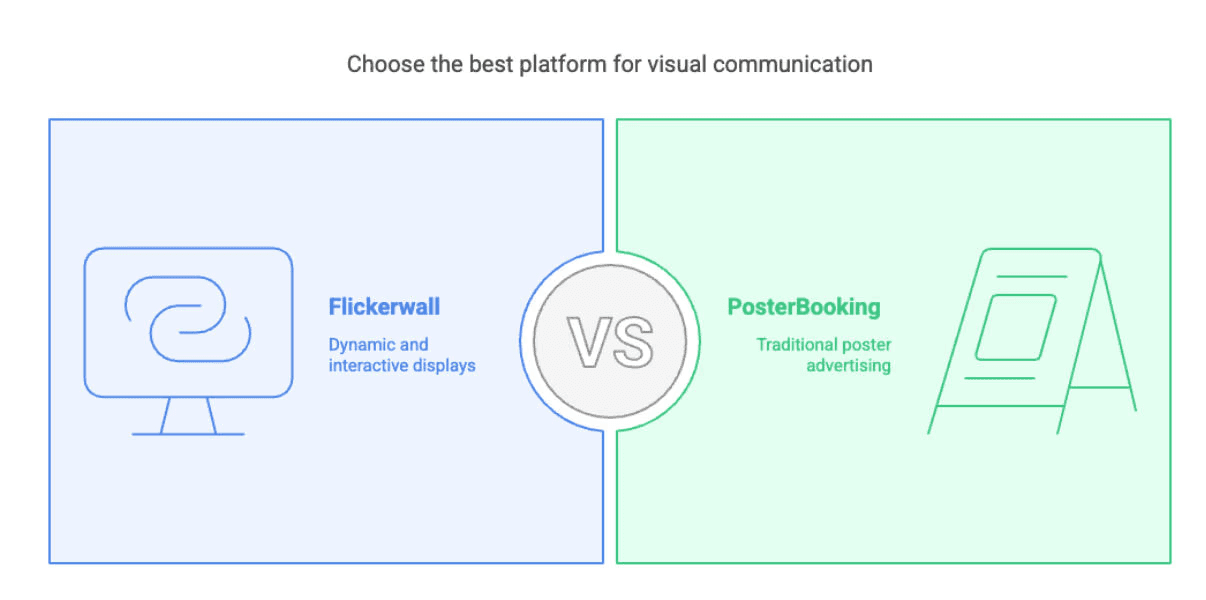
PosterBooking is widely recognized for its “10 free screens” model, making it attractive for startups and small businesses. It offers basic playlist scheduling and simple screen management.
Flickerwall, by contrast, is engineered for performance-driven organizations that require centralized control, security compliance, and measurable outcomes across multiple locations.
Content Management Capabilities
Effective content management determines how agile your signage network can be.
Flickerwall enables:
Day-parting and repeat scheduling rules
Multi-zone dynamic layouts
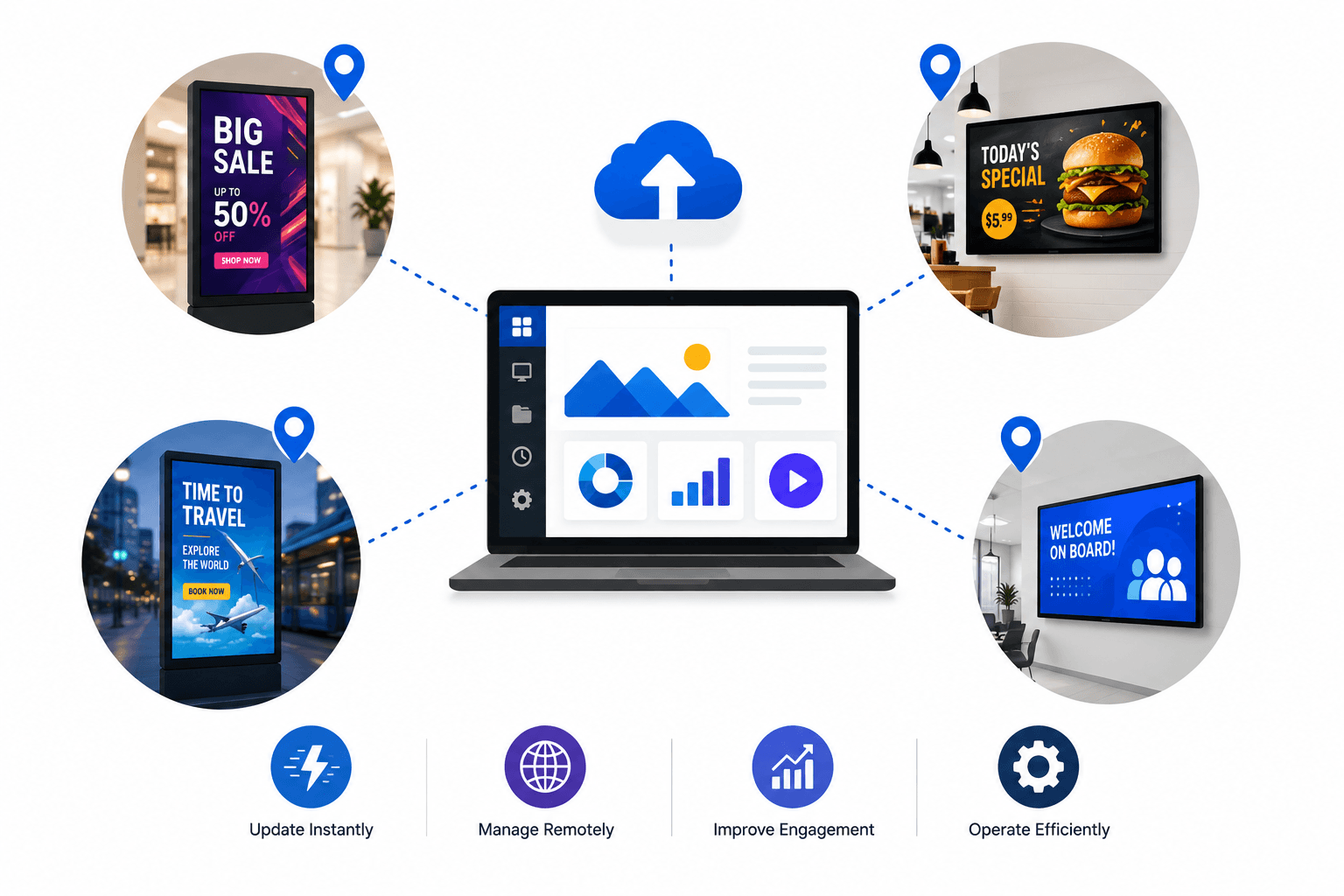
Real-time remote updates
Centralized control across hundreds of screens
PosterBooking focuses on simpler playlist and calendar-based scheduling, suitable for non-complex deployments.
Custom Layouts and Dynamic Zones
Modern screen networks demand more than static slideshows.
Flickerwall supports dynamic multi-zone layouts combining:
Videos and images
RSS feeds and social integrations
Weather and live applications
Custom app integrations
This flexibility allows brands to personalize content by location, time, and audience context. PosterBooking provides more limited layout customization.
Security and Reliability
Enterprise deployments require infrastructure-level assurances.
Flickerwall offers:
Military-grade encryption
Secure cloud architecture
99.99% uptime guarantee
Device-level monitoring and audit logs
PosterBooking provides standard security measures but does not position itself around enterprise-grade SLA commitments.
Analytics and Performance Tracking
Digital signage should be measurable.
Flickerwall includes advanced analytics such as:
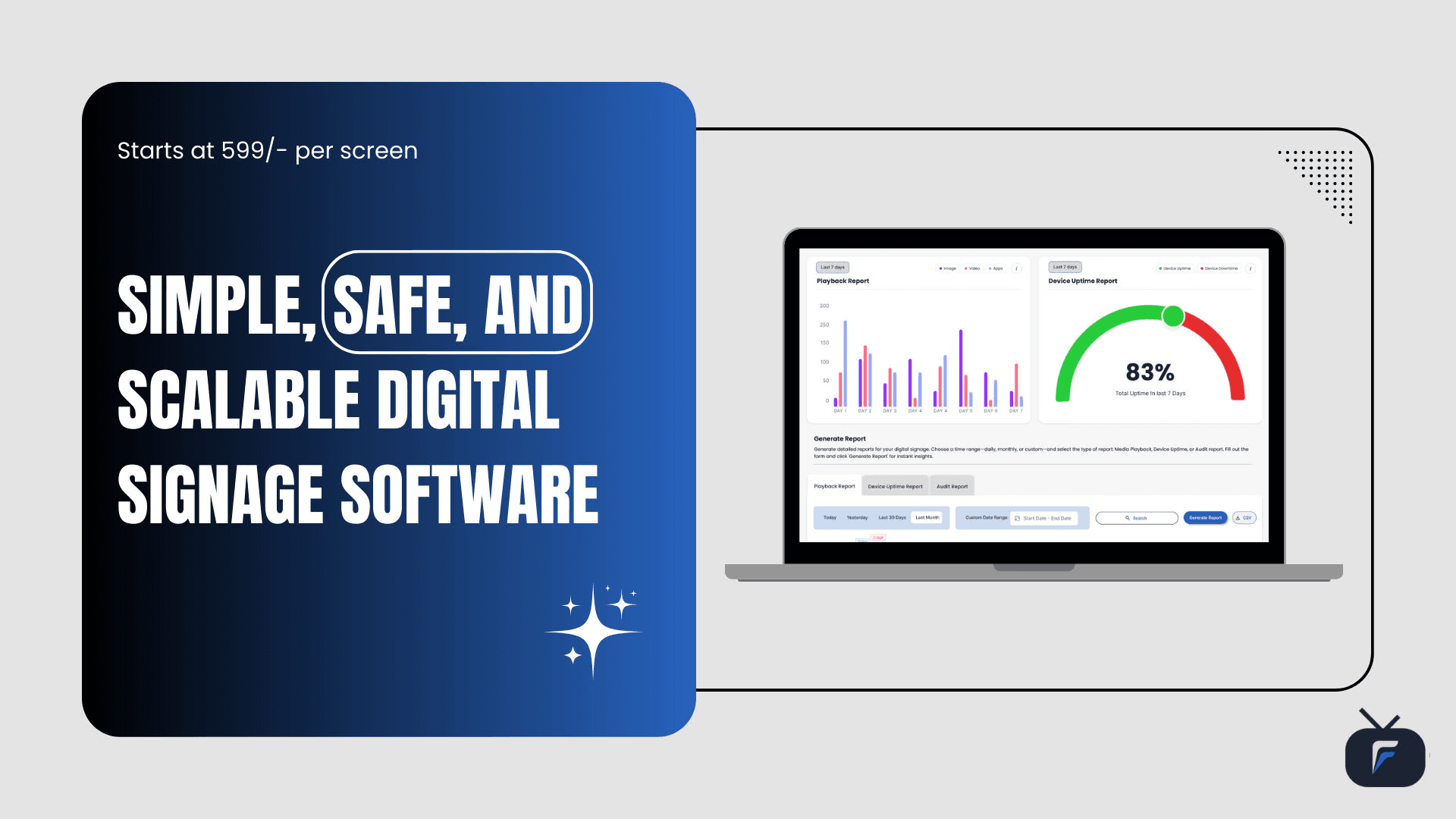
Device uptime reports
Media performance tracking
Audit trails
Operational insights for ROI optimization
PosterBooking offers limited reporting functionality, primarily focused on basic playback confirmation.
Integrations and Automation
Scalable organizations rely on interconnected systems.
Flickerwall integrates with:
REST API for custom workflows
Social feeds
Calendars
Weather data
External enterprise systems
This integration capability enables automation at scale, reducing manual intervention and improving operational efficiency.
Support and Enterprise Readiness
Dedicated support becomes critical as networks expand.
Flickerwall provides 24/7 live support and relationship management for enterprise accounts. This ensures continuity across deployments and minimizes downtime risk.
PosterBooking offers standard support channels suitable for smaller teams.
Performance and Scalability
For businesses operating across multiple cities or countries, performance consistency matters.
Flickerwall’s infrastructure supports:
Multi-location deployments
4K and Full-HD displays
Real-time synchronization
Large-scale network expansion
It is designed to evolve alongside retail chains, hospitality groups, healthcare networks, and global enterprises.
Conclusion: From Screens to Strategic Assets
PosterBooking is a practical starting point for small businesses experimenting with digital signage.
Flickerwall, however, is purpose-built for organizations that view screens as revenue-generating, data-driven infrastructure. With enterprise security, advanced analytics, and automation-ready integrations, it transforms digital signage into a measurable growth engine.
If your roadmap includes scale, performance accountability, and operational intelligence, it’s time to move beyond basic signage.
Start your free Flickerwall trial today and turn your screen network into a strategic enterprise asset.