Understanding GST in Digital Signage India
A practical overview of taxation and billing structure for signage businesses
As digital signage adoption increases across industries in India, GST and billing have become critical operational considerations for businesses in this space. From SaaS platforms to advertising networks and hardware providers, each component of digital signage falls under specific tax treatments. Understanding how GST applies is essential not just for compliance, but also for building efficient and scalable business operations.
Written by
Sidharth Gaikwad
Read Time
4 minutes
Posted on
04/05/2026
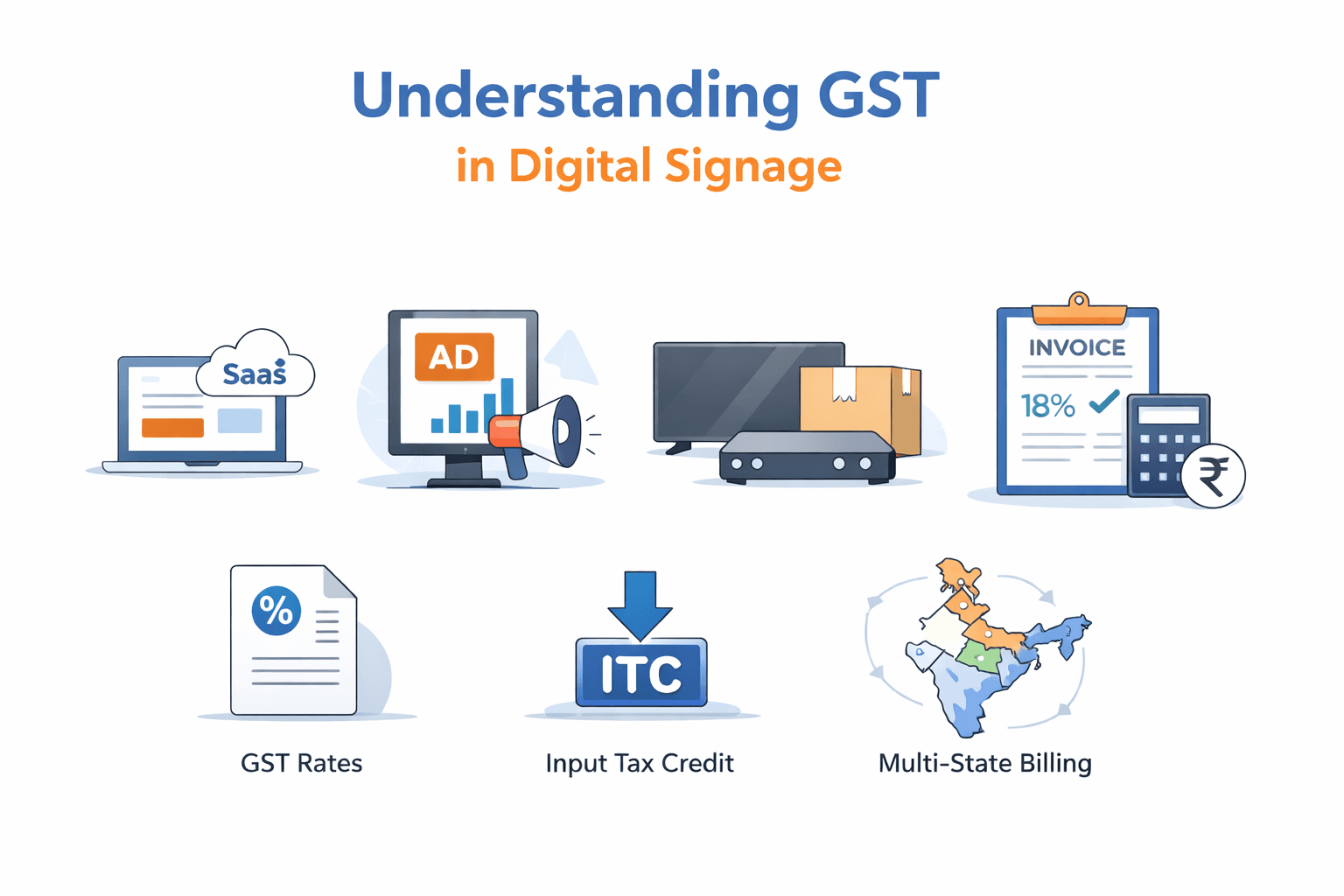
How GST Applies to Digital Signage
Digital signage spans multiple business layers, which means GST is applied based on the nature of the offering.
These typically include:
Software platforms (CMS / SaaS)
Advertising services (DOOH campaigns)
Hardware (screens, media players)
Managed services and support
Each of these is treated differently under GST, making clarity important.
GST on Software and SaaS Platforms
Digital signage software is generally categorized as a service.
In most cases:
It is taxed at 18% GST
It is billed as a recurring subscription
GST must be clearly mentioned in invoices
This is especially important for SaaS companies managing multiple clients and recurring billing cycles.
GST on Hardware Components
Hardware forms a significant part of digital signage infrastructure.
This includes:
Display screens
Media players
Mounting and networking equipment
These are treated as goods and may have different GST rates depending on classification. Proper invoicing ensures accurate taxation and eligibility for input tax credit.
GST in DOOH Advertising
Digital Out-of-Home advertising is treated as a service under GST.
This typically covers:
Selling advertising space on screens
Campaign execution
Programmatic ad delivery
Most of these services fall under the 18% GST bracket, though structuring of contracts can impact classification.
Input Tax Credit (ITC) in Digital Signage
GST allows businesses to claim input tax credit on eligible expenses.
This includes:
Hardware purchases
Software subscriptions
Business-related operational costs
Efficient use of ITC can reduce overall tax liability and improve margins.
Billing Structure in Digital Signage
Billing in digital signage often involves multiple components.
A clear structure usually includes:
Separate line items for hardware and services
Clearly defined GST rates
Transparent pricing breakdown
This helps avoid confusion and ensures compliance across transactions.
Multi-State Considerations
Many digital signage businesses operate across cities or states.
This introduces factors such as:
Place of supply rules
Interstate billing implications
GST registration requirements
Understanding these ensures smoother expansion and avoids compliance risks.
Common Challenges Businesses Face
Despite clear GST guidelines, businesses often face issues due to complexity.
Common challenges include:
Misclassification of services
Incorrect GST application
Poor billing structure
Missed input tax credit opportunities
Addressing these early improves operational efficiency.
Conclusion
GST and billing are essential components of running a digital signage business in India. Rather than being a constraint, a clear understanding of taxation enables better pricing, smoother operations, and scalable growth.
As the ecosystem evolves, businesses that structure their billing and GST processes correctly will be better positioned to expand and operate efficiently.
Call to Action:
If you're scaling a digital signage network, Flickerwall helps streamline operations—from screen management to monetization—making it easier to manage complex workflows as your business grows.