How Businesses Use Digital Screens to Increase Revenue
Understanding the strategies companies use to turn digital displays into revenue-generating tools.
Businesses today compete not only on products but also on how effectively they communicate with customers. Digital screens have become a powerful tool that helps companies influence purchasing decisions and highlight key promotions inside physical spaces. Unlike traditional posters, digital displays allow businesses to update messaging instantly and run multiple campaigns on a single screen. When used strategically, these screens become a powerful driver for engagement, promotions, and revenue growth.
Written by
Sidharth Gaikwad
Read Time
4 minutes
Posted on
03/07/2026
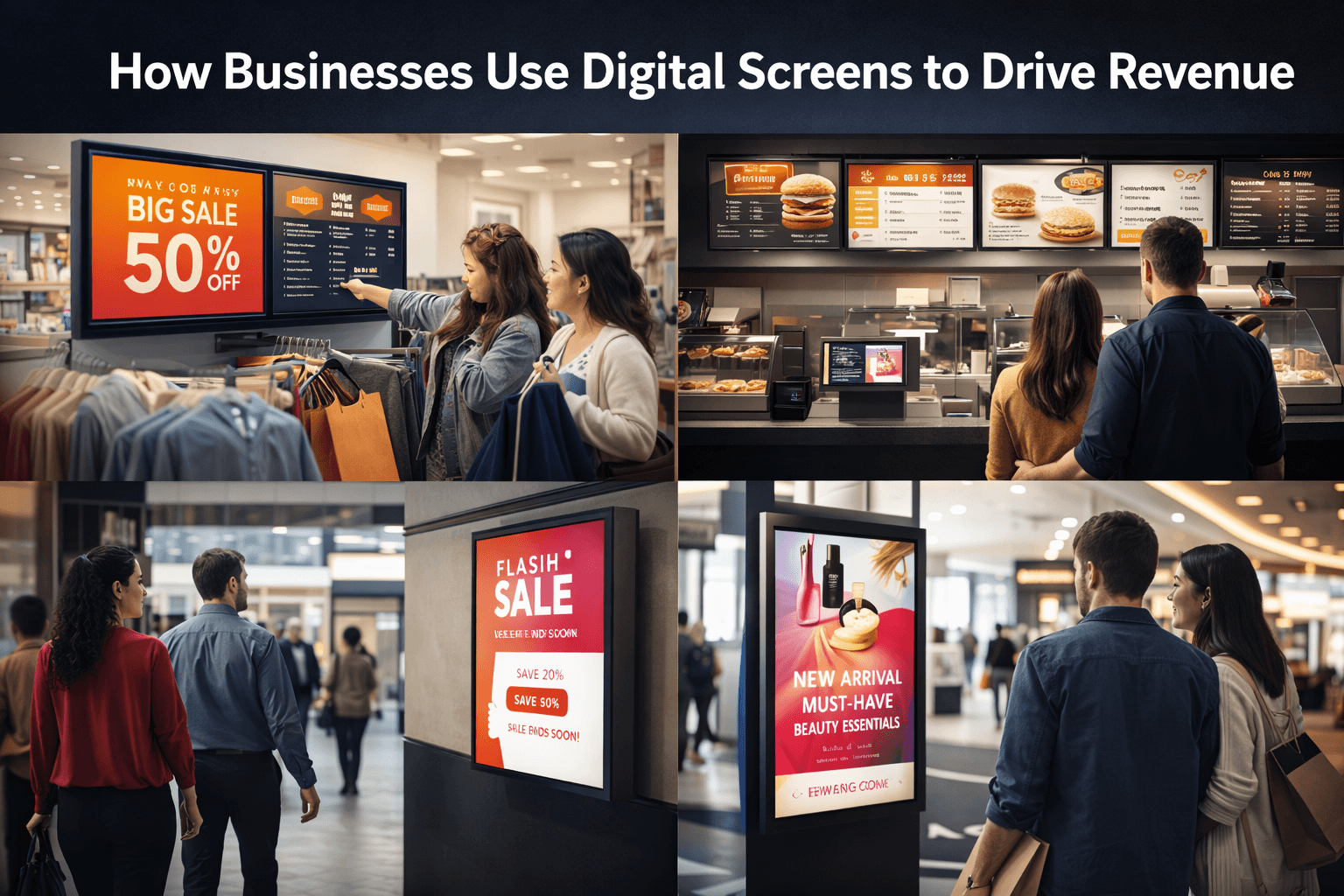
Product Promotion and Upselling
One of the most common uses of digital screens is promoting products and encouraging upsells.
Retail stores and restaurants often display high-margin items or limited-time offers on screens placed near customer decision points.
Examples include:
combo meal promotions in restaurants
featured products in retail stores
seasonal offers and discounts
These visual prompts encourage customers to consider additional purchases.
Businesses that want to manage promotions efficiently across screens often rely on digital signage software to schedule and control campaigns.
Increasing Visibility for Promotions
Many promotions fail simply because customers do not notice them.
Digital displays solve this problem by placing promotional content in high-visibility areas inside stores or service locations.
Businesses use screens to highlight:
limited time discounts
bundle offers
new product launches
loyalty program benefits
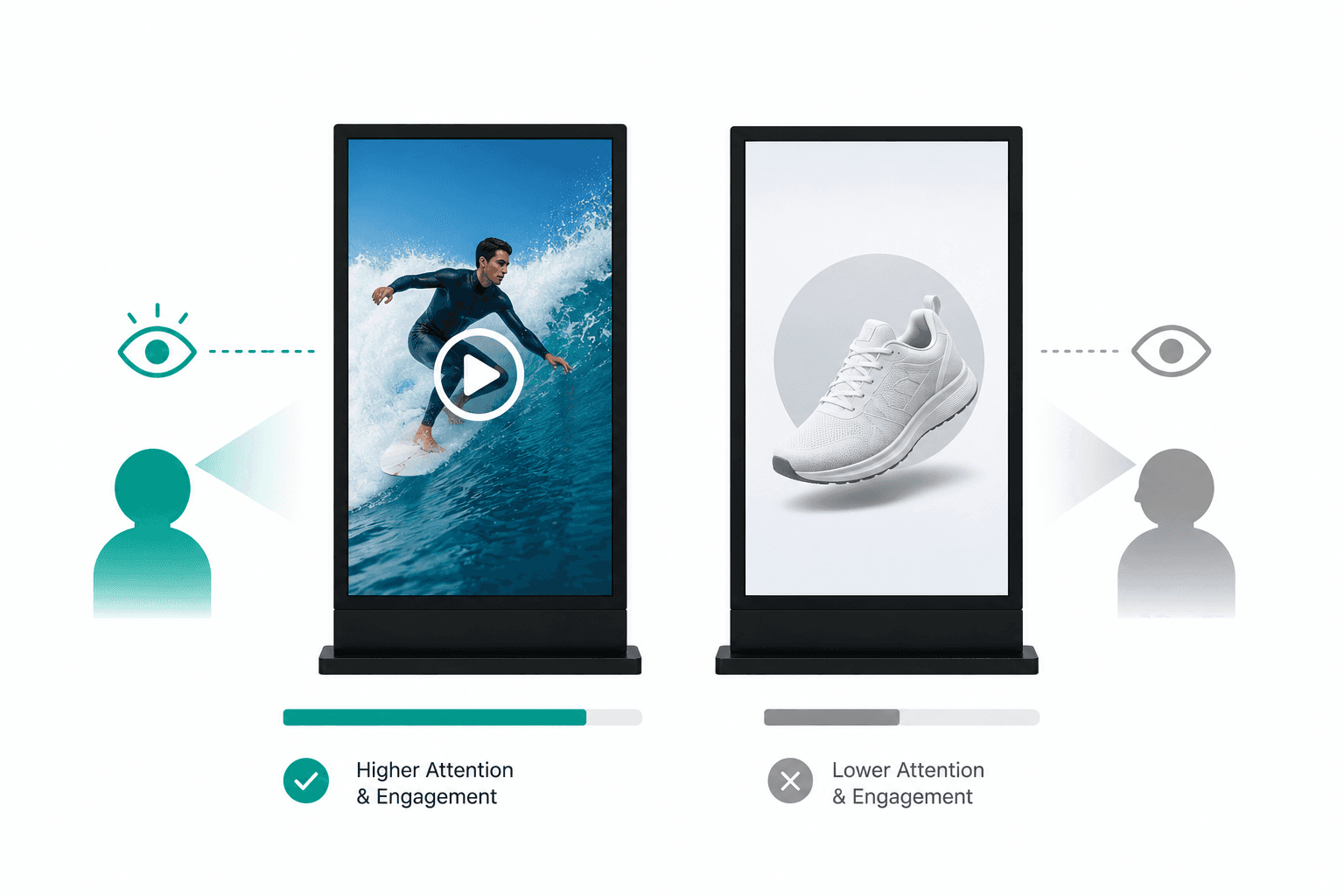
Compared to printed posters, digital displays attract more attention and can rotate multiple promotional messages.
Before implementing large screen networks, many organizations evaluate the digital signage cost in India to plan their deployment strategy.
Improving Customer Experience
Digital screens also improve customer experience by delivering useful information quickly.
Businesses often display:
menus and pricing
waiting times
directions inside large facilities
service announcements
Providing this information visually reduces confusion and improves customer satisfaction.
Small businesses sometimes begin with simple offline setups such as USB digital signage for shops, especially when operating a single display.
Driving In-Store Advertising
Some businesses monetize their screens by selling advertising space to brands or partners.
Retail stores, malls, and supermarkets often run advertisements on digital screens placed near checkout areas or high-traffic sections.
This allows businesses to generate additional revenue while using existing screen infrastructure.
Companies evaluating screen strategies often compare digital signage software vs CMS to understand which platform is suitable for managing display networks.
Managing Campaigns Across Multiple Locations
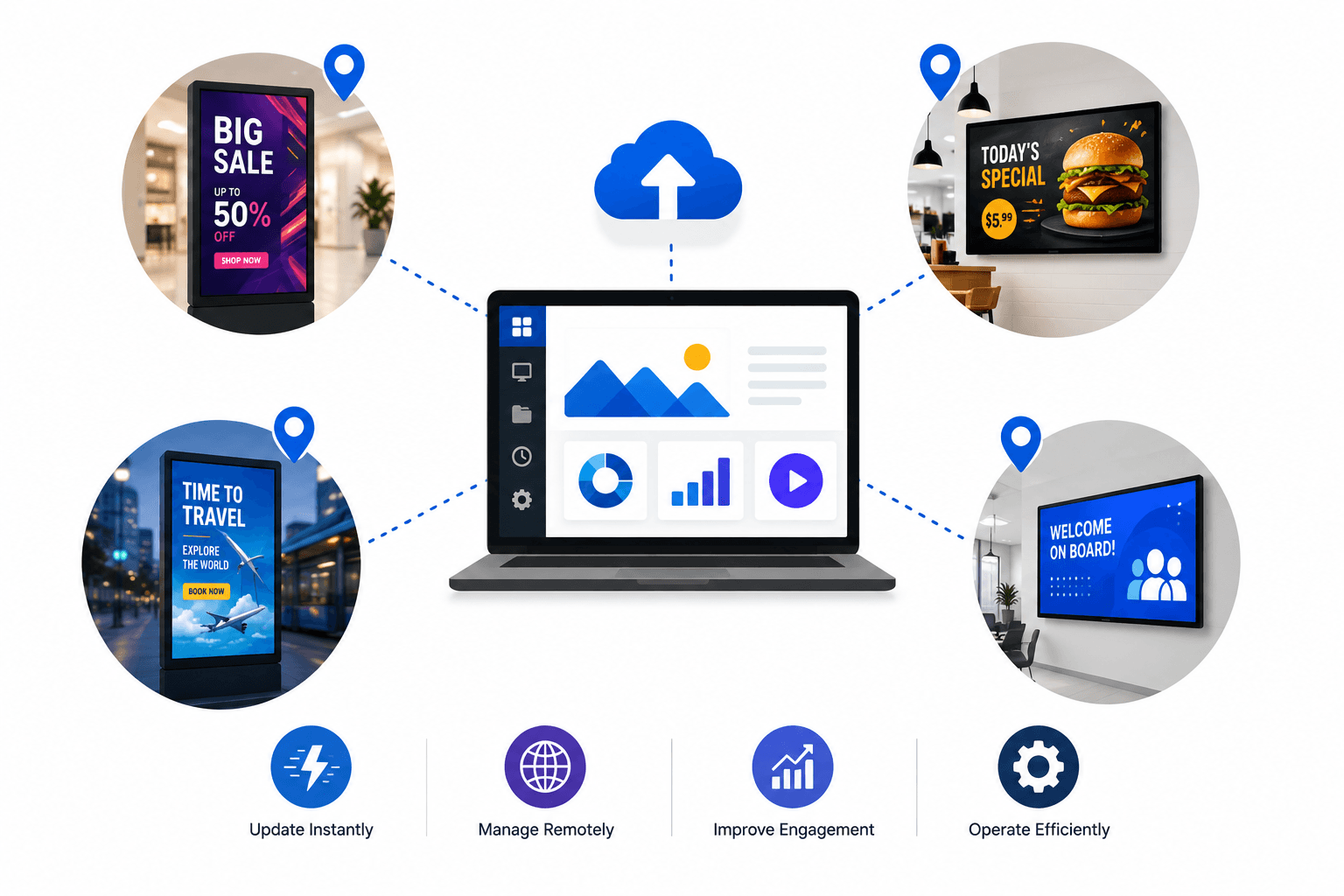
For businesses operating multiple branches, digital screens provide a consistent way to run marketing campaigns across locations.
Marketing teams can launch promotions simultaneously across dozens or even hundreds of screens.
Benefits include:
consistent brand messaging
faster campaign deployment
centralized content management
easier updates across locations
This centralized control becomes essential for growing businesses.
Using Data and Scheduling for Smarter Campaigns
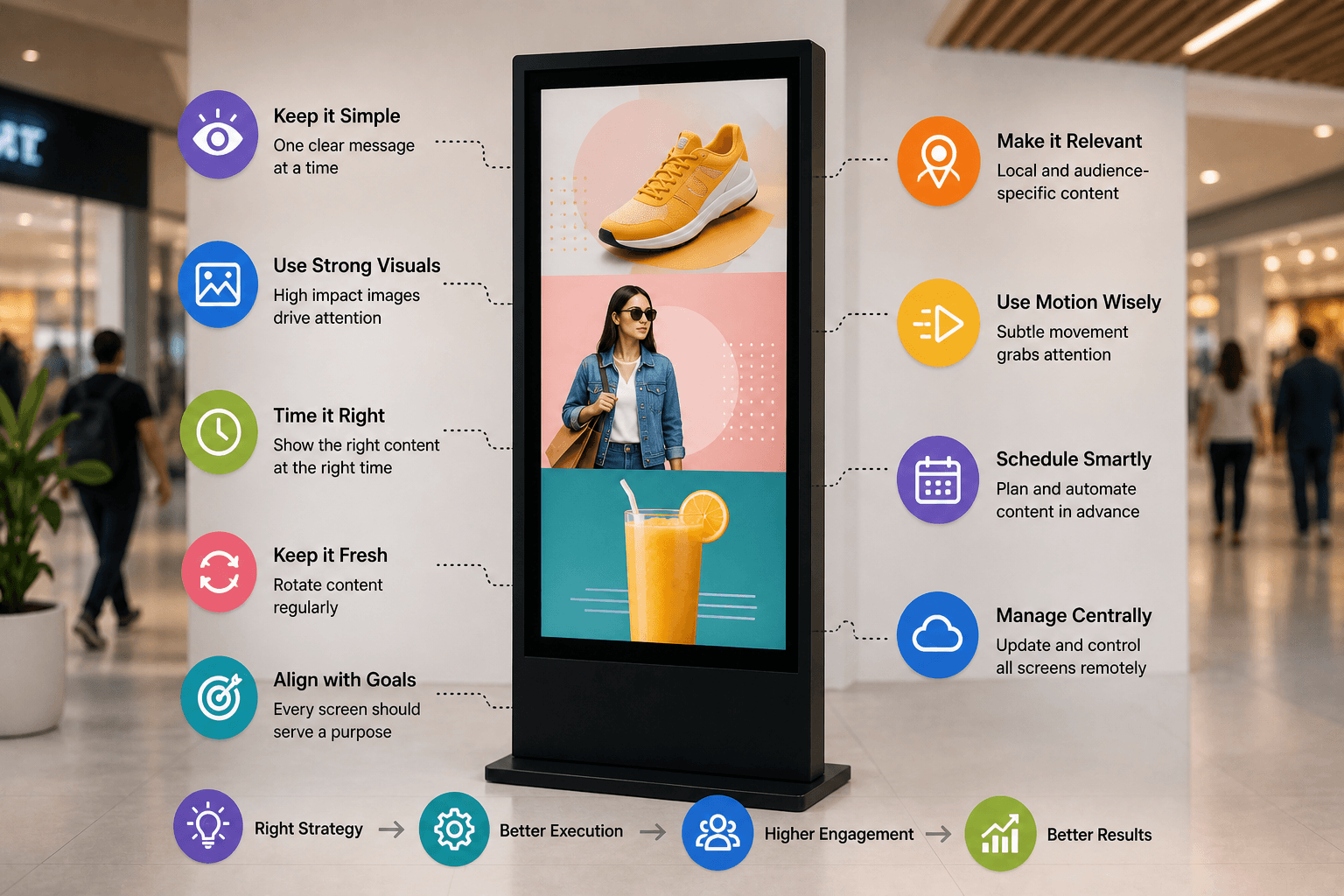
Modern digital signage platforms allow businesses to schedule content based on time or campaign requirements.
Examples include:
breakfast menu promotions in the morning
lunch offers during midday hours
evening promotions for high-margin products
Scheduling content ensures that customers always see the most relevant messaging at the right time.
Conclusion
Digital screens have evolved from simple display tools into strategic marketing assets for modern businesses. When used effectively, they help companies promote products, highlight offers, improve customer experience, and generate additional revenue.
As organizations expand their use of digital displays, managing screen content efficiently becomes increasingly important.
Businesses looking to scale screen networks and automate campaigns can benefit from digital signage platforms like Flickerwall, which provide centralized content management and help organizations turn displays into revenue-driving communication channels.