Images vs Videos: What Works Better on Screens
A practical comparison of content formats for engagement, clarity, and scale
Digital signage content strategy often comes down to one key decision: should you use images or videos? While videos are often seen as more engaging, they are not always the most effective choice. In many scenarios, static visuals outperform motion content due to clarity and speed of communication. Understanding the strengths and limitations of each format is essential for building high-performing display networks.
Written by
Sidharth Gaikwad
Read Time
3 minutes
Posted on
04/06/2026
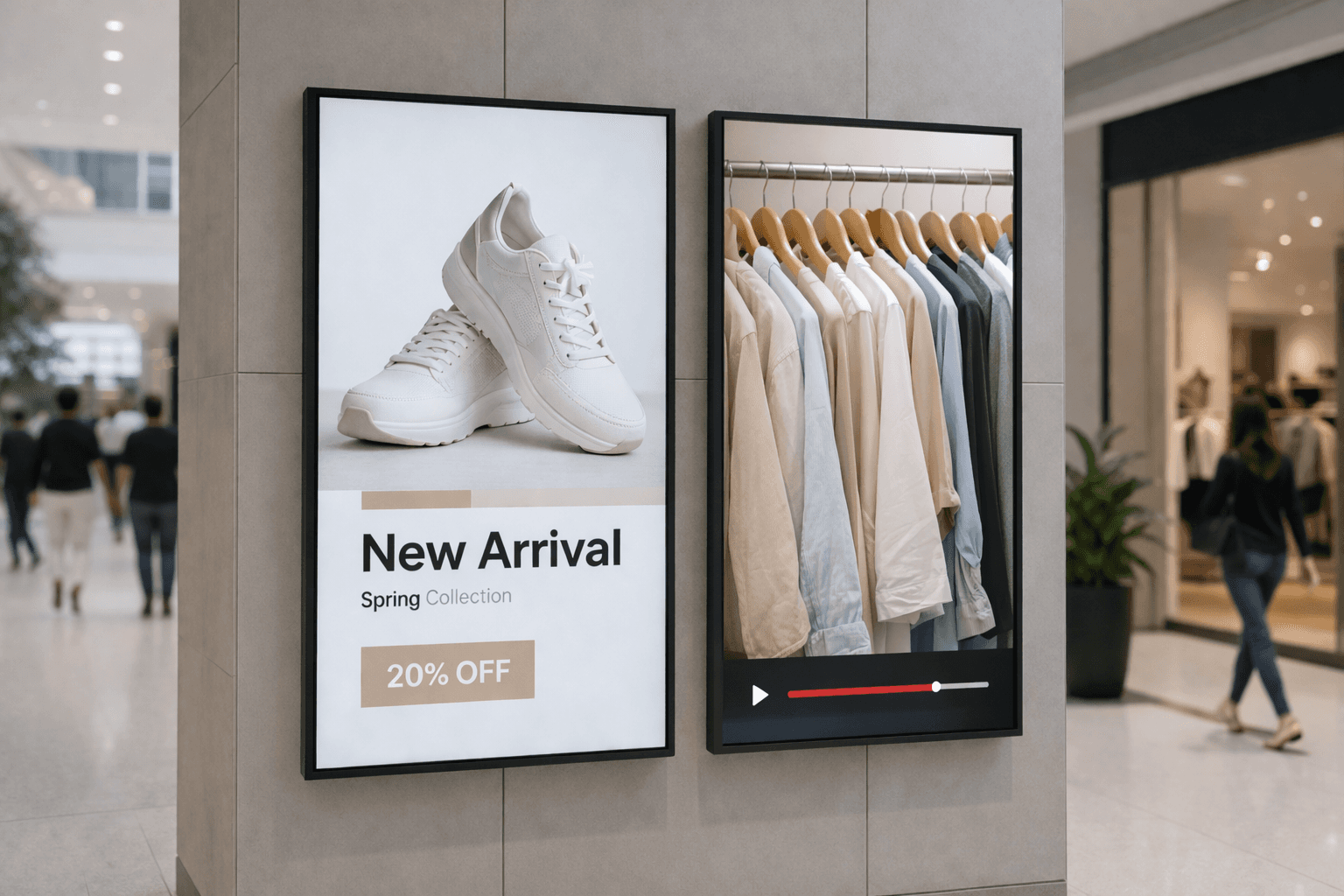
How Images Perform on Digital Screens
Images are fast, clear, and easy to consume, making them highly effective in high-traffic environments.
Key advantages:
Instant readability
Lower cognitive load
Faster message delivery
Minimal distraction
Best use cases:
Promotions and offers
Pricing and product highlights
Wayfinding and directions
Simple announcements
Images are ideal when viewers have only a few seconds to engage.
How Videos Perform on Digital Screens
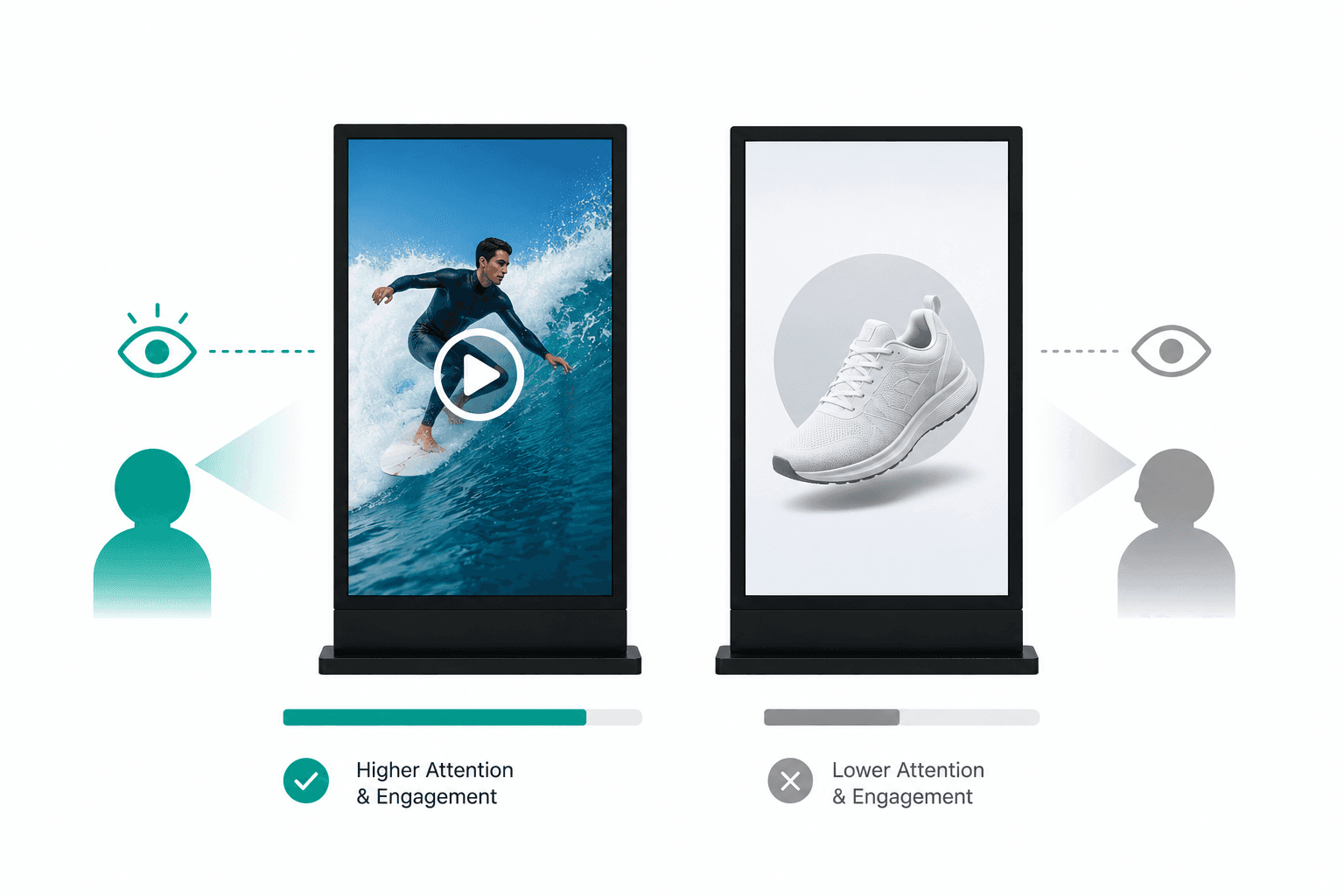
Videos capture attention through motion, storytelling, and dynamic visuals.
Key advantages:
Higher engagement levels
Better storytelling capability
Stronger emotional impact
Increased brand recall
Best use cases:
Brand storytelling
Product demonstrations
Ambient or experiential environments
Longer dwell-time locations
However, videos require more attention and time to be effective.
Key Performance Differences
Factor | Images | Videos |
|---|---|---|
Attention Span | Short | Medium to Long |
Clarity | High | Medium |
Engagement | Medium | High |
Load Time | Fast | Slower |
Best Environment | High traffic | Dwell zones |
This comparison highlights that performance depends on context, not just format.
When to Use Images vs Videos
Use Images When:
Audience is moving quickly
Message needs instant clarity
Screen time per viewer is low
Information is simple and direct
Use Videos When:
Audience dwell time is higher
Storytelling is important
Brand experience matters
You want to create visual impact
Choosing the wrong format can reduce effectiveness even with great content.
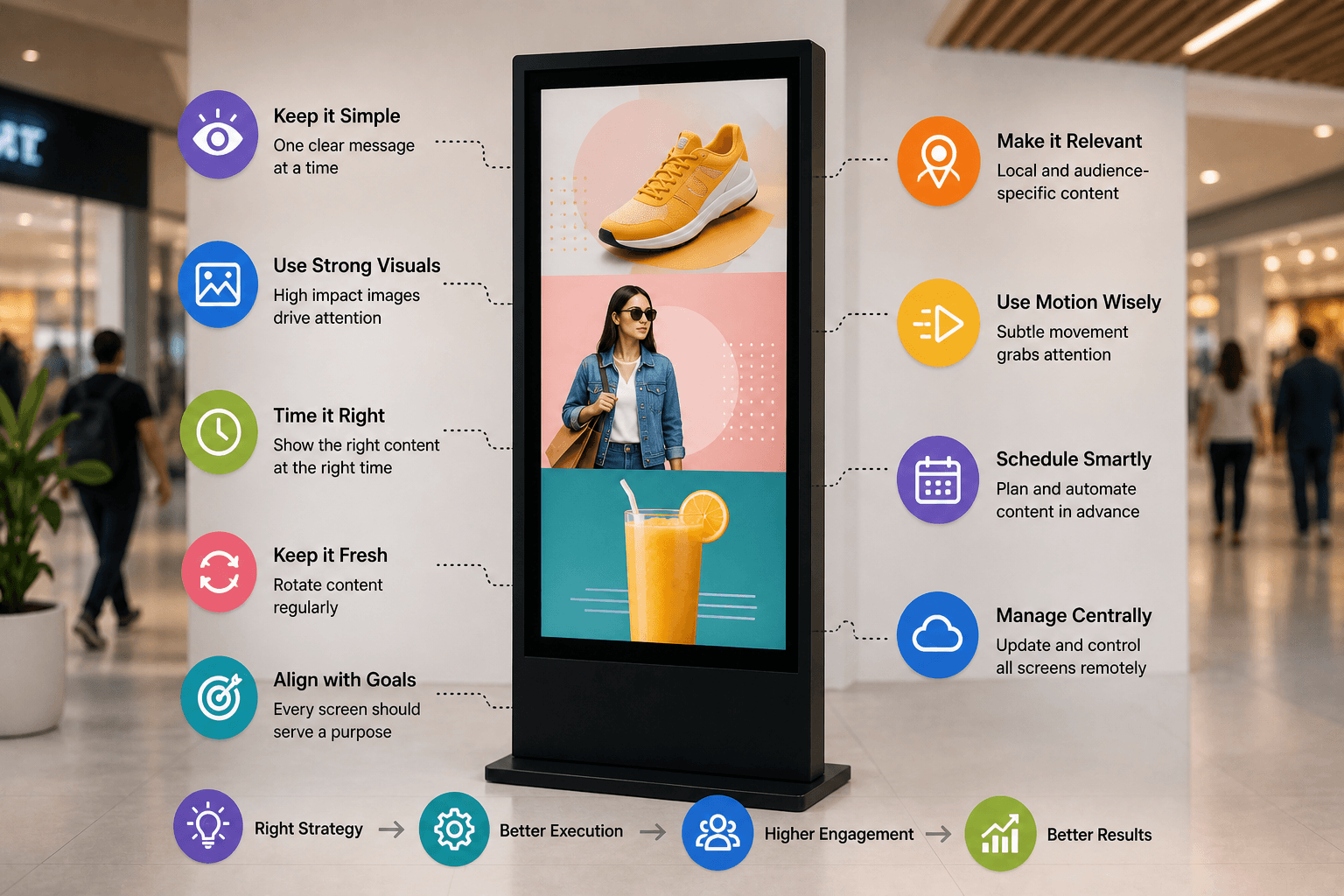
Best Practice: Combine Both Formats
The most effective digital signage strategies use a mix of images and videos.
Recommended approach:
Use images for quick, high-impact messaging
Use short videos (5–10 seconds) for engagement
Alternate formats to maintain viewer interest
Optimize content based on location and audience behavior
A hybrid approach ensures both clarity and engagement.
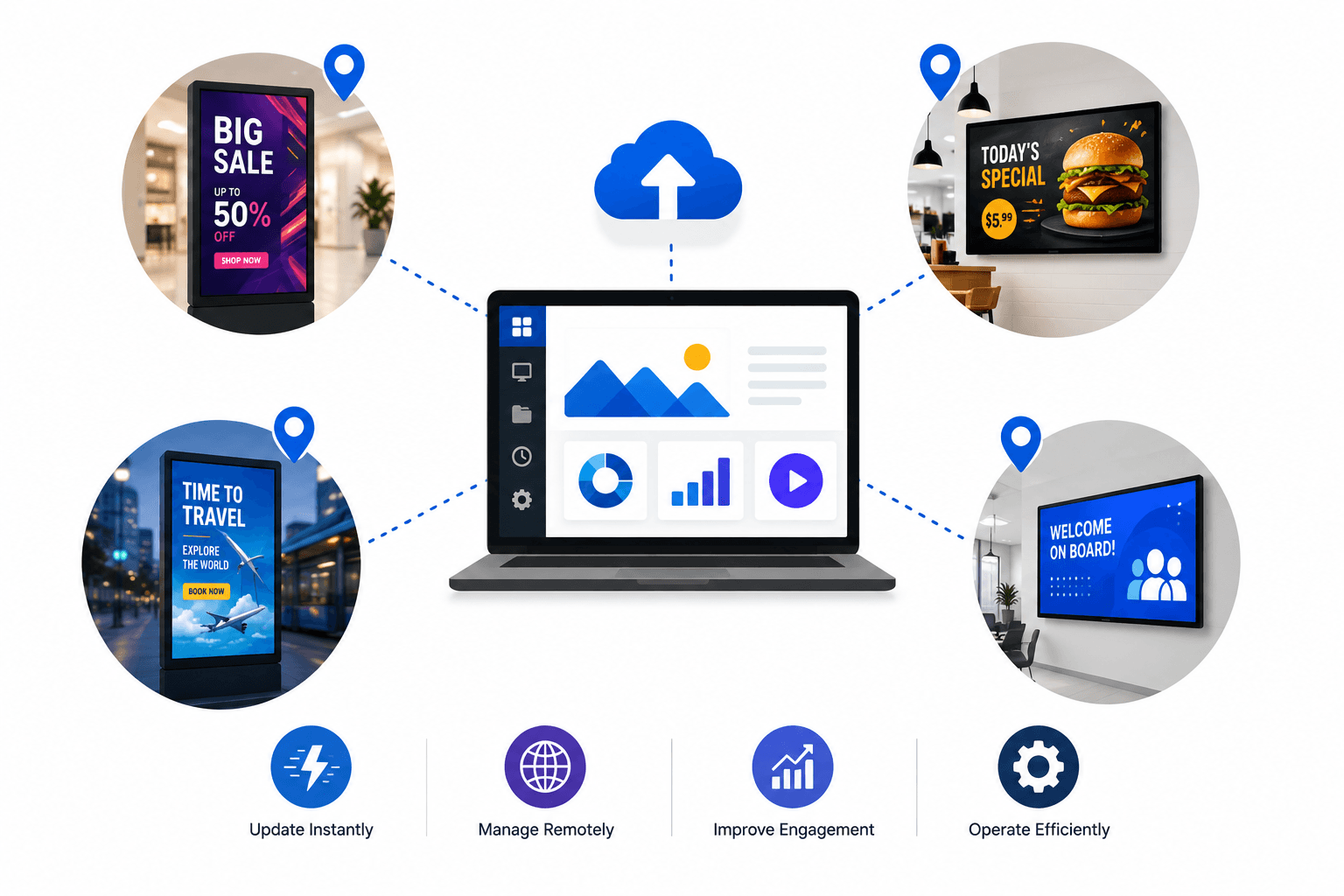
How Flickerwall Optimizes Content Performance
Managing mixed content formats across multiple screens requires a robust CMS.
Flickerwall enables:
Seamless image and video scheduling
Automated content rotation
Performance optimization across locations
Real-time updates and control
This ensures the right format is shown at the right time.
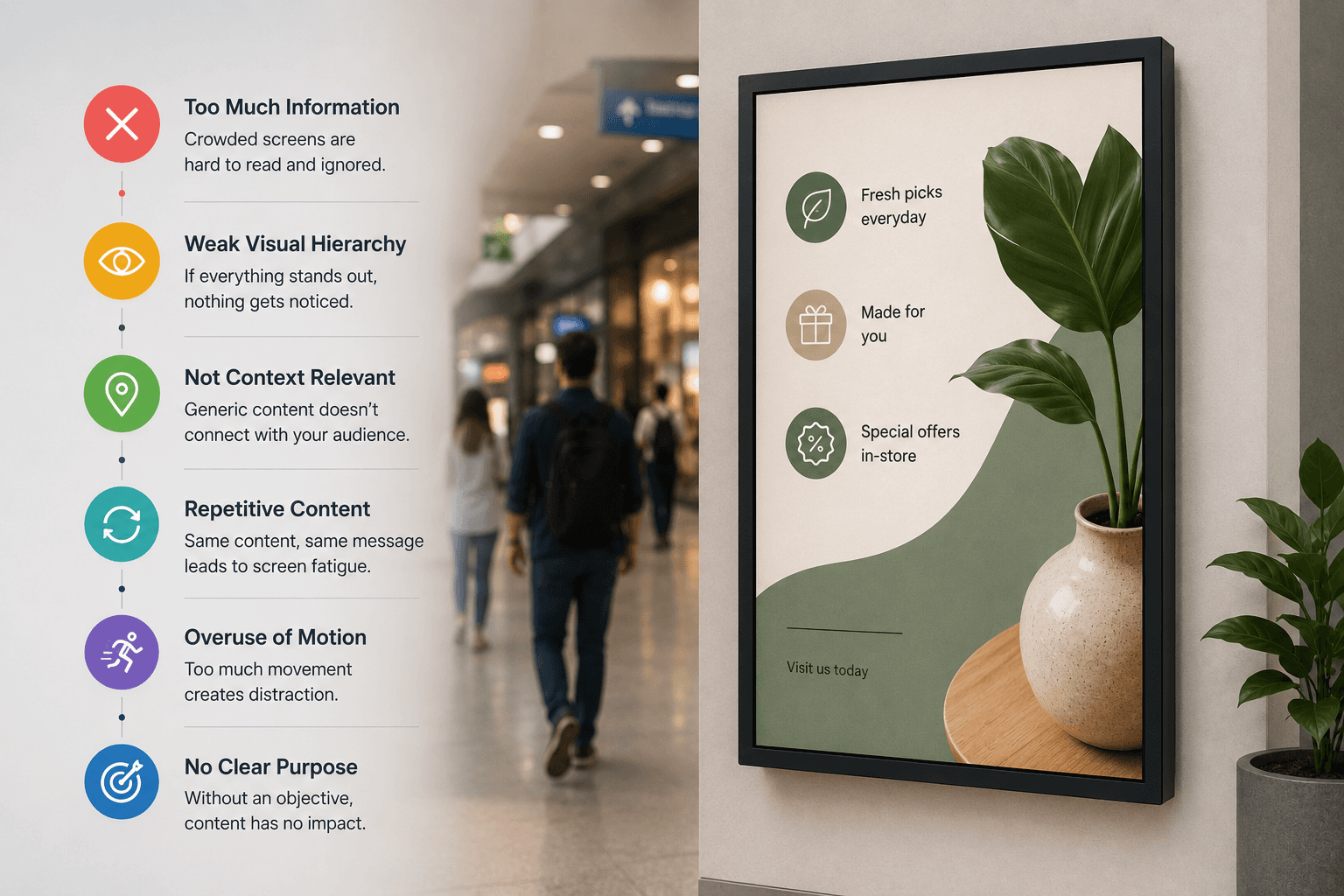
Common Mistakes to Avoid
Using long videos in high-traffic areas
Overloading screens with motion content
Ignoring audience dwell time
Not optimizing file sizes for performance
Lack of content variation
Avoiding these mistakes improves both engagement and ROI.
Conclusion: Context Drives Performance
There is no universal winner between images and videos. The best-performing format depends on context, audience behavior, and business objectives.
A strategic mix of both formats ensures maximum impact across digital screens.
Flickerwall helps businesses deliver optimized content strategies at scale, ensuring every screen performs efficiently.
Start optimizing your digital signage content with the right mix of images and videos today.