Strengthening Workplace Security Through Smart Signage
Leveraging real-time alerts and IoT integration to protect physical and digital assets
Workplace safety extends far beyond fire alarms and surveillance cameras. Organizations must address physical hazards, cybersecurity risks, and regulatory compliance simultaneously. Digital signage introduces a centralized communication layer that delivers instant safety updates, emergency instructions, and operational alerts across the workplace. When integrated strategically, it becomes a core component of enterprise risk management.
Written by
Sidharth Gaikwad
Read Time
5 minutes
Posted on
03-19-2025
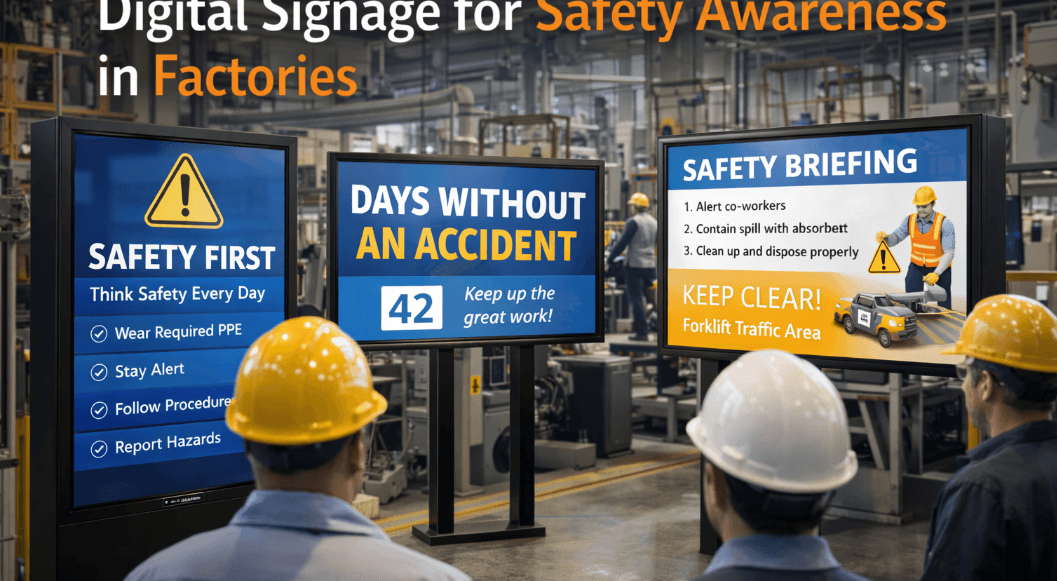
Reinforcing Safety Protocols Across Facilities
Consistent visibility reduces accidents and improves preparedness.
Digital signage can display:
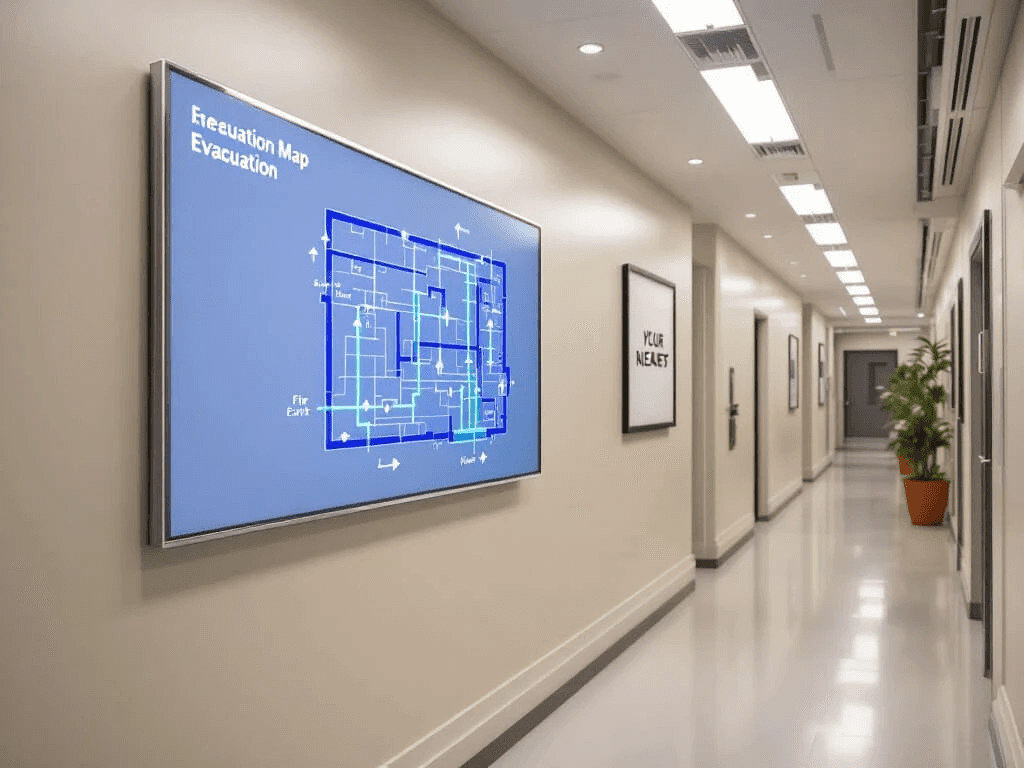
Evacuation maps and fire exit routes
Safety guidelines and best practices
Step-by-step emergency procedures
Frequent visual reinforcement strengthens employee awareness and readiness.
Delivering Real-Time Hazard Alerts
High-risk environments such as factories, labs, and construction sites require dynamic communication.
Integrated signage systems can:
Display gas leak warnings
Highlight extreme temperature alerts
Notify teams about unsafe noise levels
In emergency scenarios, screens can instantly switch to evacuation instructions and safe-zone routing.
Promoting Safety Metrics and Accountability
A measurable safety culture improves engagement and compliance.
Organizations can use signage to:
Display days without incidents
Encourage reporting of near-misses
Recognize safety milestones
Visibility reinforces accountability and motivates proactive behavior.
Optimizing Traffic Flow and Crowd Management
Large campuses and facilities often face congestion challenges.
Digital signage helps by:
Directing foot traffic during peak hours
Indicating parking availability
Identifying secure entry and exit points
Improved flow reduces confusion and potential safety risks.
Enabling Rapid Emergency Communication
During crises, speed and clarity are critical.
Digital signage supports:
Real-time exit directions
Identification of restricted zones
Automated alerts from fire or security systems
Centralized communication ensures coordinated and informed response.
Enhancing Cybersecurity Awareness
Security threats are no longer limited to physical spaces.
Screens in high-traffic areas can display:
Phishing awareness reminders
Password security guidelines
Safe online practice tips
Frequent reinforcement keeps digital risk prevention top of mind.
Broadcasting Immediate Security Alerts
In the event of cyber incidents, rapid internal communication is essential.
Digital signage can:
Alert employees to potential breaches
Provide instructions to log out or update credentials
Notify teams of temporary system shutdowns
This reduces vulnerability and accelerates containment efforts.
Supporting Regulatory Compliance
Industries such as healthcare, finance, and manufacturing operate under strict regulations.
Digital signage assists by:
Displaying compliance reminders
Breaking down complex policies into visual summaries
Reinforcing audit readiness procedures
Clear communication reduces confusion and strengthens adherence to standards.
Conclusion
Digital signage transforms workplace safety from static instruction to real-time, intelligent communication. By integrating IoT alerts, reinforcing compliance, and promoting cybersecurity awareness, organizations create a proactive risk management environment.
Beyond the fire alarm, smart signage becomes a strategic safeguard for both physical infrastructure and digital assets.
If your organization is ready to modernize safety communication, partner with Flickerwall to deploy a scalable, enterprise-grade digital signage network designed for real-time protection and operational resilience.