How the World’s Largest Malls Use Digital Ecosystems
Applying enterprise signage infrastructure to modern retail chains and shopping centers
The world’s largest shopping malls function like self-contained cities. They manage millions of visitors annually while delivering immersive brand experiences across vast physical spaces. Behind this operational scale lies a unified digital signage strategy—interactive kiosks, LED video walls, and centralized cloud networks that guide, inform, and monetize visitor attention.
Written by
Sidharth Gaikwad
Read Time
8 minutes
Posted on
04-28-2025
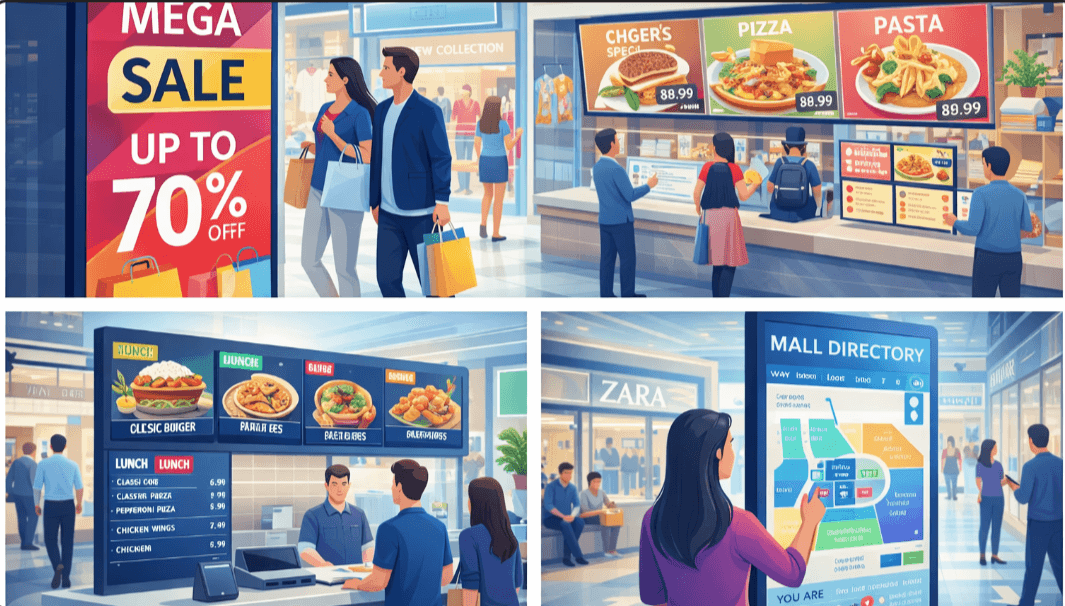
The Rise of Retail as a Digital Ecosystem
Modern mega-malls no longer rely on static directories or printed posters. Instead, they deploy synchronized digital networks that handle navigation, advertising, event promotion, and emergency communication in real time.
The common denominator across leading malls is centralized cloud-based control combined with near-perfect uptime reliability.
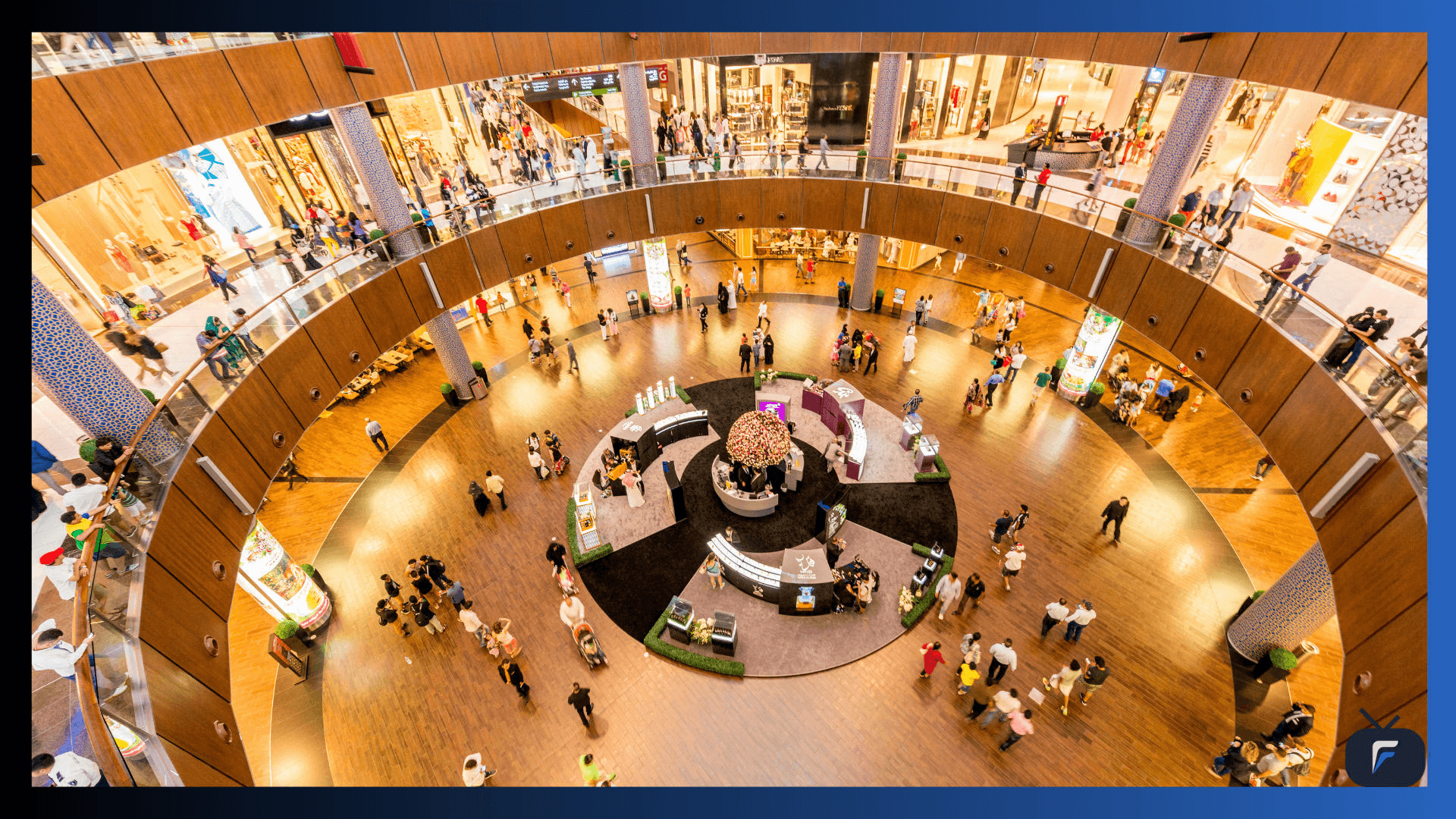
1. The Dubai Mall (Dubai, UAE)
With more than 80 million annual visitors, The Dubai Mall integrates retail, entertainment, and digital spectacle.
Digital strategy includes:
A 980 m² indoor LED video wall
Interactive smart directories
High-resolution promotional displays
Centralized content scheduling ensures campaigns and wayfinding updates remain consistent across attractions and retail zones.
2. The Avenues Mall (Kuwait City, Kuwait)
One of the largest shopping destinations in the Middle East, The Avenues features immersive LED installations including curved domes and floors.
Large-format synchronized displays allow coordinated multimedia campaigns across concourses and experiential zones.
3. IOI City Mall (Putrajaya, Malaysia)
IOI City Mall uses dozens of touchscreen kiosks for navigation and store discovery.
Cloud-managed content ensures:
Real-time directory updates
Tenant changes reflected instantly
Unified branding across floors
4. SM Mall of Asia (Pasay City, Philippines)
Known for its cylindrical MOA 360 LED display, this mall integrates immersive video formats into its architecture.
Circular and high-resolution displays are centrally controlled, allowing event graphics, brand campaigns, and announcements to run seamlessly.
5. Starfield COEX Mall (Seoul, South Korea)
This underground retail ecosystem features a massive curved outdoor LED billboard combined with interior digital kiosks.
Campaign synchronization between indoor and outdoor displays ensures cohesive promotional storytelling.
6. Mall of America (Bloomington, USA)
With more than 100 interactive kiosks, Mall of America prioritizes navigation and multilingual accessibility.
Advanced digital systems support:
Text directions to smartphones
Analytics on visitor movement
Remote content management
7. West Edmonton Mall (Edmonton, Canada)
Operating across retail, hospitality, and entertainment zones, West Edmonton Mall uses centralized digital signage systems.
Screen segmentation enables different content for hotels, food courts, and retail corridors while maintaining unified scheduling.
8. CentralWorld (Bangkok, Thailand)
Home to one of the largest exterior LED displays in Southeast Asia, CentralWorld integrates multimedia shows and real-time promotions.
Time-based scheduling and emergency alert capabilities are managed through centralized cloud infrastructure.
9. Istanbul Cevahir (Istanbul, Turkey)
This European retail hub leverages in-store digital signage and directories to coordinate mall-wide promotions.
Network-wide updates allow both mall operators and tenants to align campaigns efficiently.
10. Iran Mall (Tehran, Iran)
The largest mall by footprint utilizes advanced interactive kiosks across multiple levels.
Real-time map updates and centralized announcements ensure operational clarity across expansive physical space.
Common Patterns Across Mega-Malls
Despite geographic diversity, these retail ecosystems share core strategies:
Experiential LED video walls for engagement
Interactive wayfinding kiosks for navigation
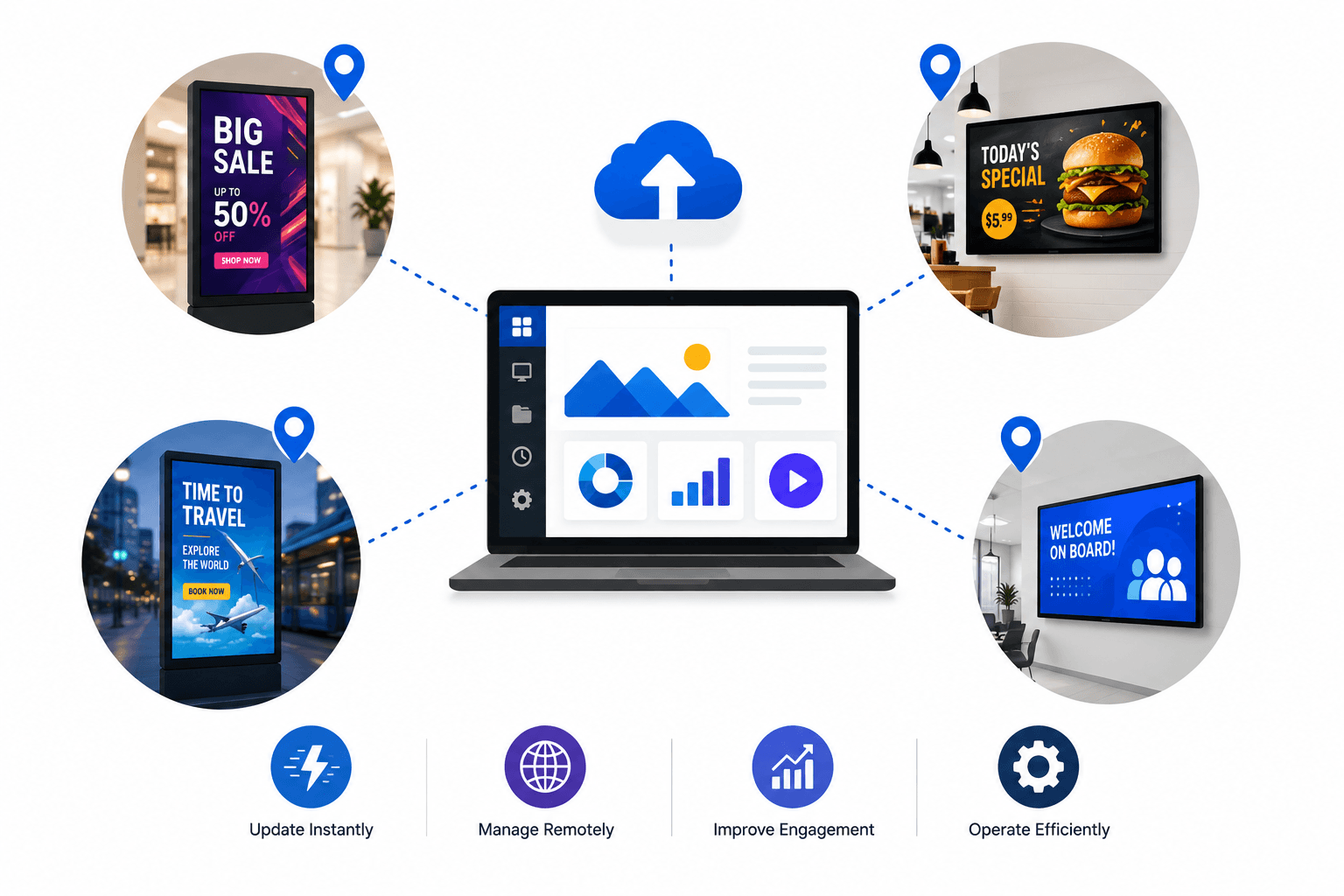
Centralized cloud management
Real-time content updates
99.9% uptime infrastructure
Monetization through digital advertising
Digital signage is not decorative. It is operational infrastructure.
Applying the Mega-Mall Playbook to Retail Chains
While mega-malls operate at enormous scale, the underlying principles are transferable. Retail chains and property managers can implement:
Unified content dashboards
Multi-location scheduling
Real-time directory updates
Emergency messaging capabilities
Advertising revenue management tools
Cloud-based platforms eliminate the need for on-site IT teams while enabling enterprise-grade performance.
How Flickerwall Democratizes Enterprise Signage
Flickerwall provides a scalable digital signage platform designed for retail ecosystems of all sizes.
Core capabilities include:
Centralized content control across locations
High-resolution video wall support
Multi-language directories
Real-time scheduling and updates
Advanced analytics and uptime reliability
Secure cloud-based infrastructure
Retail chains can deploy the same strategic framework used by global mega-malls—without enterprise-level capital expenditure.
Conclusion: Building Your Own Retail Ecosystem
The world’s largest malls demonstrate that digital signage is foundational to modern retail strategy. It enhances navigation, increases engagement, and unlocks new revenue streams.
By adopting centralized cloud-based control and experiential display formats, shopping centers and retail chains can transform physical spaces into intelligent, revenue-generating ecosystems.
Start your free trial with Flickerwall or book a demo to bring enterprise-grade digital signage strategy to your retail environment.