Digital Wayfinding for Smart Infrastructure
How airports and hospitals use intelligent navigation systems to improve efficiency and visitor experience
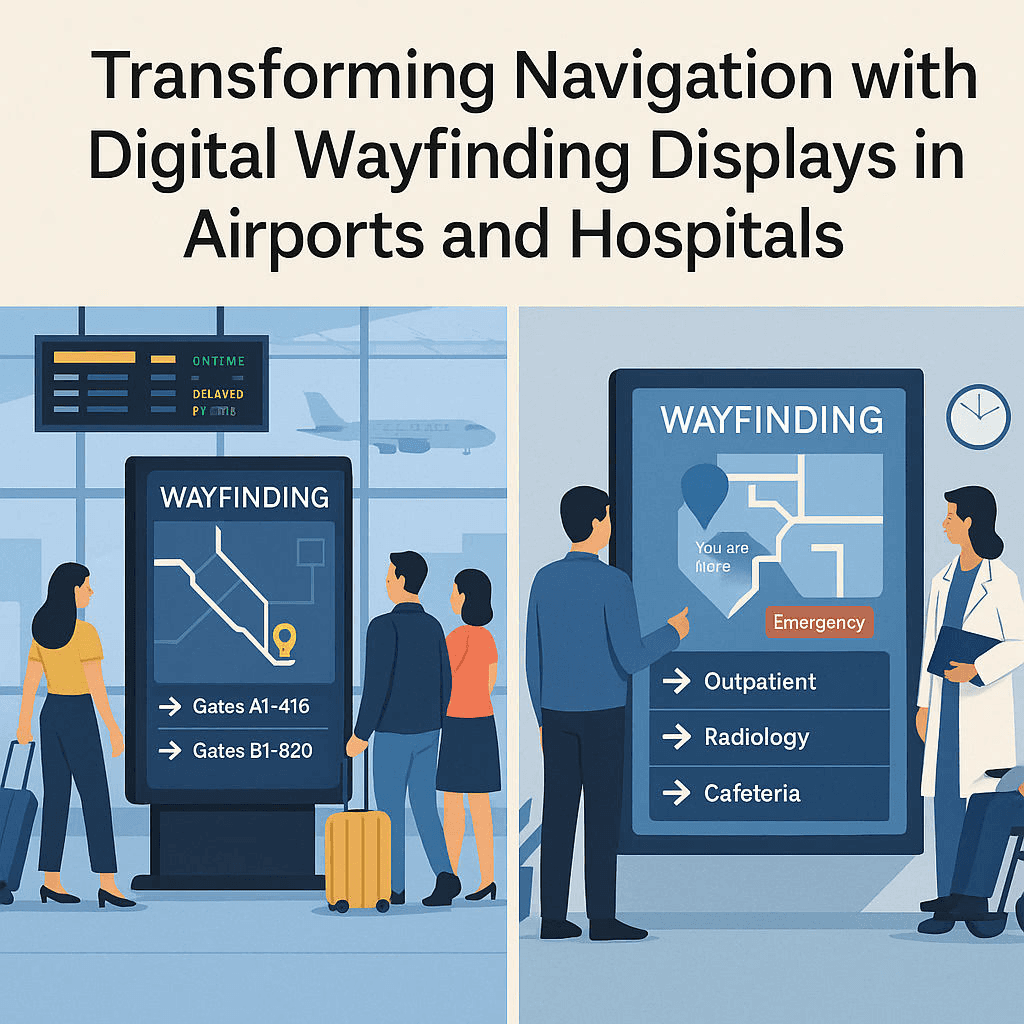
Airports and hospitals function as high-density environments where time, clarity, and precision are critical. Visitors often navigate unfamiliar, complex layouts while managing stress, urgency, or strict schedules. Digital wayfinding systems have transformed how these institutions guide people through expansive facilities. Interactive kiosks, LED displays, and cloud-managed signage networks now provide intuitive navigation while improving operational control and efficiency.
Written by
Sidharth Gaikwad
Read Time
8 minutes
Posted on
04-22-2025

The Importance of Digital Wayfinding
Large transportation hubs and healthcare campuses are notoriously complex. Without clear guidance, visitors can easily feel overwhelmed.
Digital wayfinding systems simplify navigation by offering real-time, easy-to-understand directions. These systems reduce confusion, enhance accessibility, and ensure smoother movement throughout facilities.
For example, Istanbul Airport operates one of the largest indoor digital signage deployments in the world, featuring hundreds of smart LCD and LED displays covering more than 1,000 square meters to assist passengers efficiently.
Core Features in Airports
Airports require dynamic navigation systems that respond instantly to operational changes.
Key features include:
• Real-time flight updates including gate changes and delays
• Multilingual support for international travelers
• Retail and lounge guidance
• Emergency evacuation routing
• Integration with passenger information systems
These features help reduce missed flights, manage crowds during peak hours, and increase retail revenue through better directional prompts.
Core Features in Hospitals
Hospitals demand clarity, accessibility, and sensitivity in navigation.
Essential capabilities include:
• Department and ward locators
• Digital appointment check-in kiosks
• Accessibility tools for visually and hearing-impaired visitors
• Custom maps for multiple floors and specialized wings
• Emergency navigation guidance
By reducing confusion, hospitals improve patient satisfaction while lowering the administrative burden on front-desk staff.
Unique Innovations Transforming Wayfinding
Digital wayfinding continues to evolve through emerging technologies.
Eco-friendly digital systems
Replacing printed maps with digital displays significantly reduces paper waste. Mid-sized hospitals can eliminate thousands of printed maps annually after switching to digital systems.
Augmented reality integration
AR overlays on smartphones or wearable devices provide interactive guidance through virtual arrows and highlighted paths.
Beacon-based indoor positioning
Beacon technology enables highly accurate indoor location tracking, allowing users to identify their exact position within large facilities.
Gamified navigation
Interactive experiences can make navigation engaging. Airports can design child-friendly “exploration paths,” while hospitals can introduce calming navigation themes for pediatric wards.
Benefits of Digital Wayfinding
Airports benefit through:
• Reduced stress and fewer missed flights
• Improved crowd flow management
• Increased retail and dining revenue
Hospitals benefit through:
• Higher patient satisfaction
• Reduced staff interruptions for directions
• Faster access to emergency and critical care zones
Digital wayfinding acts as both a visitor experience tool and an operational efficiency system.
The Future of Intelligent Navigation
Predictive navigation
AI-powered systems will analyze crowd data and suggest optimal routes based on congestion levels and user preferences.
Voice-activated interfaces
Voice-enabled signage will improve accessibility for visually impaired users and non-native language speakers.
5G-enabled connectivity
High-speed networks will allow seamless updates and richer interactive content without latency.
Virtual assistant integration
Future displays may include conversational assistants that provide step-by-step guidance, adapting routes in real time based on maintenance zones or crowd density.
Centralized Cloud Management
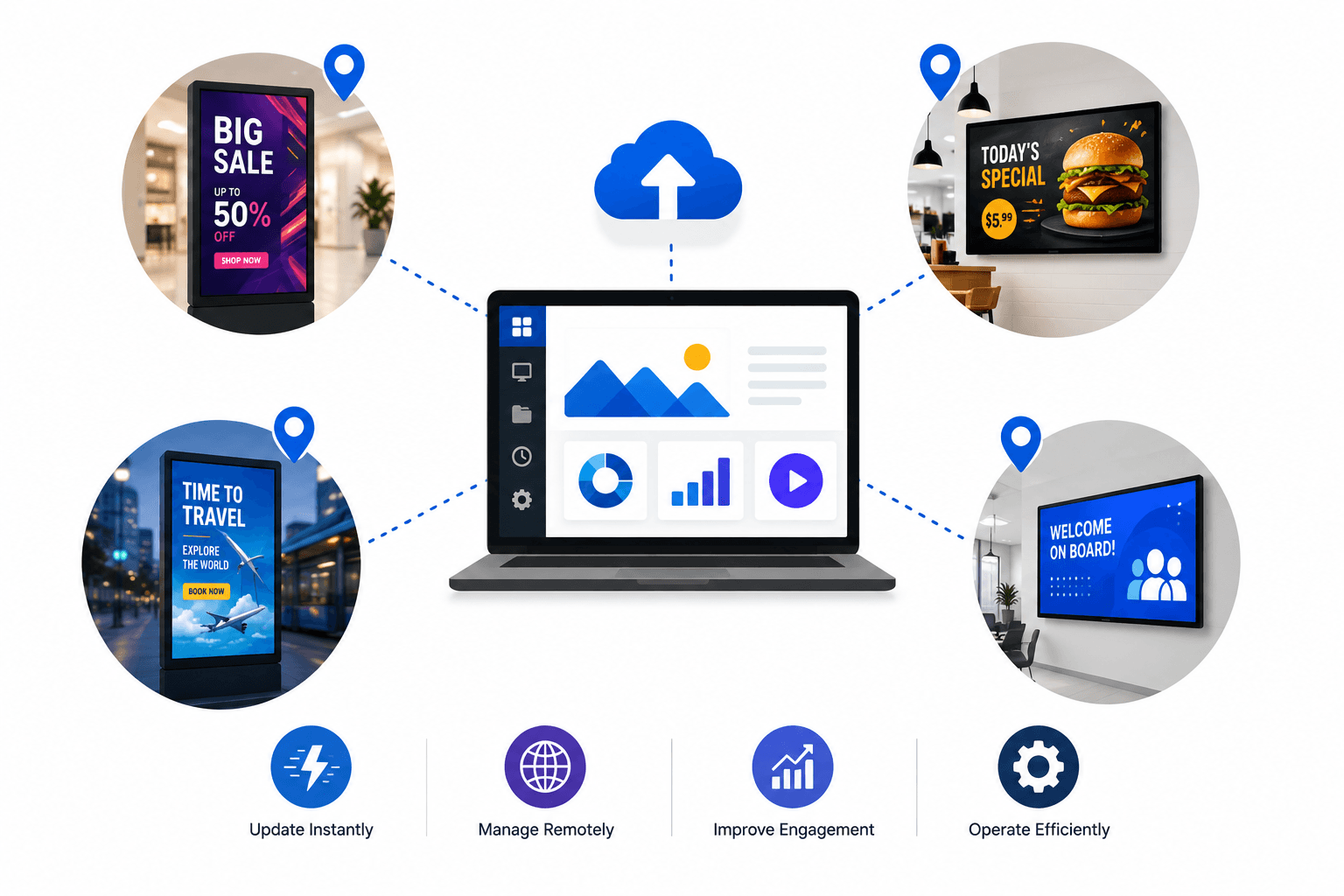
Managing hundreds of displays across terminals or hospital wings requires centralized control. Cloud-based signage platforms allow administrators to:
• Update maps instantly
• Push emergency notifications
• Synchronize multilingual content
• Monitor uptime and system health
• Analyze visitor engagement data
This infrastructure ensures reliability, scalability, and near-continuous availability in mission-critical environments.
Conclusion
Digital wayfinding systems are no longer optional enhancements. They are core infrastructure for modern airports and hospitals. By combining real-time data, interactive displays, and centralized cloud management, these institutions create smoother, safer, and more intuitive visitor experiences.
As intelligent navigation technologies continue to advance, facilities that invest in scalable digital wayfinding platforms will lead the way in operational efficiency and user-centric innovation.
Start your free trial with Flickerwall or book a demo to implement smart digital wayfinding across your infrastructure network.