Smart City Communication Is Going Fully Digital
Key learnings from Smart Cities India Expo 2026 for scalable display networks
The Smart Cities India Expo 2026 highlights how urban infrastructure is rapidly evolving beyond physical systems into digital-first ecosystems. Communication is at the center of this transformation. Cities are moving away from static information systems toward real-time, connected display networks that improve both efficiency and citizen experience. For platforms like Flickerwall, this shift reinforces the growing need for scalable, intelligent content management across distributed screens.
Written by
Sidharth Gaikwad
Read Time
3 minutes
Posted on
03/23/2026
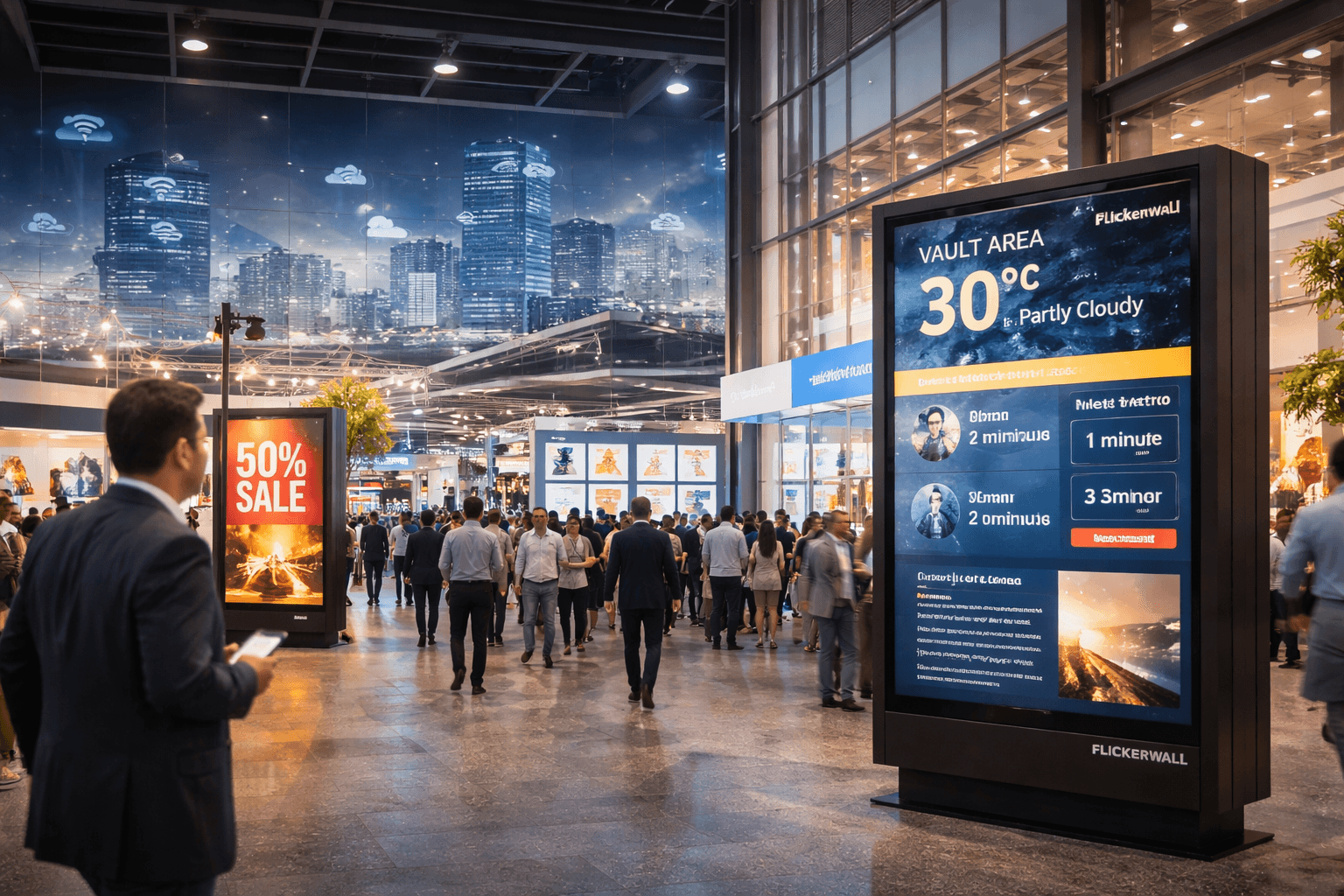
Digital Signage Is Becoming Core Urban Infrastructure
Modern cities require fast, reliable communication channels. Digital signage is emerging as a critical layer in this infrastructure.
Key use cases include:
Public information and announcements
Transport updates and wayfinding
Emergency alerts
Revenue-generating ad networks
These applications demand centralized control and real-time updates.
Key Trends from the Expo Floor
Smart Cities India Expo 2026 reflects a clear shift toward intelligent, connected systems.
Major trends include:
Integration of IoT with display networks
Real-time data-driven content delivery
Automation replacing manual operations
Unified platforms managing multi-location screens
This signals a move from isolated displays to fully integrated communication ecosystems.
The Need for Scalable Content Management
As screen networks expand, managing content manually becomes inefficient and error-prone.
Organizations now require:
Centralized dashboards
Remote content control
Automated scheduling
Performance tracking
Without these capabilities, scaling digital signage across a city or enterprise becomes unmanageable.
How Flickerwall Aligns with Smart City Needs
Flickerwall is built to support the exact requirements highlighted at the expo.
Core capabilities include:
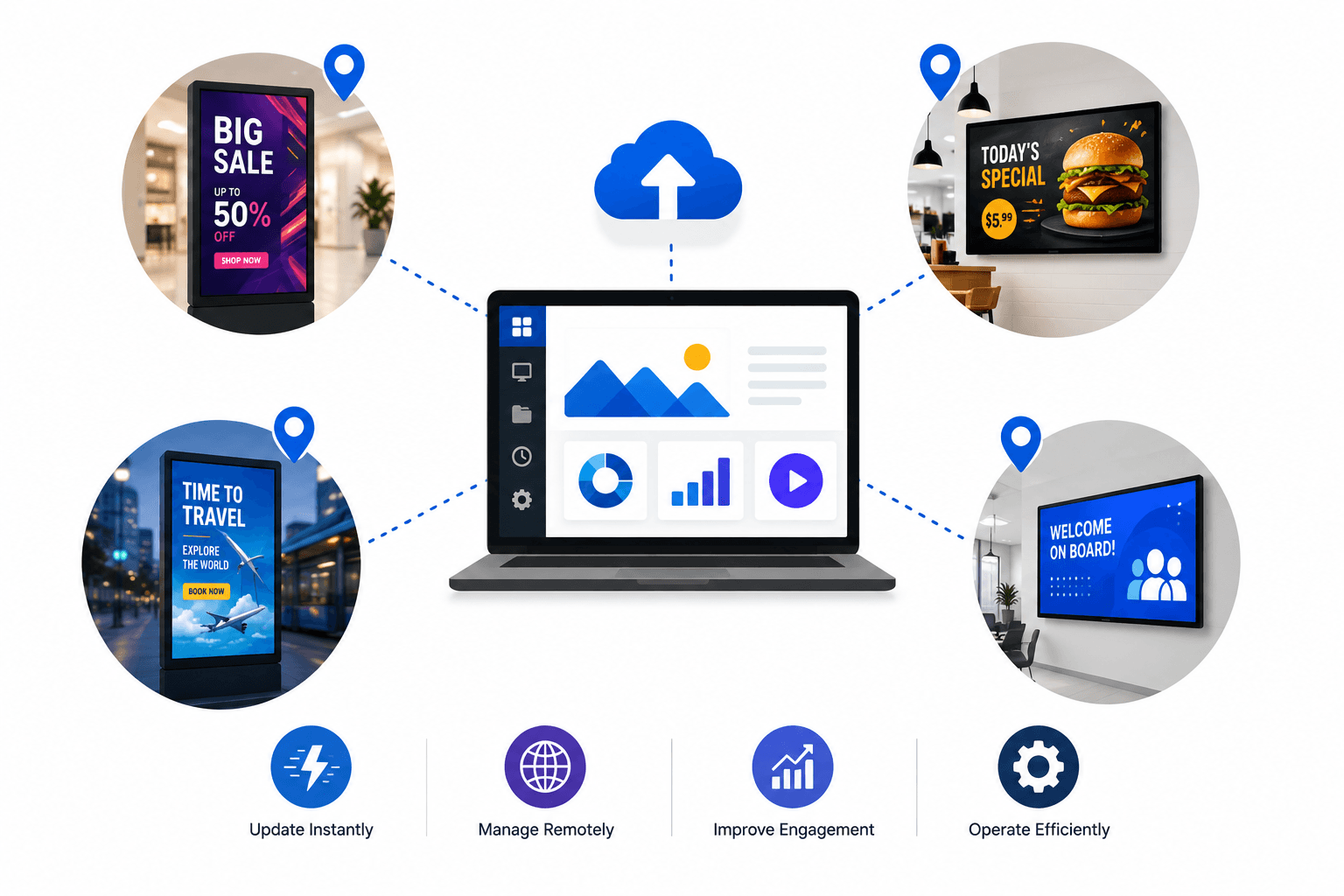
Managing multiple screens from a single platform
Real-time content updates across locations
Automated workflows and scheduling
Scalable infrastructure for enterprise and government use
This enables seamless communication across large, distributed networks.
Use Cases Across Smart City Environments
Urban Public Spaces
Deliver real-time announcements and civic information efficiently.
Transportation Networks
Provide live updates across stations, terminals, and transit hubs.
Commercial Zones
Enable dynamic advertising and localized messaging.
Smart Campuses and Offices
Streamline internal communication across large facilities.
From Static Screens to Intelligent Networks
The biggest takeaway from the expo is the transition from static displays to intelligent communication networks.
Modern systems are defined by:
Cloud-based infrastructure
Real-time data integration
Automation at scale
Measurable performance insights
Digital signage is no longer just a display tool—it is a strategic communication asset.
Conclusion: Powering the Communication Layer of Smart Cities
Smart Cities India Expo 2026 reinforces that digital communication is becoming foundational to urban infrastructure.
Flickerwall enables organizations to transform disconnected screens into unified, intelligent networks that scale with city and enterprise needs.
If you’re building for the future of smart cities, now is the time to adopt scalable digital signage powered by Flickerwall