7 High-Impact DOOH Campaigns Driving Results
7 High-Impact DOOH Campaigns Driving Results
Imagine walking down the street on a breezy morning, thinking about breakfast. A digital billboard displays:
“Craving a fresh bagel and coffee? Order now and get it in 10 minutes.” You scan the QR code and complete your purchase instantly. This is the power of Digital Out-of-Home (DOOH) advertising. Unlike traditional static billboards, DOOH uses dynamic digital screens that respond to real-time triggers such as weather, time of day, audience behavior, and location data. It transforms passive viewing into interactive engagement — converting attention into measurable action.
Written by
Sidharth Gaikwad
Read Time
8 minutes
Posted on
03-21-2025
1. Digital Billboards
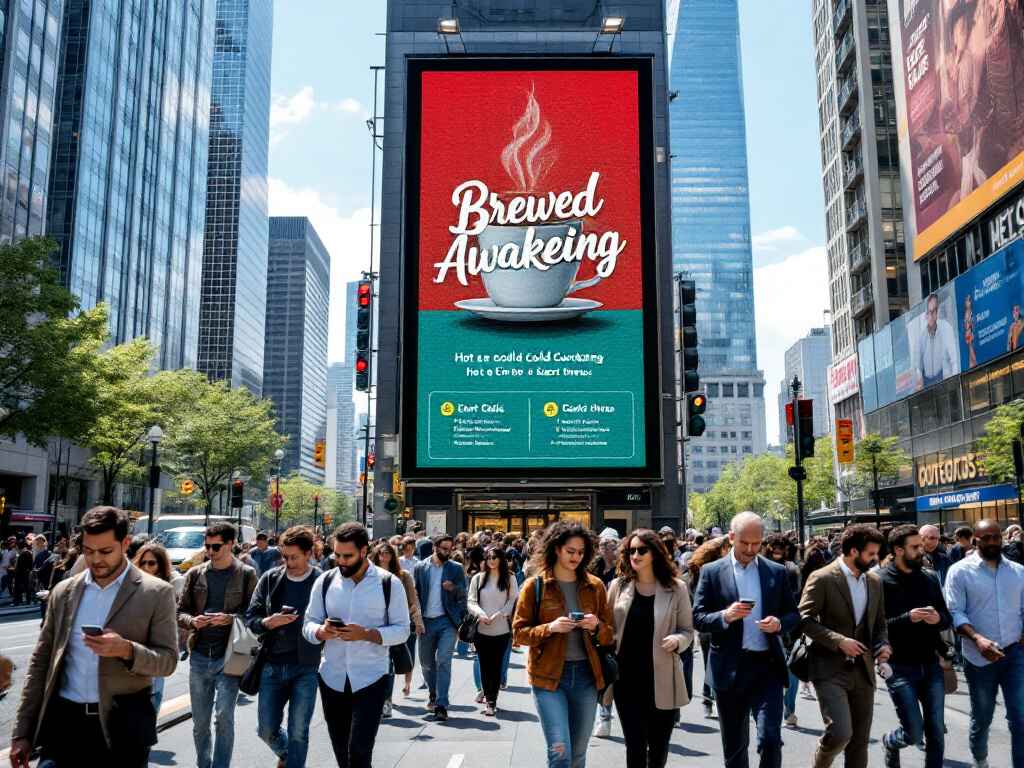
Digital billboards remain one of the most recognizable DOOH formats, positioned in high-traffic areas such as highways, commercial districts, and city centers.
Example: A coffee brand displays time-sensitive morning promotions between 6 AM and 10 AM, increasing peak-hour sales.
Why it works:
• High visibility
• Time-based scheduling
• Rotating campaign creatives
• Instant content updates
2. Bus Stop DOOH Advertising
Commuters waiting for public transport represent a highly engaged, stationary audience.
Example: A fitness brand runs an interactive step challenge encouraging passersby to scan a QR code and unlock a free trial membership.
Why it works:
• Captive audience
• Interactive engagement
• Direct mobile conversion
3. Sidewalk Digital Displays
Pedestrian-heavy areas are ideal for contextual promotions and hyper-local advertising.
Example: A restaurant changes its digital menu throughout the day — breakfast in the morning, lunch combos in the afternoon, and dinner specials at night.
Why it works:
• Daypart targeting
• Location-based messaging
• Real-time menu updates
4. Taxi and Rideshare Top Screens
Taxi-top digital screens offer mobile advertising that adapts to specific neighborhoods and events.
Example: A music festival promotes last-minute ticket sales on taxis circulating near the venue.
Why it works:
• Geo-targeted advertising
• Event-based campaigns
• Dynamic messaging by district
5. Elevator DOOH Screens
Elevators provide a rare moment of minimal distraction — making them powerful micro-engagement zones.
Example: A local spa promotes stress-relief packages during weekday office hours in corporate buildings.
Why it works:
• Undivided viewer attention
• Hyper-relevant audience targeting
• High message recall
6. Gas Station Digital Screens
Fuel stations capture consumers during unavoidable idle time.
Example: A nearby car wash promotes a limited-time discount while customers refuel.
Why it works:
• Dwell-time engagement
• Immediate call-to-action
• Proximity-based offers
7. Weather-Triggered DOOH Campaigns
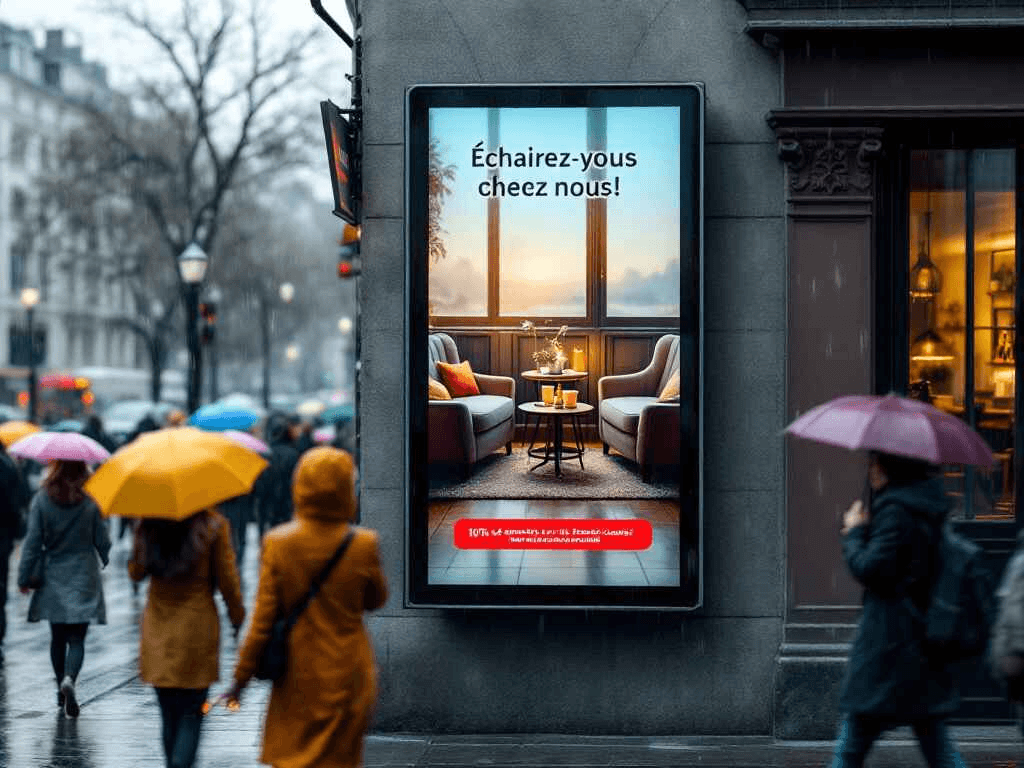
Weather-based advertising dynamically adjusts messaging depending on real-time conditions.
Example:
• On hot days: Cold beverage promotions
• On rainy days: Umbrella or delivery service offers
Why it works:
• Contextual relevance
• Emotional alignment
• Higher conversion rates
Why DOOH Outperforms Traditional Billboards
DOOH delivers advantages that static outdoor advertising cannot match:
• Real-time content updates
• Data-driven targeting
• Interactive QR codes and touchpoints
• Measurable engagement analytics
• Flexible campaign scheduling
By responding to audience context, DOOH ensures the right message appears at the right time.
Managing Complex DOOH Campaigns with Flickerwall
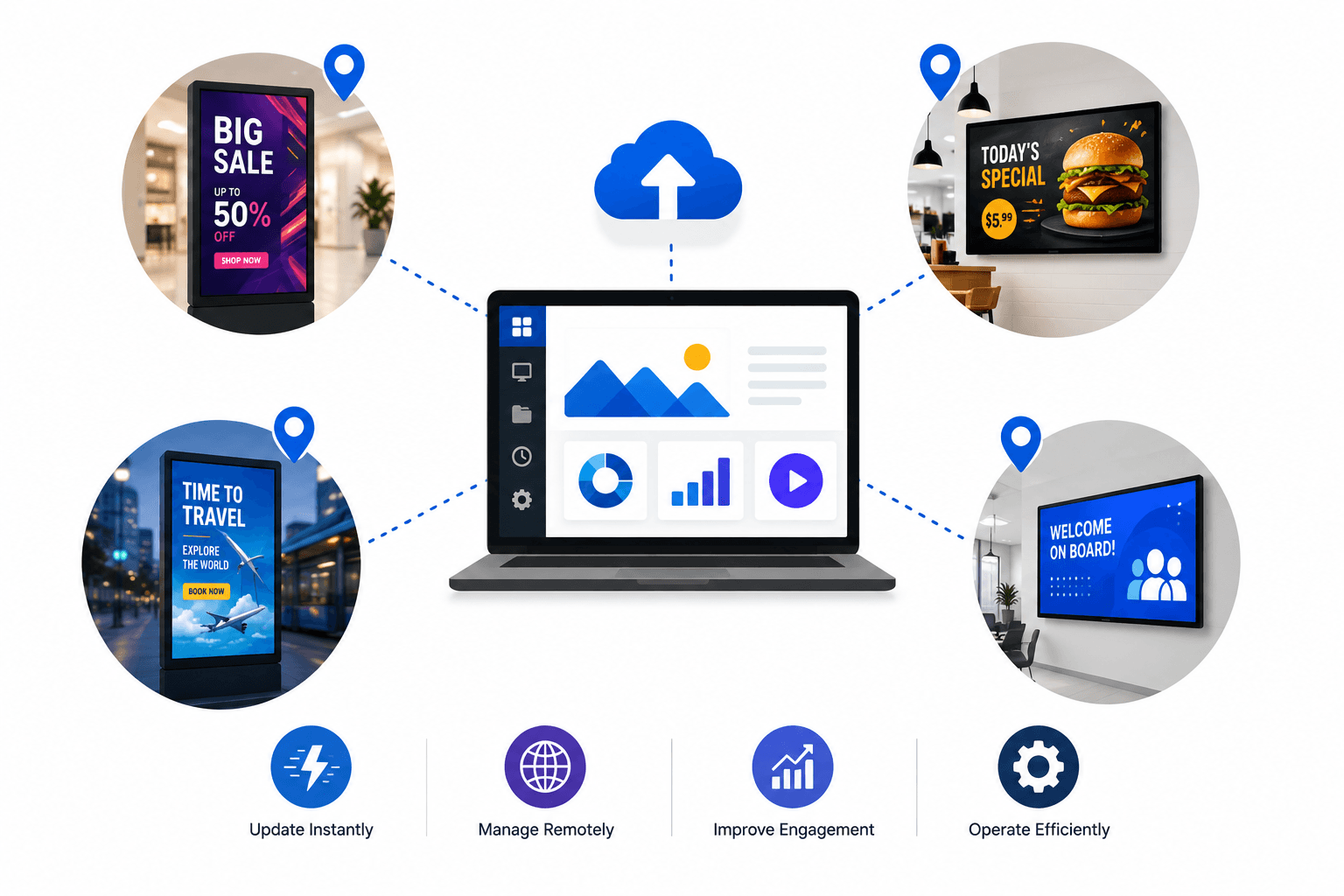
Executing high-impact DOOH campaigns requires centralized control and data responsiveness.
Flickerwall enables brands to:
• Remotely manage multiple screens
• Schedule time-based and event-triggered content
• Deploy weather and location-based creatives
• Track campaign performance with analytics
• Optimize messaging in real time
This transforms DOOH from simple display advertising into an intelligent, performance-driven marketing channel.
Conclusion
The DOOH revolution has redefined outdoor advertising by replacing static messaging with intelligent, responsive campaigns.
From taxi-top promotions to weather-triggered billboards, DOOH turns high-traffic public spaces into dynamic sales funnels. Brands no longer broadcast messages blindly — they deliver context-aware content that converts attention into action.
Ready to elevate your brand’s outdoor presence?
Start your free trial today and launch smarter, data-driven DOOH campaigns with Flickerwall.