Digital Signage Architecture: How the System Actually Works
A simplified breakdown of the components powering modern screen networks
Behind every digital screen is a system that manages, delivers, and displays content seamlessly. This system is known as digital signage architecture. it may seem technical, understanding the basics helps businesses make better decisions when scaling deployments. This guide breaks it down in a simple, practical way.
Written by
Sidharth Gaikwad
Read Time
3 minutes
Posted on
04/16/2026
Core Components of Digital Signage
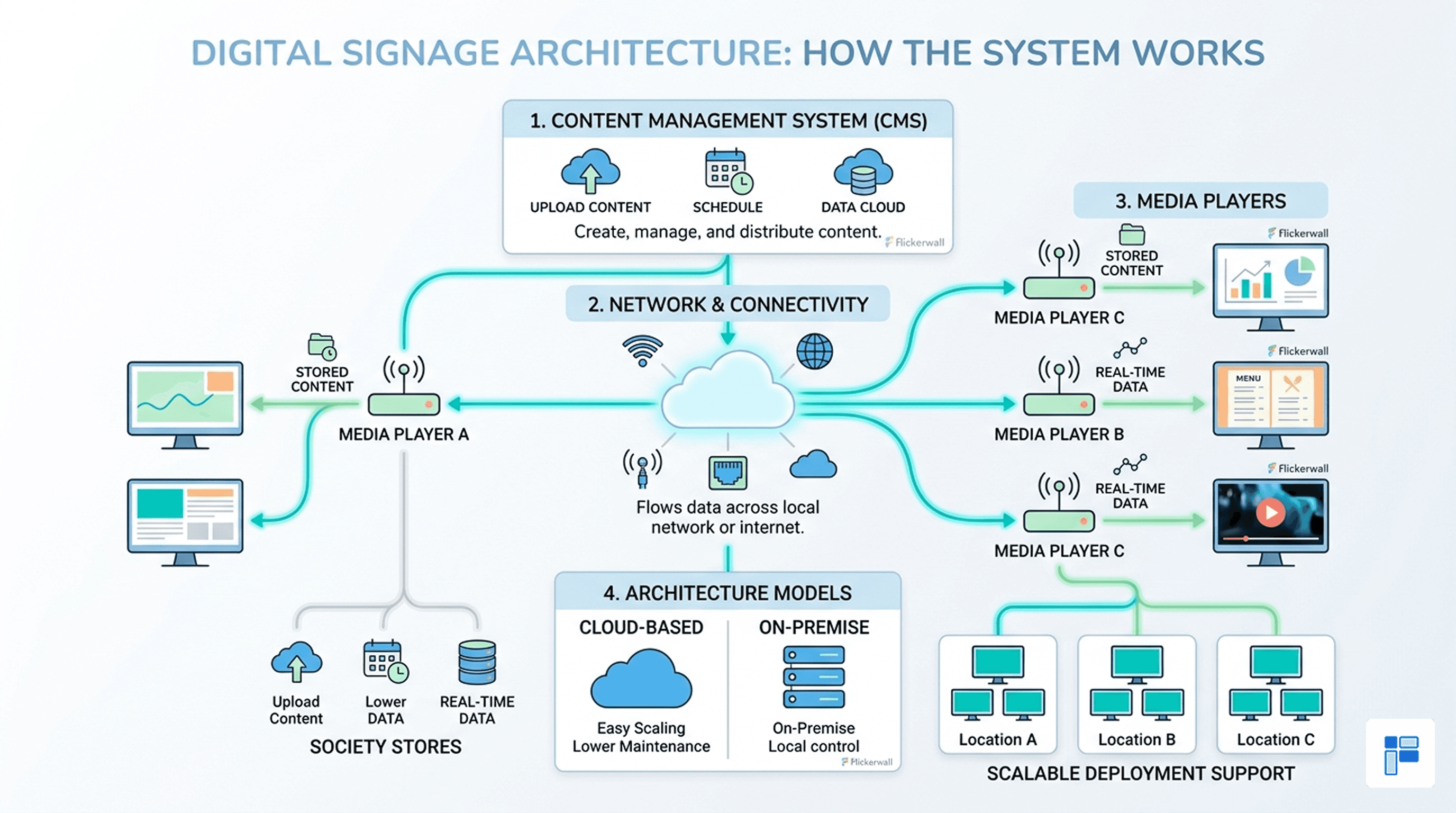
Every signage system includes:
Content Management System (CMS)
Media players
Display screens
Network connectivity
Each component plays a specific role in the ecosystem.
How Content Flows
The process is straightforward:
Content is created and uploaded to CMS
CMS schedules and distributes content
Media players receive and store content
Screens display the content
This flow ensures centralized control with distributed execution.
Cloud vs On-Premise Architecture
There are two primary models:
Cloud-based:
Remote access
Easy scalability
Lower maintenance
On-premise:
Local control
Higher setup complexity
Limited flexibility
Most modern deployments prefer cloud-based systems.
Scaling the Architecture
As businesses grow, architecture must support:
Multiple locations
Real-time updates
User access control
Device monitoring
A scalable system prevents operational bottlenecks.
Conclusion
Understanding digital signage architecture helps businesses deploy smarter and scale faster. A well-designed system ensures reliability, efficiency, and long-term success.
Flickerwall provides end-to-end digital signage architecture built for scalability, performance, and enterprise-grade deployments.