How Intelligent Digital Displays Power Smart Urban Infrastructure
Transforming urban landscapes into responsive, data-driven environments that improve citizen safety and connectivity
Rapid urbanization is redefining how cities operate. As populations grow and infrastructure becomes more complex, municipalities require efficient communication systems that connect real-time data with the public instantly. Digital signage has emerged as the primary visual interface of the smart city—bridging the gap between municipal data systems and everyday citizens. These intelligent displays do more than show content; they enable cities to function more transparently, safely, and efficiently.
Written by
Sidharth Gaikwad
Read Time
4 minutes
Posted on
03-15-2025
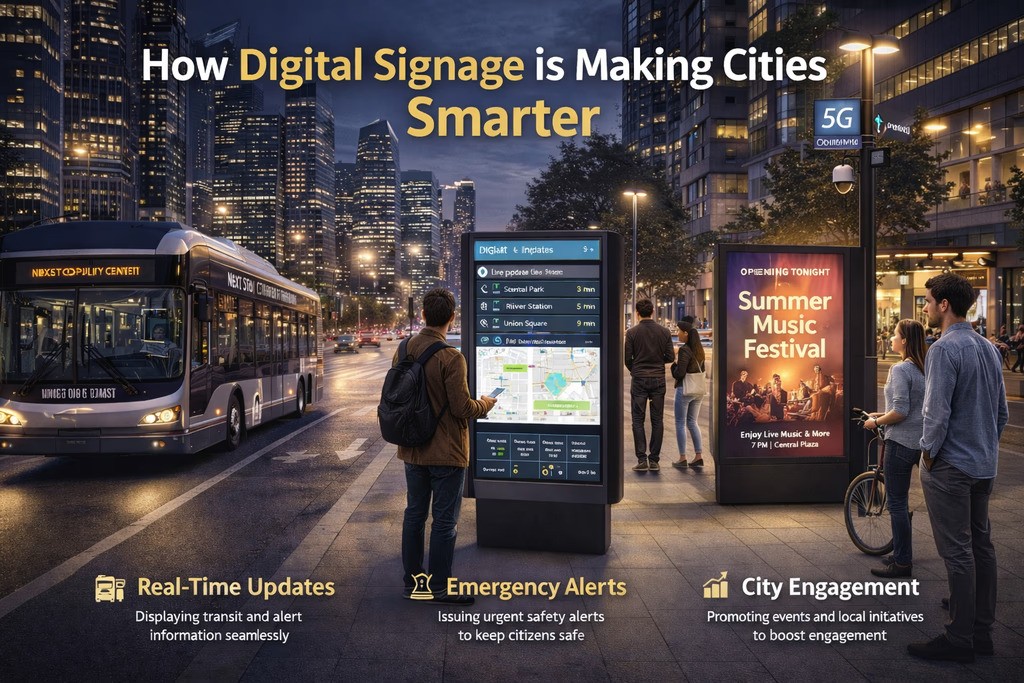
How Intelligent Digital Displays Power Smart Urban Infrastructure
Subheading
Transforming urban landscapes into responsive, data-driven environments that improve citizen safety and connectivity
Introduction
Rapid urbanization is redefining how cities operate. As populations grow and infrastructure becomes more complex, municipalities require efficient communication systems that connect real-time data with the public instantly.
Digital signage has emerged as the primary visual interface of the smart city—bridging the gap between municipal data systems and everyday citizens. These intelligent displays do more than show content; they enable cities to function more transparently, safely, and efficiently.
Real-Time Public Communication
Traditional static signage cannot keep pace with dynamic urban needs. Digital signage allows authorities to broadcast immediate updates across transportation hubs, government buildings, and public spaces.
Key Applications
Emergency alerts and disaster notifications
Public service announcements
City event promotions
Policy or civic updates
This ensures that residents and visitors receive accurate information exactly when it matters most.
Smarter Transportation Networks
Urban mobility is one of the biggest challenges in growing cities. Integrating digital signage with transit and traffic management systems significantly improves commuter experience.
Transportation Benefits
Live bus and train arrival times
Traffic congestion monitoring
Real-time rerouting information
Interactive pedestrian wayfinding
By reducing uncertainty and wait times, cities encourage greater public transport adoption and smoother traffic flow.
Enhancing Public Safety and Crisis Management
During emergencies, communication speed can directly impact public safety. Digital signage provides an immediate, highly visible channel for broadcasting critical information.
Safety-Driven Use Cases
Weather warnings and evacuation notices
Road closures and accident alerts
Missing person notifications
Environmental hazard advisories
Unlike social media alerts that rely on personal device access, public screens ensure universal visibility.
Environmental Awareness and Sustainability
Smart cities prioritize sustainability, and digital signage supports these initiatives by making environmental data accessible.
Screens can display:
Air quality indices
Energy consumption statistics
Water conservation updates
Green initiative campaigns
By visualizing environmental performance, cities encourage responsible citizen participation.
Elevating Tourism and Citizen Engagement
Beyond operational efficiency, digital signage enhances the cultural and social experience of urban spaces.
Interactive kiosks and digital billboards provide:
Multilingual tourist information
Historical site details
Event calendars and festival promotions
Augmented reality engagement experiences
This fosters a connected community while improving visitor satisfaction.
Scalable Infrastructure Through Cloud Management
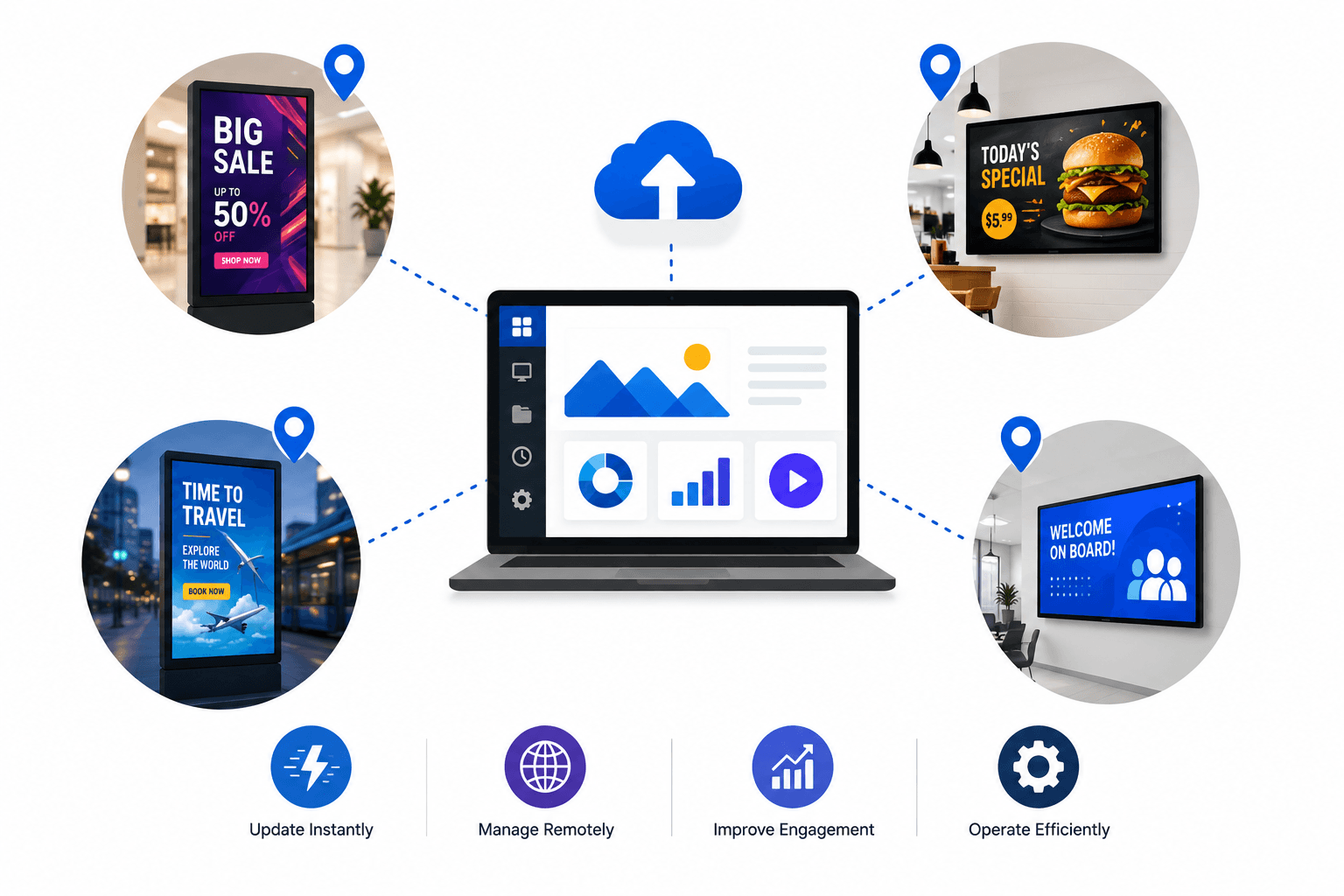
For city-wide deployment, centralized cloud-based platforms are essential. Managing hundreds of screens manually would be impractical.
Cloud-driven systems enable:
Centralized content scheduling
Location-specific messaging
Real-time updates across districts
Seamless integration with municipal data systems
Platforms like Flickerwall empower city administrators to operate complex screen networks from a single, secure dashboard.
Conclusion
Digital signage is no longer a supplementary feature in urban planning—it is a foundational infrastructure component of smart cities. By integrating real-time data with dynamic public displays, municipalities can improve transportation efficiency, enhance
public safety, promote sustainability, and create more engaging urban environments.
As cities evolve toward data-driven governance, intelligent digital signage will continue to serve as the bridge between infrastructure systems and the people they serve.
If your municipality is ready to modernize communication and build a more connected urban ecosystem, start your free trial with Flickerwall and experience the future of smart city communication today.