What Actually Powers Digital Screens Behind the Scenes
Understanding the software layer that makes digital signage scalable and effective
Digital screens are often seen as a hardware upgrade over static media. But the real advantage of digital signage doesn’t come from the screens themselves—it comes from the system behind them. To understand why digital screens outperform traditional formats, it’s important to look at what powers them.
Written by
Sidharth Gaikwad
Read Time
3 minutes
Posted on
04/29/2026
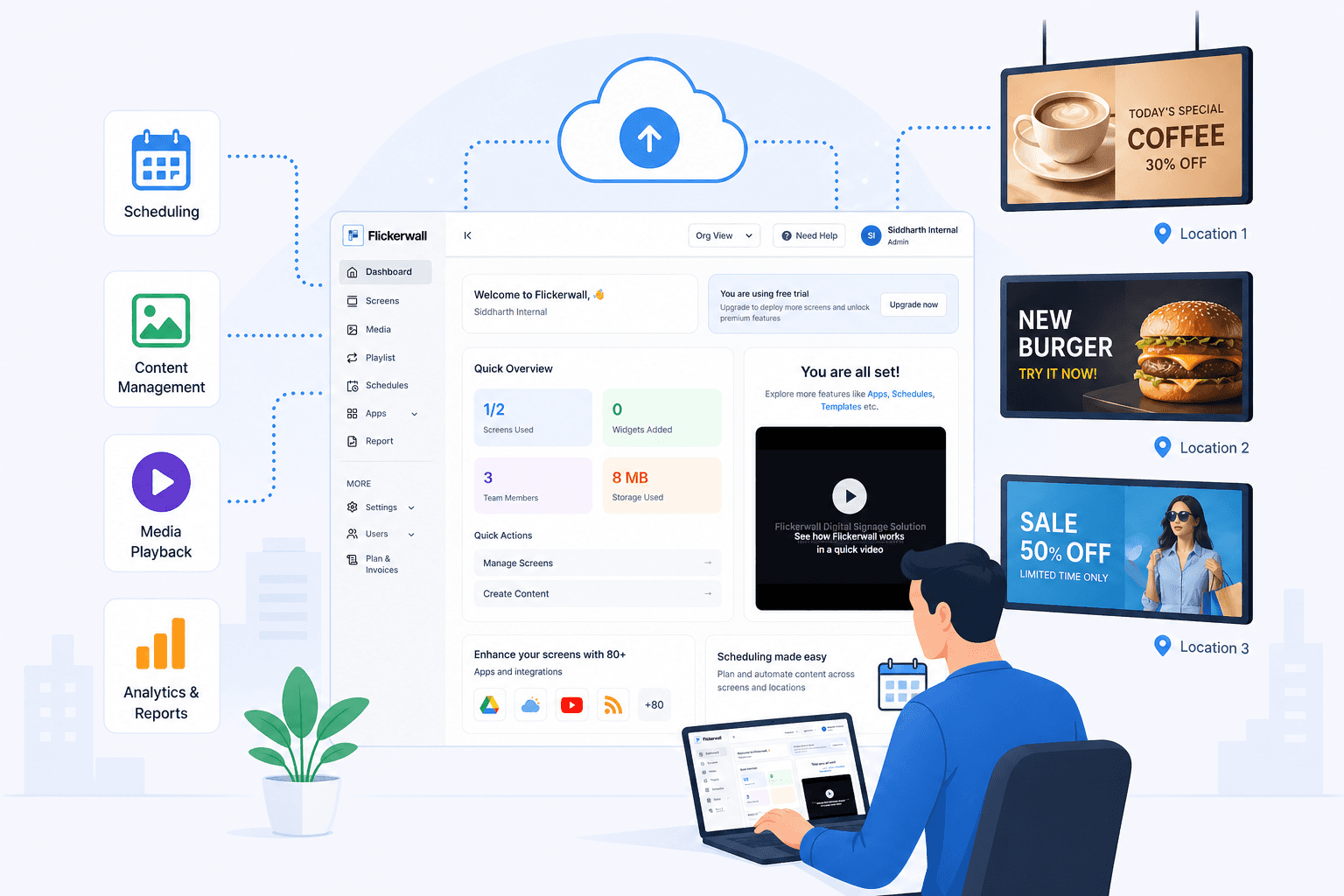
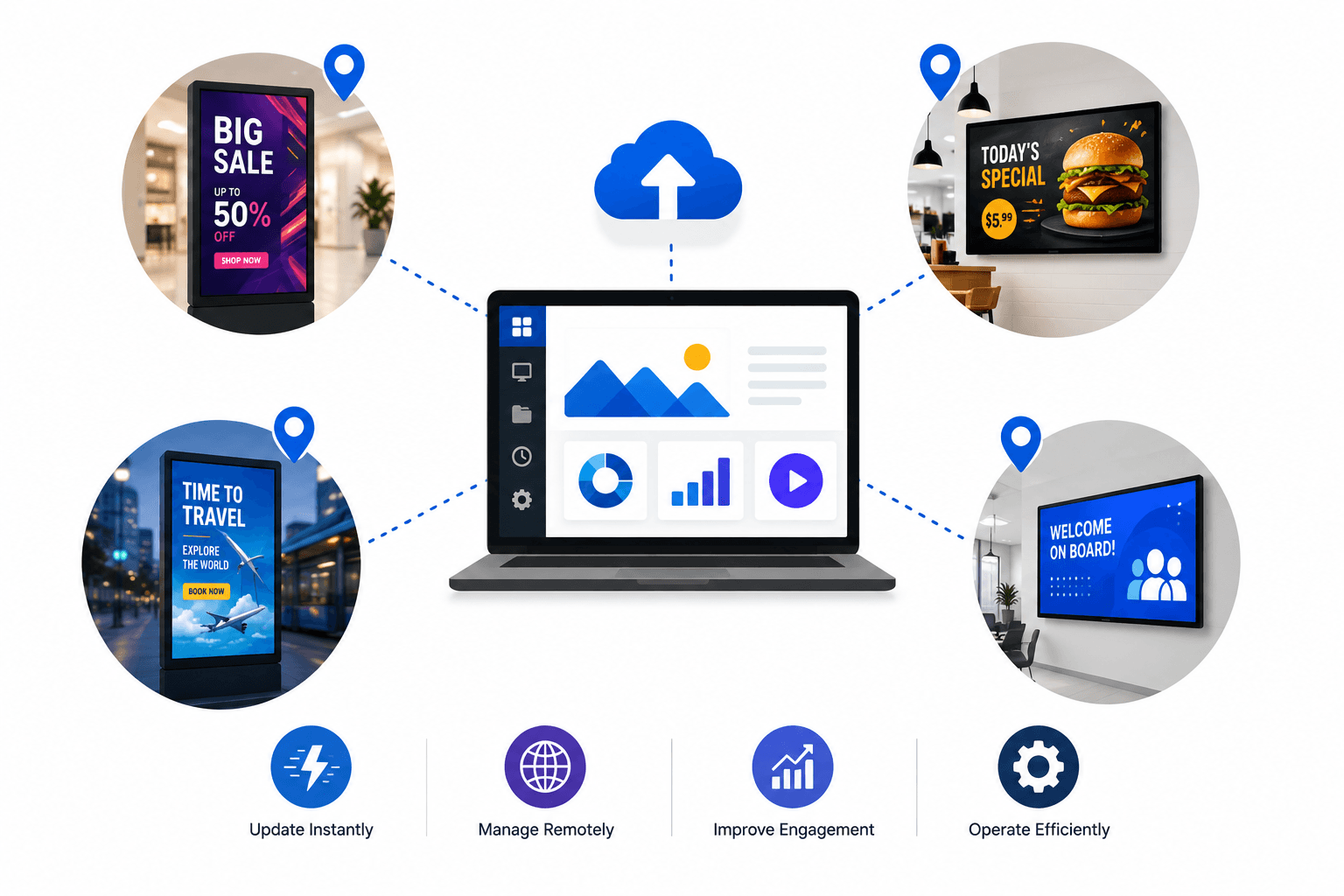
Digital Screens Are Driven by Software
Unlike static posters or print media, digital screens rely on software to function.
This includes:
Content management systems (CMS)
Media players
Scheduling engines
👉 This is where a digital signage CMS becomes critical in managing content across screens.
Content Control Is What Creates Impact
The biggest difference between static and digital media is control.
With the right system, businesses can:
Update content instantly
Run time-based campaigns
Adapt messaging dynamically
👉 These capabilities are part of broader cloud signage capabilities that enable real-time communication.
Scalability Comes from Centralization
Managing one screen is simple. Managing hundreds is not.
Digital signage systems solve this through:
Centralized dashboards
Multi-location control
Automated content distribution
Without this layer, digital screens lose their operational advantage.
Why Static Media Cannot Compete
Static media is fixed once deployed.
This creates limitations:
No updates without reprinting
No flexibility in messaging
No control across locations
👉 These are similar to the limitations of offline signage when systems lack centralized control.
Where This Connects
If you’ve already explored why digital screens outperform static Signage, the next step is understanding how to implement and scale them effectively.
👉 Read: Why Digital Screens Beat Static Signage
Conclusion
Digital screens are not just displays—they are part of a connected system powered by software.
The real value comes from control, scalability, and the ability to adapt content in real time. Businesses that understand this move beyond just installing screens—they build a digital communication system.