Reducing Travel Friction with Smart Transit Displays
How real-time data sync, AI-driven wayfinding, and touchless self-service ecosystems are reshaping modern travel
Digital signage and touchscreen technology have become essential infrastructure in airports, railway stations, and transportation hubs. As passenger volumes grow and expectations rise, transit authorities are turning to digital systems to streamline operations and elevate the travel experience. From real-time updates to self-service kiosks, modern transportation hubs rely on intelligent displays to guide, inform, and engage travelers efficiently.
Written by
Sidharth Gaikwad
Read Time
7 minutes
Posted on
03-21-2025
How Digital Signage Is Transforming Transportation
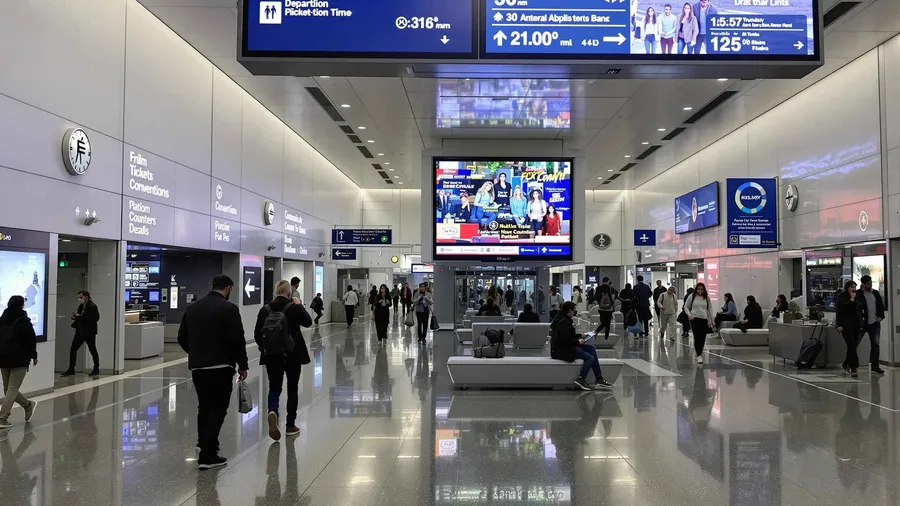
Walk through any major airport or transit station and you will see digital screens powering the passenger journey. These displays provide real-time schedules, dynamic wayfinding, baggage updates, restaurant promotions, and urgent travel alerts.
Unlike static boards, digital systems update instantly, ensuring passengers always receive accurate and timely information.
The Rise of Self-Service Touchscreens
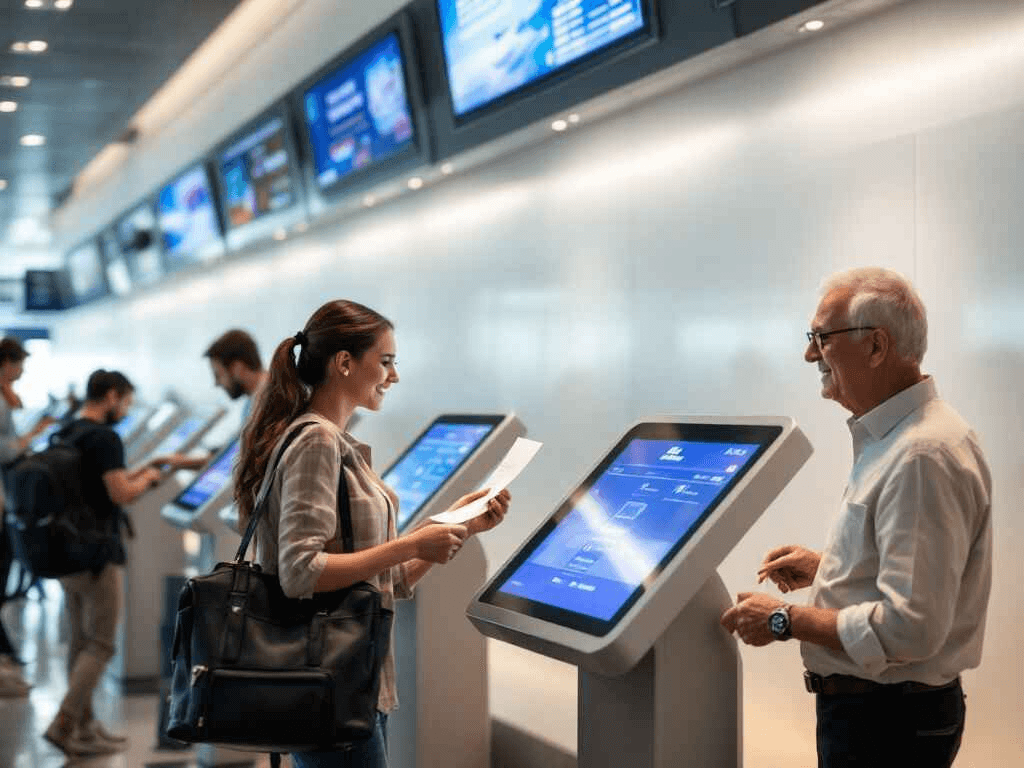
Touchscreen kiosks are redefining passenger autonomy. Travelers can check in, print boarding passes, purchase tickets, upgrade services, and place food orders without standing in long queues.
By automating routine interactions, transportation hubs reduce wait times and allow staff to focus on critical operational tasks.
Improved Operational Efficiency
Staffing shortages and high passenger volumes create significant pressure on transportation facilities. Digital signage automates repetitive tasks such as answering common questions, displaying gate changes, and guiding travelers through terminals.
This improves passenger flow, minimizes confusion, and enhances overall efficiency.
Unlocking New Revenue Streams
Airports and transportation hubs attract thousands of daily travelers, making digital screens valuable advertising assets. Retail promotions, duty-free campaigns, hospitality offers, and location-based brand advertisements create additional revenue opportunities.
Dynamic advertising increases engagement while generating non-ticket income for transit authorities.
Keeping Pace with Modern Traveler Expectations
Today’s passengers expect seamless, technology-driven experiences. Digital infrastructure enables integration with airline and rail systems, instant updates across terminals, and faster check-ins.
Modern systems improve operational performance while elevating customer satisfaction.
The Future of Digital Signage in Transportation
AI-Powered Assistance
AI-driven displays will offer multilingual support, allowing travelers to receive information in their preferred language.
Smart Analytics
Airports will use analytics to monitor passenger movement, identify congestion points, and optimize terminal layouts.
Mobile Integration
QR codes will enable travelers to load wayfinding directions to their smartphones, make purchases, or access digital boarding details instantly.
Biometric Authentication
Facial recognition and fingerprint scanning may streamline identity verification, check-in processes, and secure access.
Robotics and Automation
Transportation hubs are exploring robotic solutions for cleaning, security monitoring, and passenger guidance.
Centralized Management for Large Screen Networks
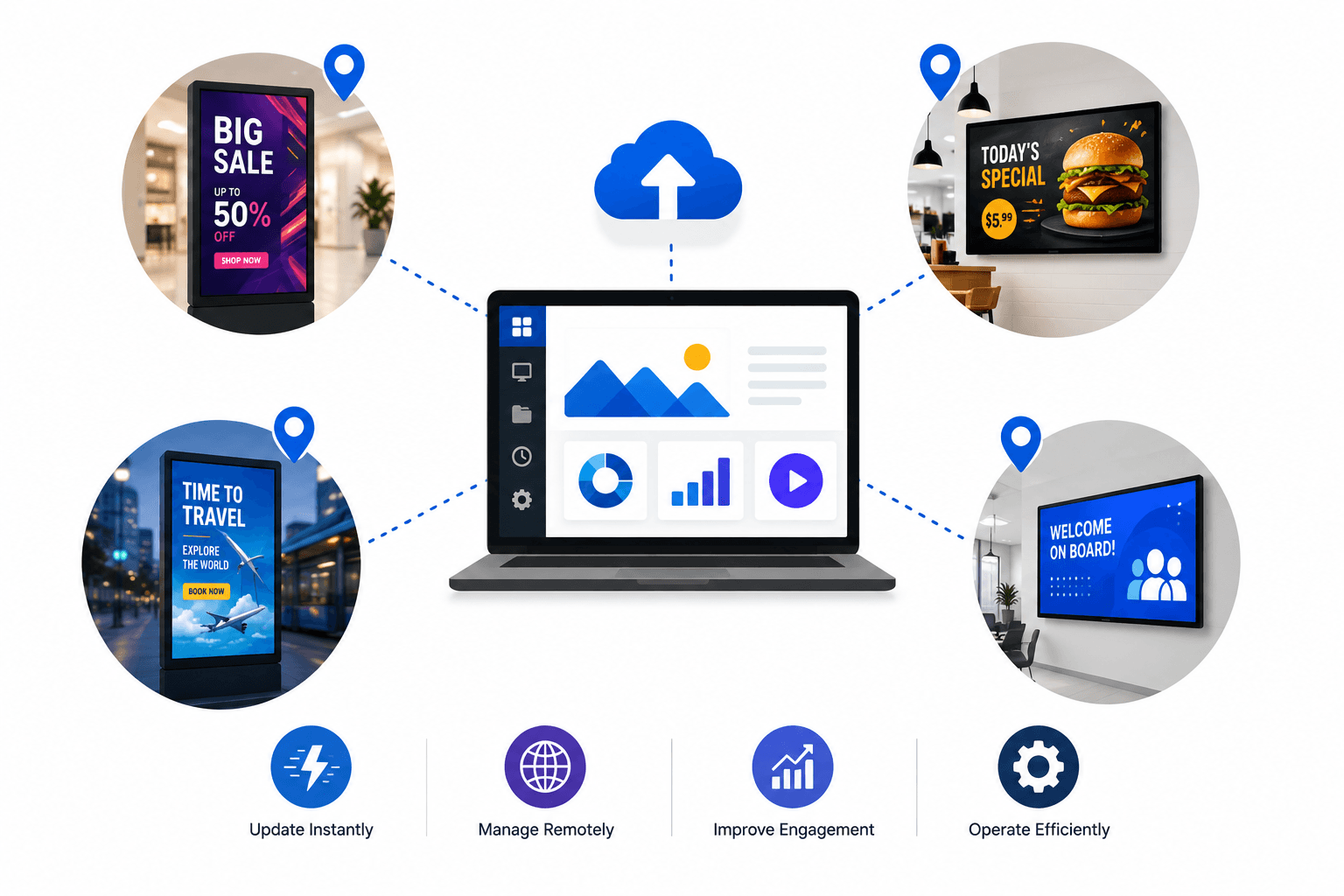
Managing large networks of digital displays requires centralized control. Cloud-based platforms allow transportation authorities to push emergency alerts, update schedules, synchronize messaging, and monitor screen performance from a single dashboard.
This ensures consistent communication from terminal entrance to boarding gate.
Conclusion
The digital transformation of transportation hubs is accelerating. Digital signage and touchscreen systems are no longer optional upgrades but essential components of efficient and modern travel infrastructure.
By reducing passenger friction, automating routine processes, and unlocking advertising revenue, transit authorities can create smarter and more profitable ecosystems.
As AI, biometrics, and mobile integration continue to evolve, transportation hubs that invest in digital signage today will remain competitive in the future of travel.