How Digital Screens Transform Business Communication
Strategic advantages of dynamic displays over traditional printed media
Businesses have relied on printed posters and banners for decades to communicate with customers. However, digital screens now offer a more flexible and dynamic way to display promotions, announcements, and brand messaging.
Written by
Sidharth Gaikwad
Read Time
4 minutes
Posted on
03/08/2026
The Limitations of Static Media
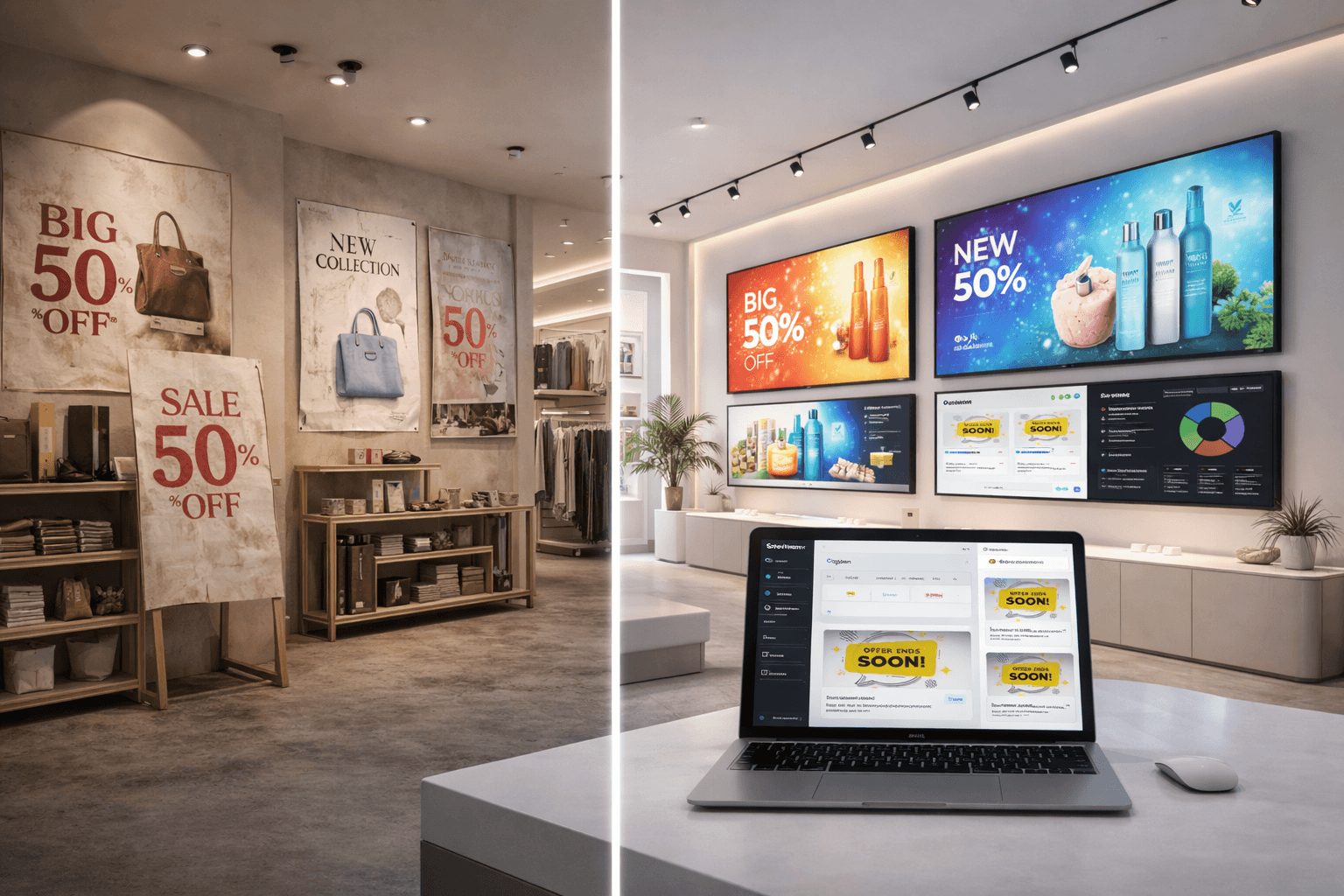
Static media such as posters, banners, and printed signage have long been used in marketing and in-store communication. However, these formats come with several limitations that reduce their effectiveness in modern, fast-paced environments.
Common challenges include the inability to update content instantly, ongoing printing and replacement costs, and the restriction of displaying only one message at a time. Additionally, any campaign update requires physical replacement, which slows down execution and increases operational effort.
These limitations make static media less adaptable for businesses that need speed, flexibility, and real-time communication.
Dynamic Content Captures More Attention
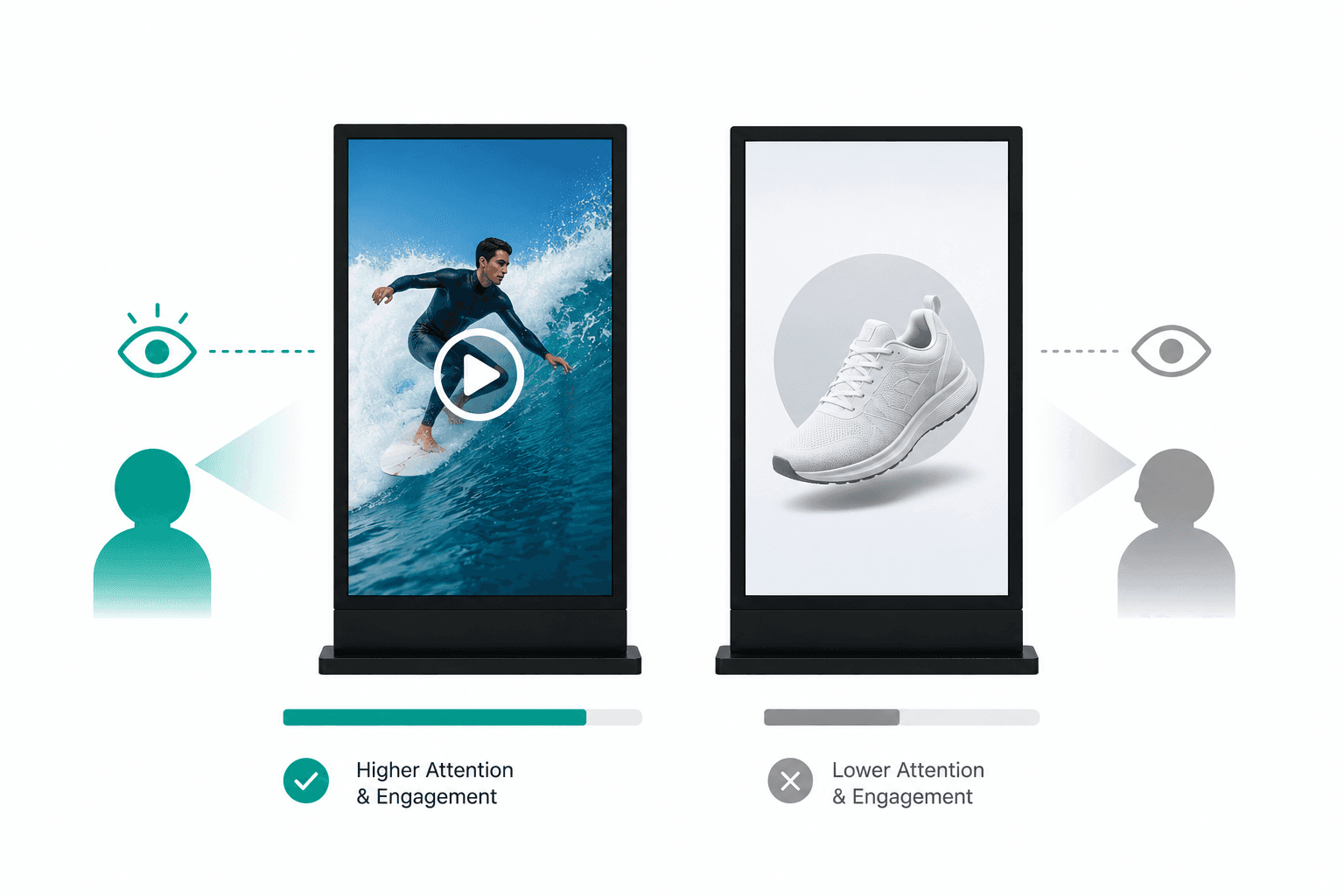
Digital screens enable businesses to display dynamic and engaging content that goes far beyond static messaging. Instead of a single fixed message, screens can rotate multiple campaigns and formats throughout the day.
Businesses can showcase promotional videos, animated advertisements, rotating product highlights, digital menu boards, and real-time announcements—all on the same screen.
This movement and variation naturally draw more attention, making digital signage significantly more effective at capturing and retaining audience interest compared to static posters.
Faster Marketing Updates
One of the biggest advantages of digital signage is the ability to update content instantly. Businesses can modify promotions, pricing, or announcements in real time without the need for printing or physical replacement.
This flexibility allows organizations to launch campaigns immediately, promote limited-time offers, update pricing on the go, and adapt messaging based on changing business needs.
As a result, digital signage becomes a faster, more responsive marketing channel that aligns with real-time business operations.
Lower Long-Term Marketing Costs
While printed media requires continuous spending on design, printing, and distribution, digital signage significantly reduces these recurring expenses over time.
Although there is an initial investment in screens and setup, businesses benefit from reusable displays, simplified content updates, and reduced dependency on physical materials.
Over the long term, this leads to lower operational costs and a more efficient marketing system.
Scalable Communication Across Locations
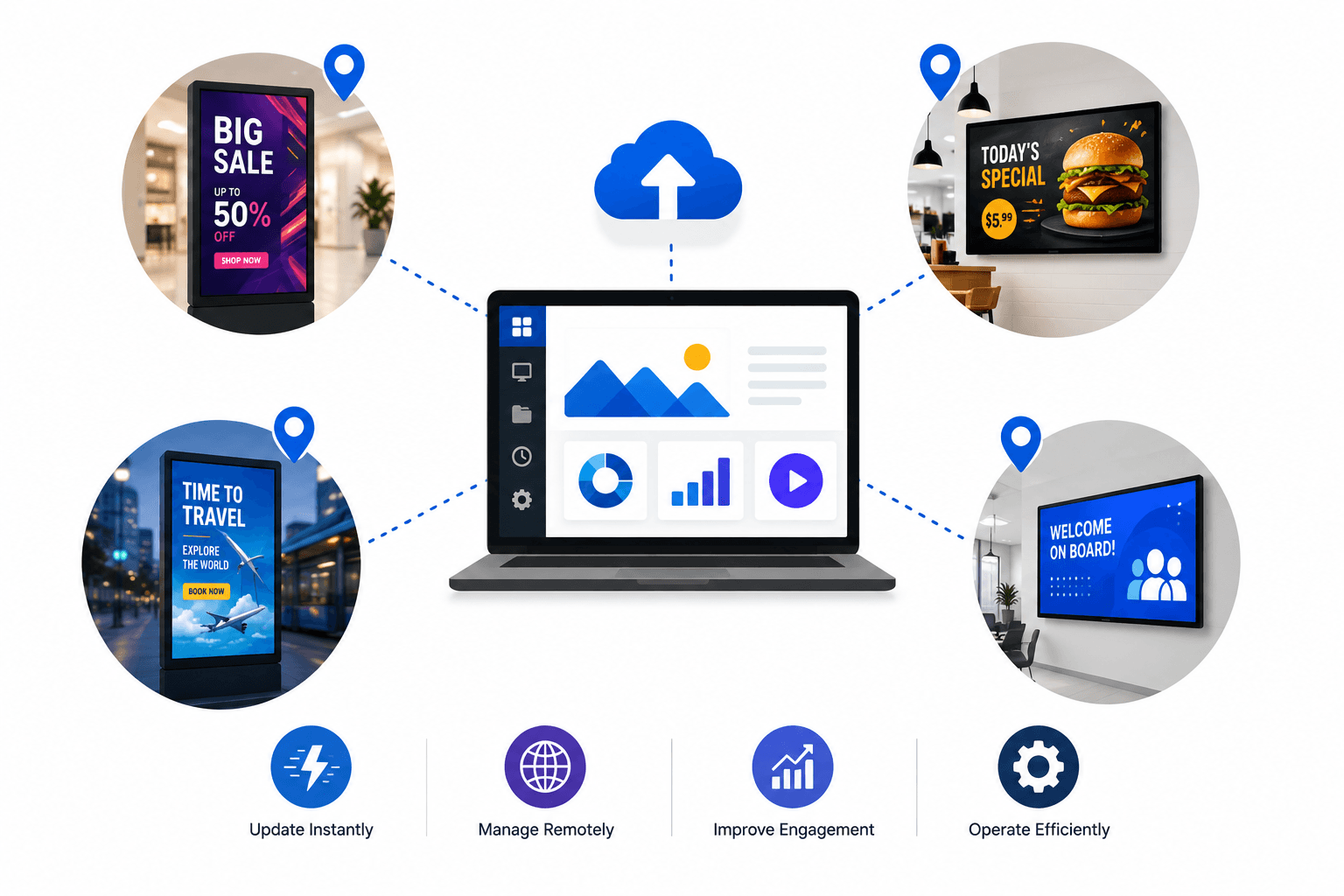
Digital signage platforms allow businesses to manage multiple screens from a centralized dashboard. This is especially valuable for organizations operating across multiple locations.
With centralized control, businesses can deploy campaigns simultaneously across all screens, ensuring consistent brand messaging and coordinated marketing efforts.
This level of scalability and control is extremely difficult to achieve with traditional printed media.
The Strategic Shift Toward Digital Displays
As display technology becomes more accessible and affordable, businesses are rapidly shifting from static media to digital signage.
Digital displays offer the flexibility, engagement, and operational efficiency that modern businesses require. They transform physical spaces into dynamic communication channels that can evolve in real time.
Conclusion
Digital signage offers clear advantages over traditional static media. It enables instant content updates, dynamic messaging, and efficient campaign management across multiple locations.
While printed materials still have a place in certain environments, digital signage is increasingly becoming the preferred choice for modern business communication.
Solutions like Flickerwall empower businesses to manage digital screens effortlessly and scale their signage networks as they grow, making it easier to deliver impactful and engaging customer experiences.