How Digital Signage Software Differs from CMS
Understanding how screen management platforms differ from traditional content management systems.
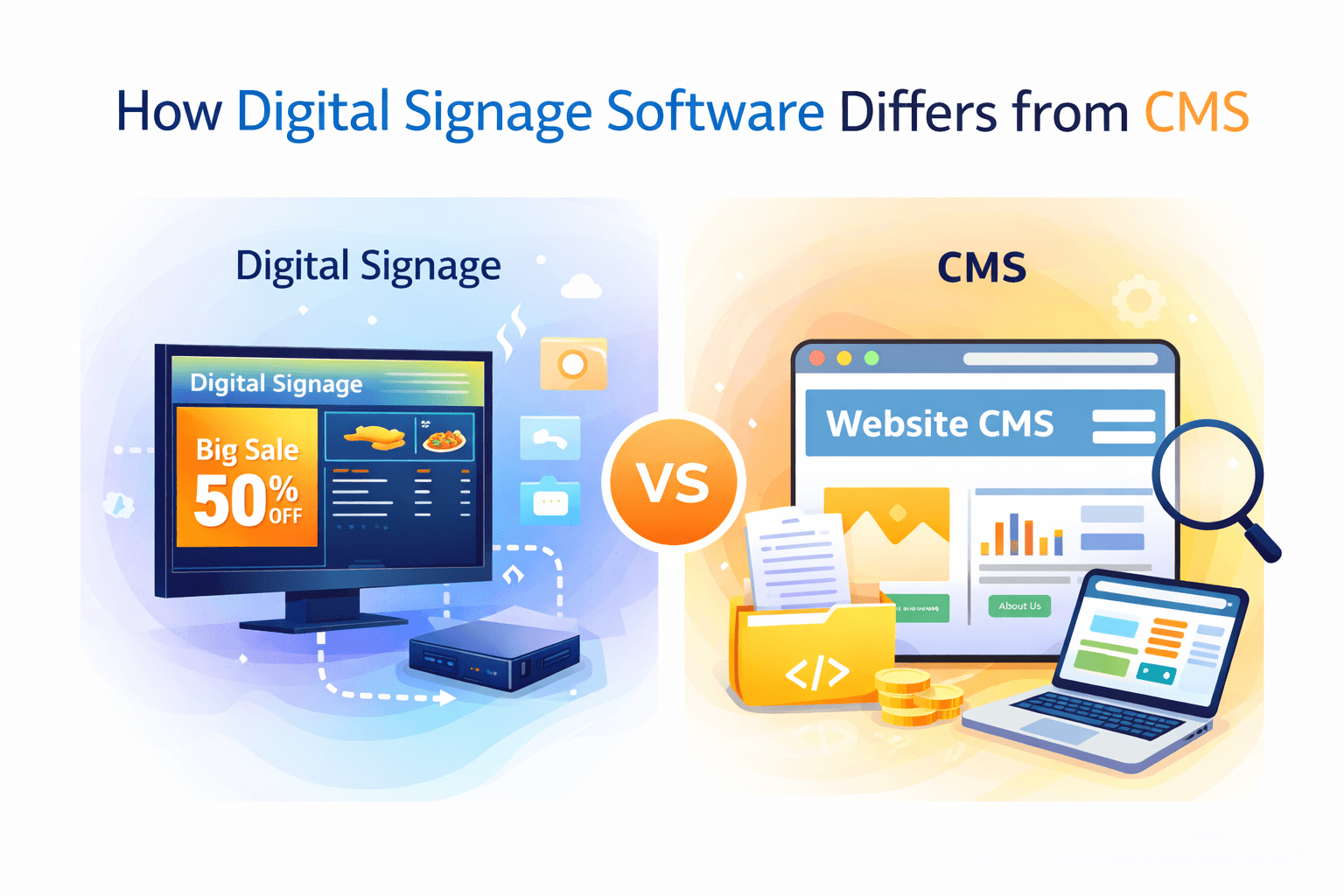
As businesses adopt digital displays for communication and marketing, many teams confuse digital signage software with traditional content management systems.Both platforms manage content, but they serve completely different purposes. A CMS focuses on managing website content, while digital signage software is designed to control content across physical display networks.Understanding the differences helps businesses implement the right tools for both digital communication and screen-based marketing.
Written by
Sidharth Gaikwad
Read Time
4 minutes
Posted on
03/07/2026
What Is Digital Signage Software
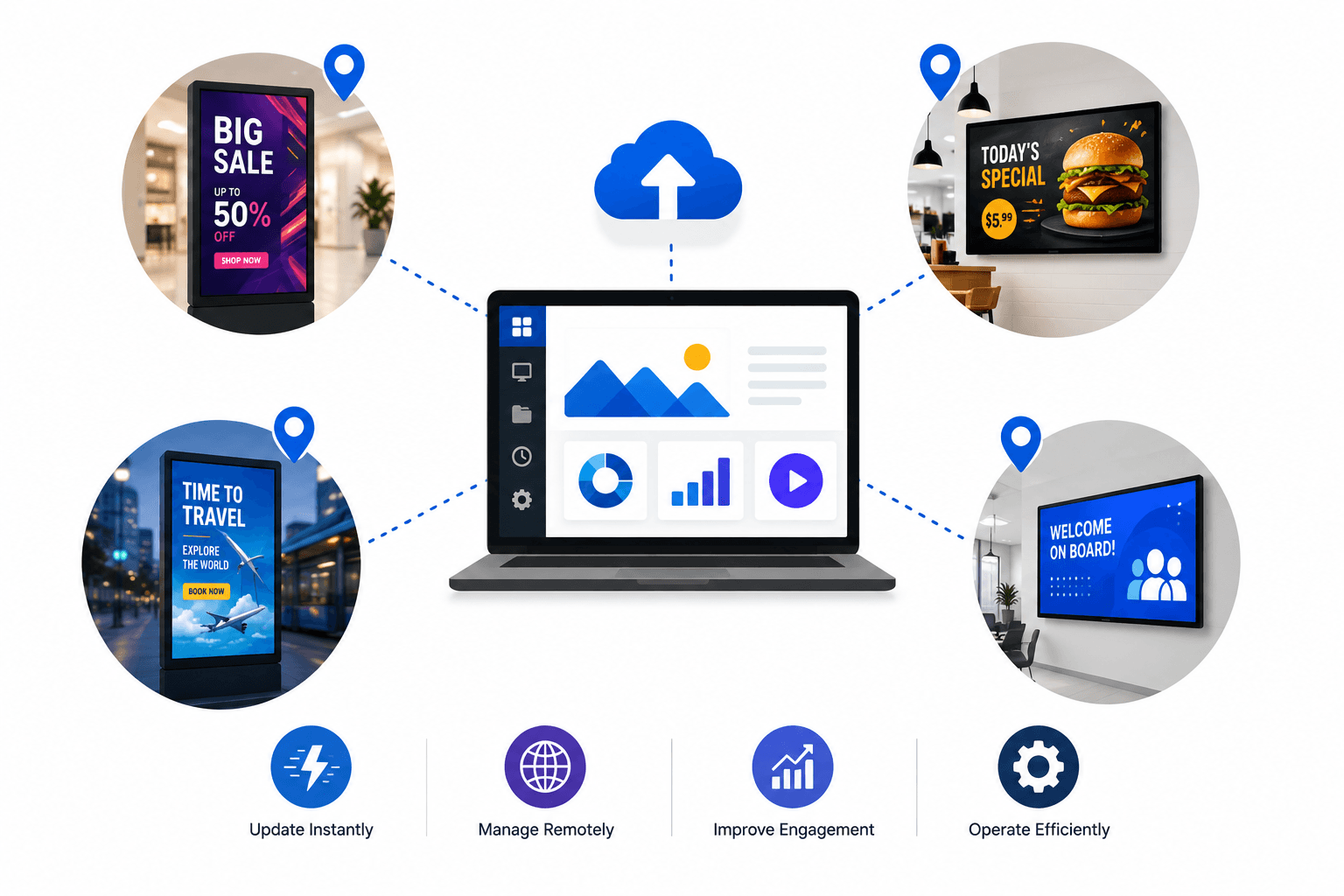
Digital signage software is a platform that allows businesses to control the content displayed on digital screens.
It enables teams to upload media, schedule playlists, and remotely manage displays across different locations.
Typical capabilities include:
Remote content updates
Screen scheduling
Playlist management
Multi-screen control
Device monitoring
Businesses use these platforms to manage retail promotions, restaurant menu boards, office dashboards, and informational displays.
For businesses evaluating screen deployments, it is also important to understand the digital signage cost in India before planning a network rollout.
What Is a Content Management System (CMS)
A content management system (CMS) is software used to manage and publish content on websites.
CMS platforms help teams create and organize web pages, blog posts, and digital media without needing extensive technical knowledge.
Common CMS capabilities include:
Page creation and editing
Blog publishing
Media library management
SEO optimization tools
User access control
Examples include website platforms used to manage company blogs and marketing pages.
Key Differences Between Digital Signage Software and CMS
While both platforms manage content, their infrastructure and purpose are very different.
Content Delivery
Digital signage software delivers content to physical displays such as TVs and kiosks.
A CMS delivers content to websites that users access through web browsers.
Device Management
Digital signage software manages hardware devices such as media players and display screens.
CMS platforms do not manage physical devices.
Scheduling and Automation
Digital signage software allows businesses to schedule when content appears on screens.
CMS platforms typically publish content instantly or based on website publishing schedules.
Network Control
Digital signage software can control hundreds of screens across multiple locations.
CMS platforms manage digital content across web pages rather than hardware networks.
When Businesses Need Digital Signage Software
Businesses should use digital signage software when they need to manage display screens across multiple locations.
Common use cases include:
Retail promotions
Restaurant menu boards
Hospital information displays
Corporate dashboards
In-store advertising
These environments require centralized screen control that a traditional CMS cannot provide.
Businesses planning a screen deployment should first understand what digital signage software is and how it manages screen networks before selecting a platform.
Why Both Systems Can Work Together
Although digital signage software and CMS platforms serve different purposes, they can complement each other.
A CMS manages website content, while digital signage software manages in-store screens and display networks.
Many organizations integrate both systems so marketing teams can maintain consistent messaging across websites and physical displays.
Conclusion
Digital signage software and CMS platforms both manage content, but they are designed for different environments.
A CMS focuses on publishing and managing website content, while digital signage software controls content across physical displays and screen networks.
Businesses implementing digital displays should rely on dedicated signage platforms that support remote screen management, scheduling, and network monitoring.
For organizations deploying screens across multiple locations, platforms like Flickerwall help centralize display management while enabling marketing teams to scale communication efficiently.