Why Cloud Digital Signage Is Replacing Traditional Systems
How modern businesses are moving from local setups to scalable cloud platforms
Digital signage has evolved significantly over the past few years. What started as simple offline displays has now become a connected, software-driven system. Today, cloud-based digital signage is no longer an advanced option—it’s the standard for businesses that want control, flexibility, and scalability. While traditional on-premise setups still exist, they are increasingly limited in how they support modern operations.
Written by
Sidharth Gaikwad
Read Time
3 minutes
Posted on
04/28/2026
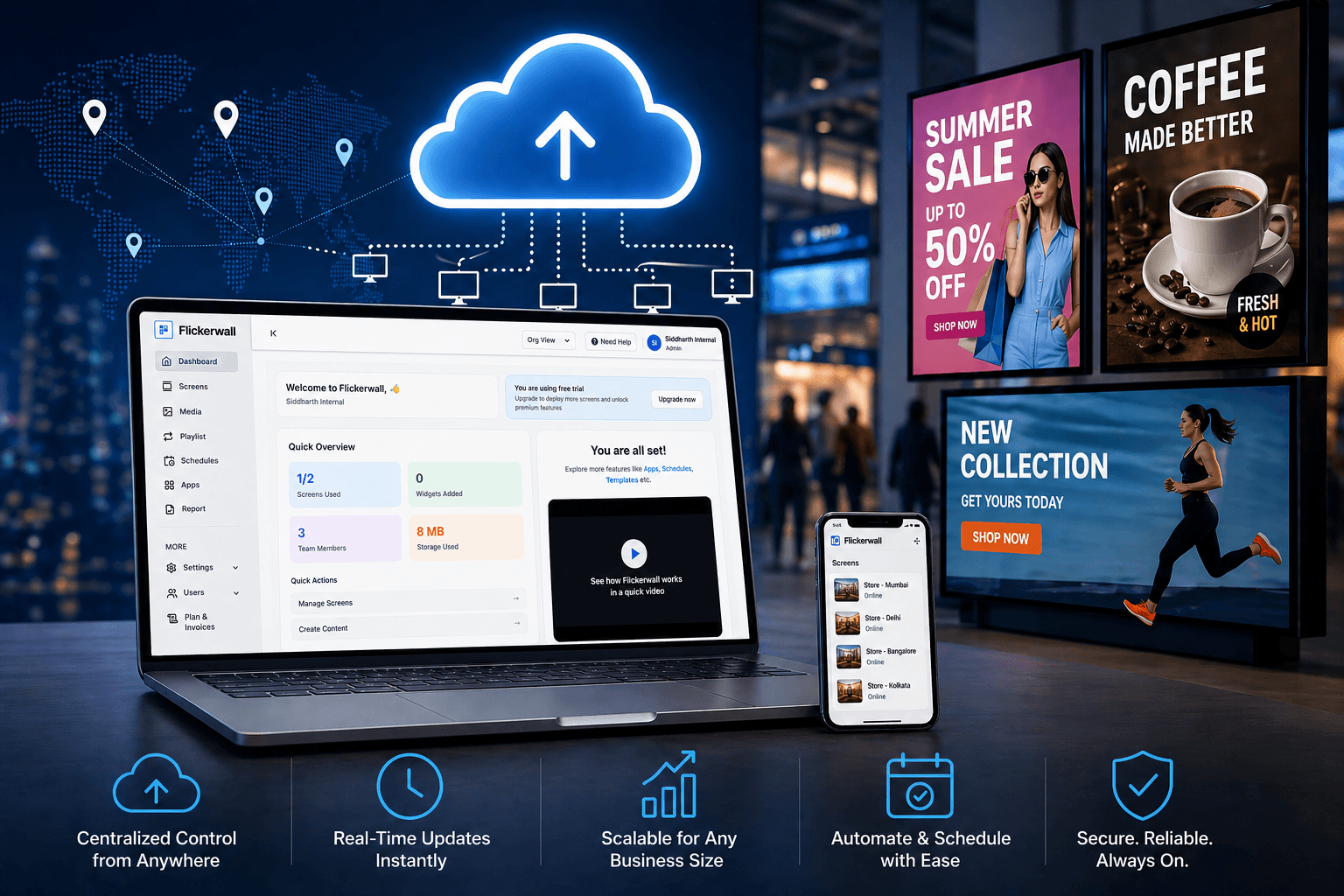
Centralized Control Changes Everything
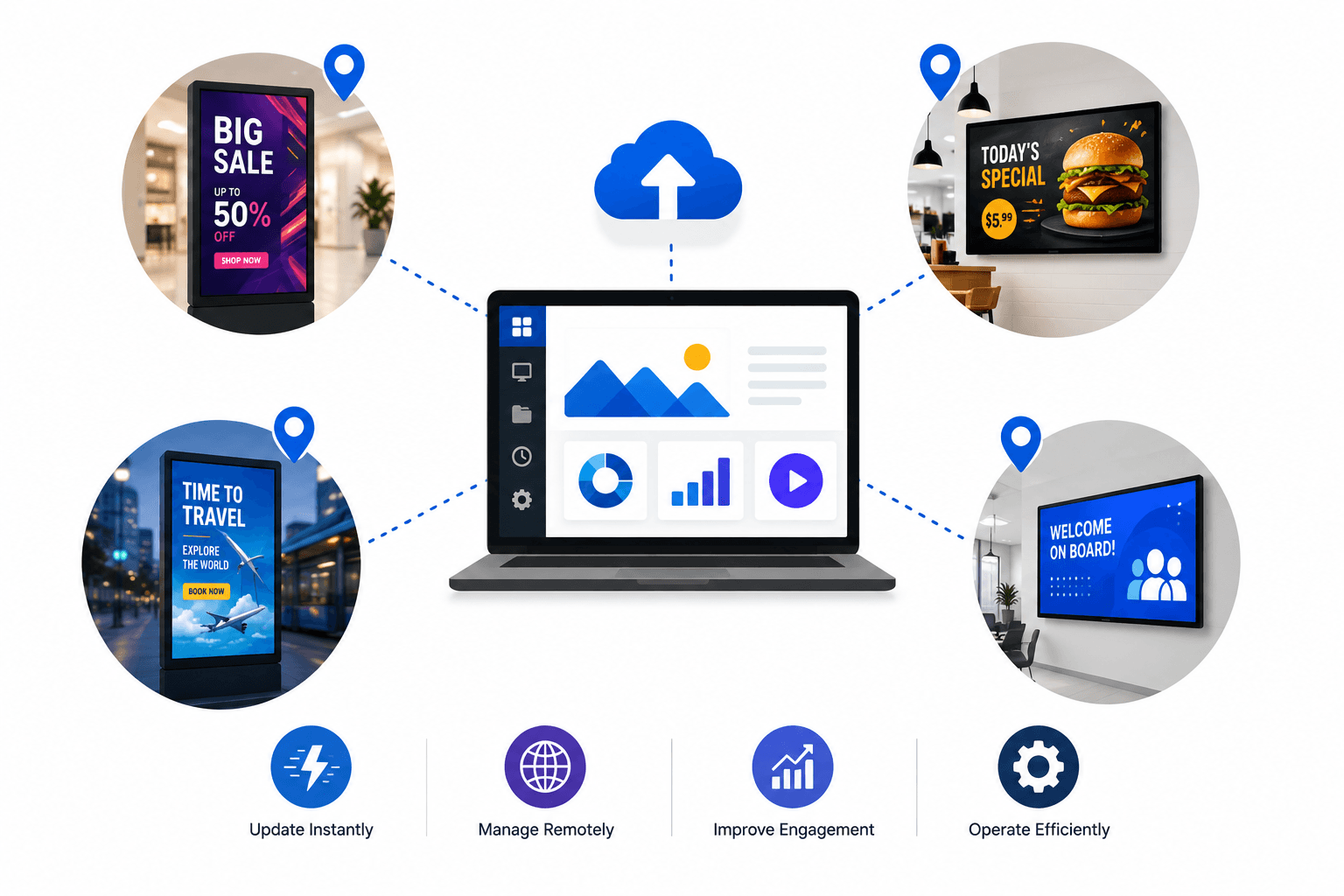
Cloud signage allows businesses to manage all screens from a single platform.
This means:
No need for physical access
Instant updates across locations
Unified control over content
👉 These are core cloud signage capabilities that enable efficient screen management.
Real-Time Updates Drive Faster Execution
In cloud environments, content updates happen instantly.
Businesses can:
Launch campaigns in real time
Update pricing or offers instantly
Respond quickly to operational changes
This level of agility is not possible with traditional offline or on-prem systems.
Scalability Without Infrastructure Complexity
One of the biggest advantages of cloud signage is how easily it scales.
Add new screens without setup complexity
Manage multiple locations centrally
Maintain consistency across all displays
As businesses grow, cloud systems grow with them—without requiring additional infrastructure at each location.
Automation Reduces Operational Effort
Cloud platforms introduce automation into signage workflows.
This includes:
Scheduled content playback
Automated campaign execution
Rule-based content updates
This reduces manual effort and ensures consistency across screens.
Where On-Prem Still Exists
On-prem systems are still used in specific scenarios:
Locations with no internet access
Highly controlled internal environments
Single-location setups with minimal scale
However, they come with trade-offs in flexibility, scalability, and control.
For a detailed breakdown of how cloud and on-prem systems compare across infrastructure, cost, and scalability, explore our cloud vs on-prem signage software guide.
Conclusion
Cloud digital signage has become the standard because it aligns with how modern businesses operate—distributed, fast-moving, and data-driven.
While on-prem systems still serve niche use cases, cloud platforms provide the control and scalability required for long-term growth.