Limitations of Offline Digital Signage (And How Cloud Solves Them)
A practical breakdown of where offline systems fall short and how cloud platforms address it
Offline digital signage is often used in environments where internet connectivity is limited or unreliable. It provides a functional way to display preloaded content without depending on real-time access. However, as soon as businesses expand across locations or require more control, the limitations of offline systems start to surface. Understanding these gaps is critical when planning for long-term scalability and operational efficiency.
Written by
Sidharth Gaikwad
Read Time
5 minutes
Posted on
04/26/2026

No Real-Time Content Updates
Offline systems rely on preloaded content.
often set up using basic methods like USB or local media players. Here’s a step-by-step guide on how to set up digital signage without internet in India.
This means:
Updates cannot be pushed instantly
Campaign changes require manual intervention
Time-sensitive communication becomes difficult
How cloud solves this:
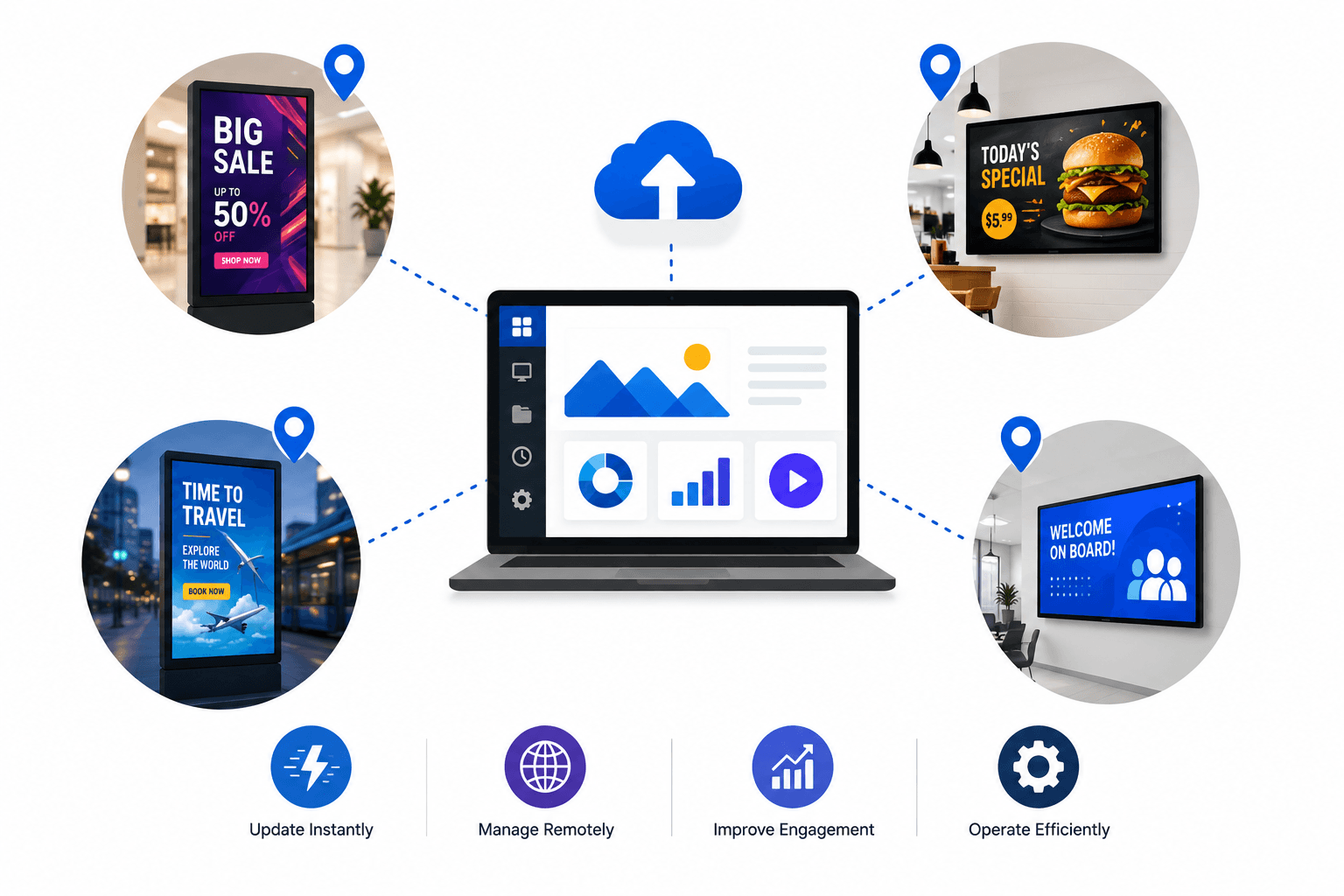
Cloud platforms enable real-time updates across all screens, ensuring immediate control over messaging.
Lack of Remote Management
Offline signage requires physical access to devices.
Challenges include:
On-site updates for every change
Increased operational effort
Delays in troubleshooting
How cloud solves this:
Cloud systems provide centralized dashboards where screens can be monitored and controlled remotely.
Limited Scalability
Managing a few screens offline is manageable. Scaling is not.
Issues include:
Difficulty managing multiple locations
No centralized control
Inconsistent content across screens
How cloud solves this:
Cloud signage allows multi-location management, bulk updates, and consistent content delivery from a single platform.
Manual Content Management
Offline workflows are largely manual.
This leads to:
USB-based updates
Version control issues
Increased dependency on staff
How cloud solves this:
Cloud CMS platforms automate scheduling, updates, and content distribution.
No Live Data or Dynamic Content
Offline systems can only display static or pre-scheduled content.
Limitations:
No API integrations
No real-time data feeds
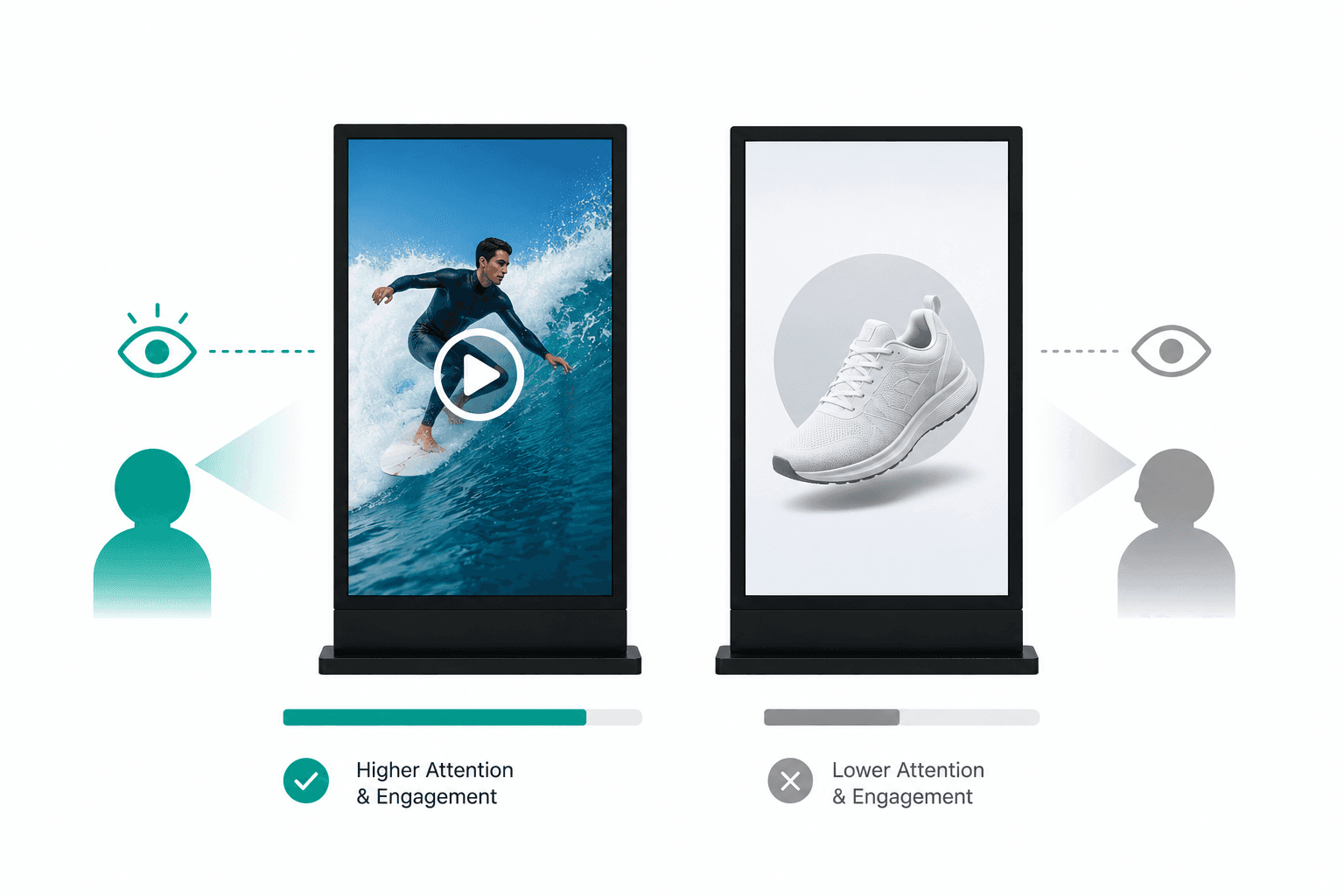
Limited engagement
How cloud solves this:
Cloud signage supports live data integrations, enabling dynamic and context-aware content.
Reduced Visibility and Monitoring
Offline systems offer little to no insight into performance.
Challenges:
No device health tracking
No playback verification
Limited analytics
How cloud solves this:
Cloud platforms provide real-time monitoring, reporting, and analytics for better decision-making.
Conclusion
Offline digital signage serves a purpose in specific scenarios, but it introduces operational limitations that restrict growth and efficiency. As businesses scale, these challenges become more pronounced.
Cloud digital signage addresses these gaps by enabling real-time control, automation, and centralized management—making it a more future-ready solution.
If you're currently relying on offline systems, it may be time to explore a cloud-based approach. Flickerwall helps businesses transition seamlessly with scalable, cloud-powered digital signage solutions.