How Businesses Should Plan Digital Signage Budgets
Understanding cost structure beyond just initial investment
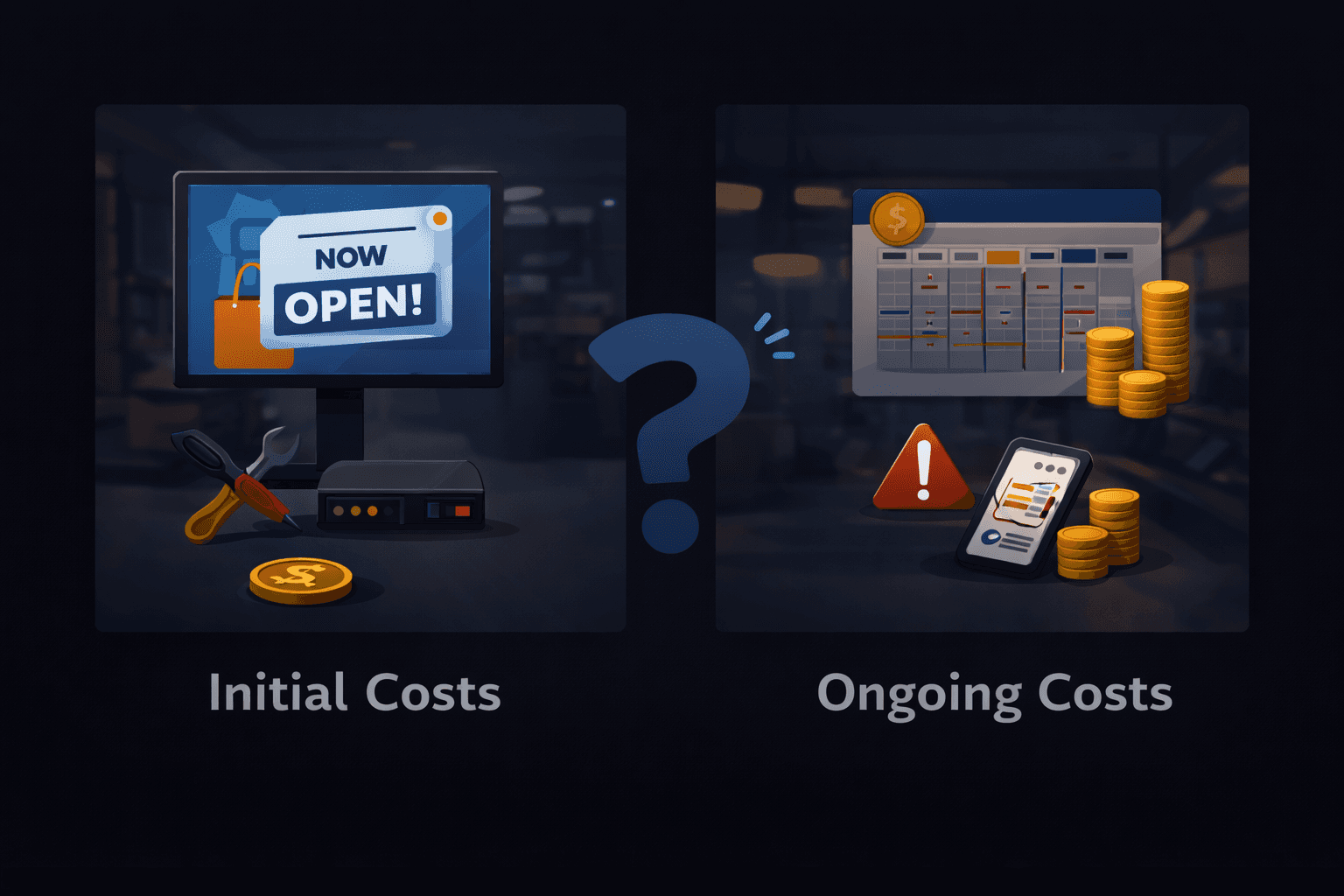
Digital signage budgeting is often approached with a narrow focus on upfront costs. Businesses typically evaluate screens and hardware while overlooking the broader financial structure behind a deployment. In reality, digital signage is a combination of initial investment and ongoing operational costs. Without a clear understanding of both, businesses risk underestimating total spend or choosing the wrong model. A structured budgeting approach ensures that your investment aligns with both current needs and future scalability.
Written by
Sidharth Gaikwad
Read Time
2 minutes
Posted on
04/23/2026
The Common Budgeting Mistake
Most businesses focus only on the visible costs—primarily screens and hardware.
This leads to:
Underestimating total cost of ownership
Ignoring operational expenses
Poor long-term planning
A complete budget must go beyond initial setup.
Understanding Total Cost of Ownership
Digital signage includes multiple cost layers that evolve over time.
These include:
Hardware and installation
Software or platform costs
Content creation and updates
Maintenance and support
Looking at total cost helps in making better decisions.
Short-Term vs Long-Term Thinking
A low upfront cost does not always mean lower overall spend.
In many cases:
Cheaper setups lead to higher manual effort
Limited systems require upgrades later
Lack of scalability increases future costs
Balancing short-term affordability with long-term efficiency is critical.
The Role of Software in Budget Planning
Software plays a major role in determining cost structure.
Depending on the setup:
Some solutions involve upfront licensing
Others operate on recurring subscriptions
Feature sets and scalability vary significantly
This directly impacts how costs are distributed over time.
Planning for Scale
As businesses grow, their digital signage requirements expand.
This includes:
Adding more screens
Managing multiple locations
Increasing content complexity
Budgeting should account for future expansion, not just current needs.
Where Most Cost Confusion Comes From
At this stage, most businesses struggle with one key decision—how they should pay for digital signage systems.
The confusion typically lies between:
Paying a one-time cost upfront
Choosing a subscription-based model
Each approach has different implications for cost, scalability, and long-term ROI. Understanding the difference between one-time pricing and SaaS models will help you make a more informed decision based on your business needs.
Conclusion
Budgeting for digital signage is not just about cost—it’s about choosing the right financial model for your business.
A clear understanding of total cost, scalability, and operational impact ensures better decision-making and long-term success.
Before finalizing your investment, it’s important to evaluate how different pricing models affect your overall strategy.