Understanding Digital Signage Terms Before You Choose
Why clarity on software, CMS, and systems matters for decision-making
Digital signage conversations are often filled with technical terms that are used interchangeably but mean very different things. For businesses evaluating solutions, this lack of clarity creates confusion and leads to incorrect assumptions about what they are actually buying. Before selecting any platform, it is important to clearly understand the terminology that defines how digital signage systems work.
Written by
Sidharth Gaikwad
Read Time
3 minutes
Posted on
04/21/2026
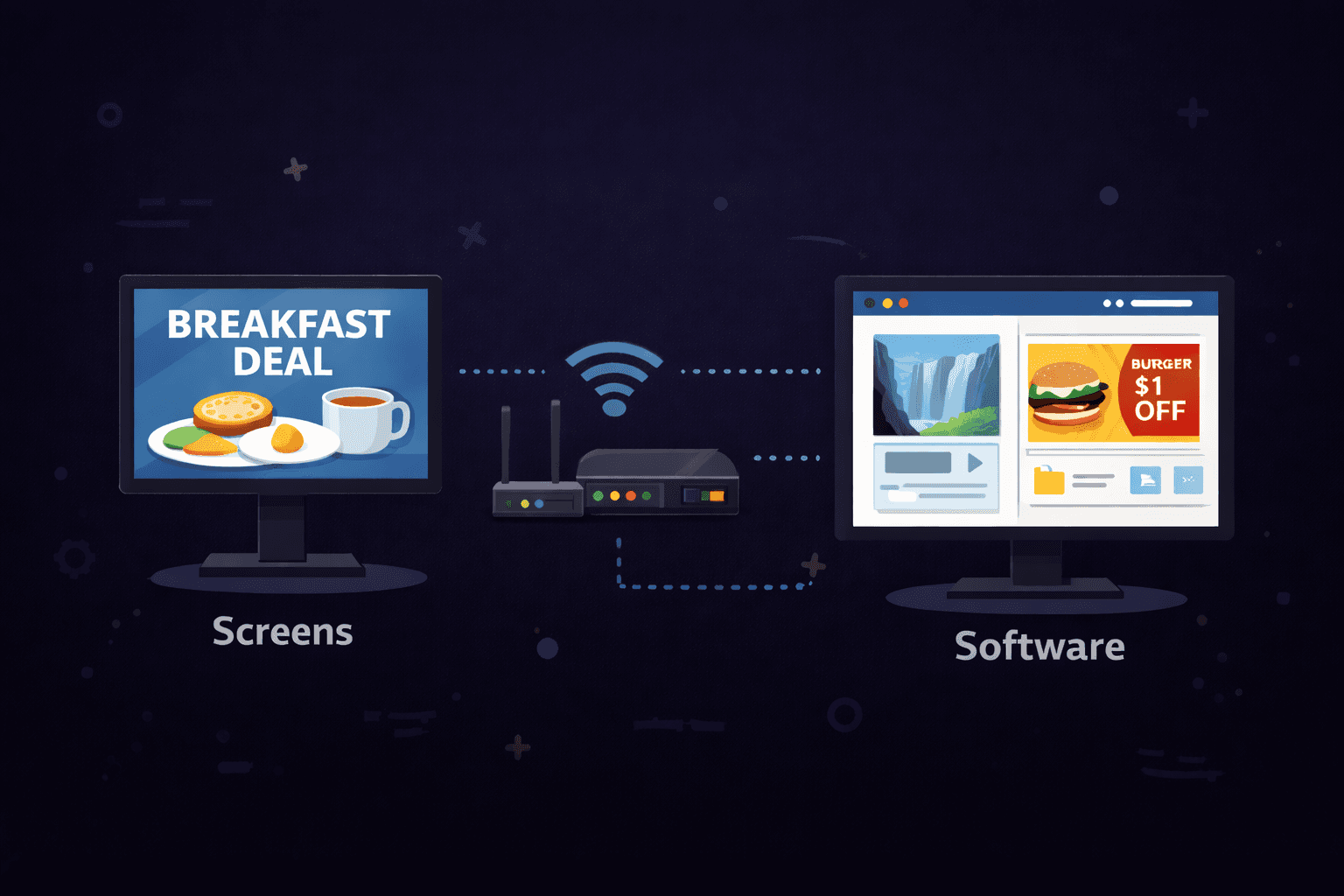
Why Terminology Creates Confusion
Many vendors and platforms use overlapping terms like software, CMS, and system architecture without clearly defining them.
This leads to:
Misaligned expectations
Incorrect product comparisons
Poor decision-making
Clarity at this stage prevents costly mistakes later.
What “Digital Signage Software” Really Refers To
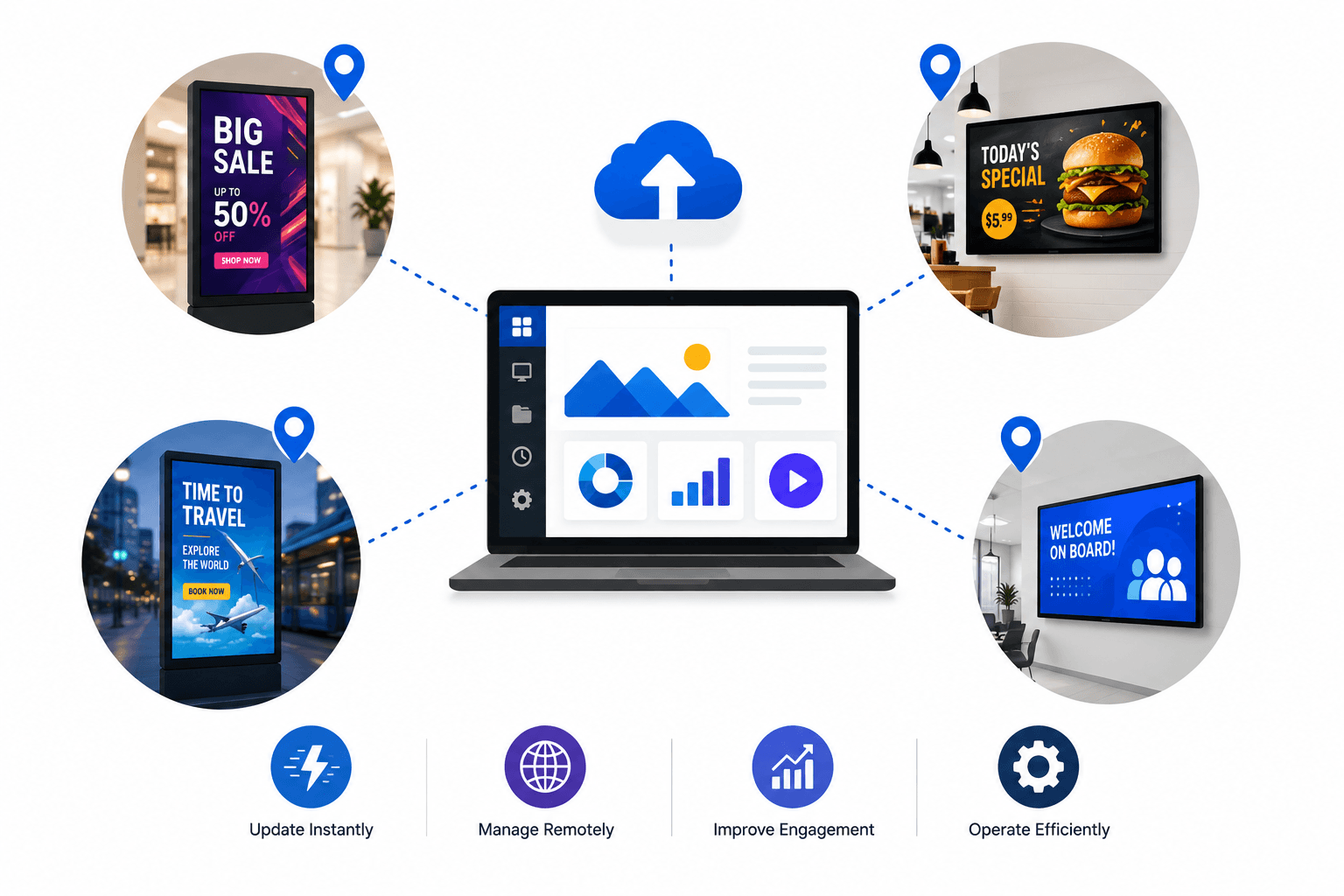
Digital signage software is the broader system that controls and manages your entire signage network.
It typically includes:
Content management capabilities
Device and screen control
Scheduling and automation
Analytics and reporting
It is not just one feature—it is the full operating layer behind your screens.
Where CMS Fits Into the System
A CMS, or content management system, is a part of the larger software ecosystem.
Its primary role is:
Creating and uploading content
Organizing playlists
Scheduling what appears on screens
While essential, it represents only one layer of the overall system.
Why This Difference Matters
Confusing CMS with full software leads to incomplete evaluations.
Common issues include:
Choosing tools that lack device control
Missing out on analytics and integrations
Limited scalability
Understanding the distinction ensures you select a complete solution, not just a partial tool.
How Misunderstanding Impacts Buying Decisions
When terminology is unclear, businesses often compare platforms incorrectly.
This results in:
Overpaying for limited functionality
Underestimating future requirements
Needing to switch systems later
A clear understanding helps align your choice with long-term goals.
Bridging the Knowledge Gap
At this stage, most buyers realize they need deeper clarity between software and CMS.
Understanding the high-level difference is useful, but making the right decision requires a more detailed comparison of how these components function in real-world deployments.
If you're evaluating platforms and still unclear about the distinction, a detailed comparison of digital signage software vs CMS will help you understand their roles, differences, and how they impact your overall system.
Conclusion
Digital signage success starts with clarity.
Understanding the difference between software, CMS, and system components ensures that you evaluate solutions correctly and avoid common pitfalls.
Before making a decision, it is essential to go beyond surface-level definitions and fully understand how these elements work together.