How Digital Signage Systems Actually Work
A clear breakdown of the technology powering modern screen networks
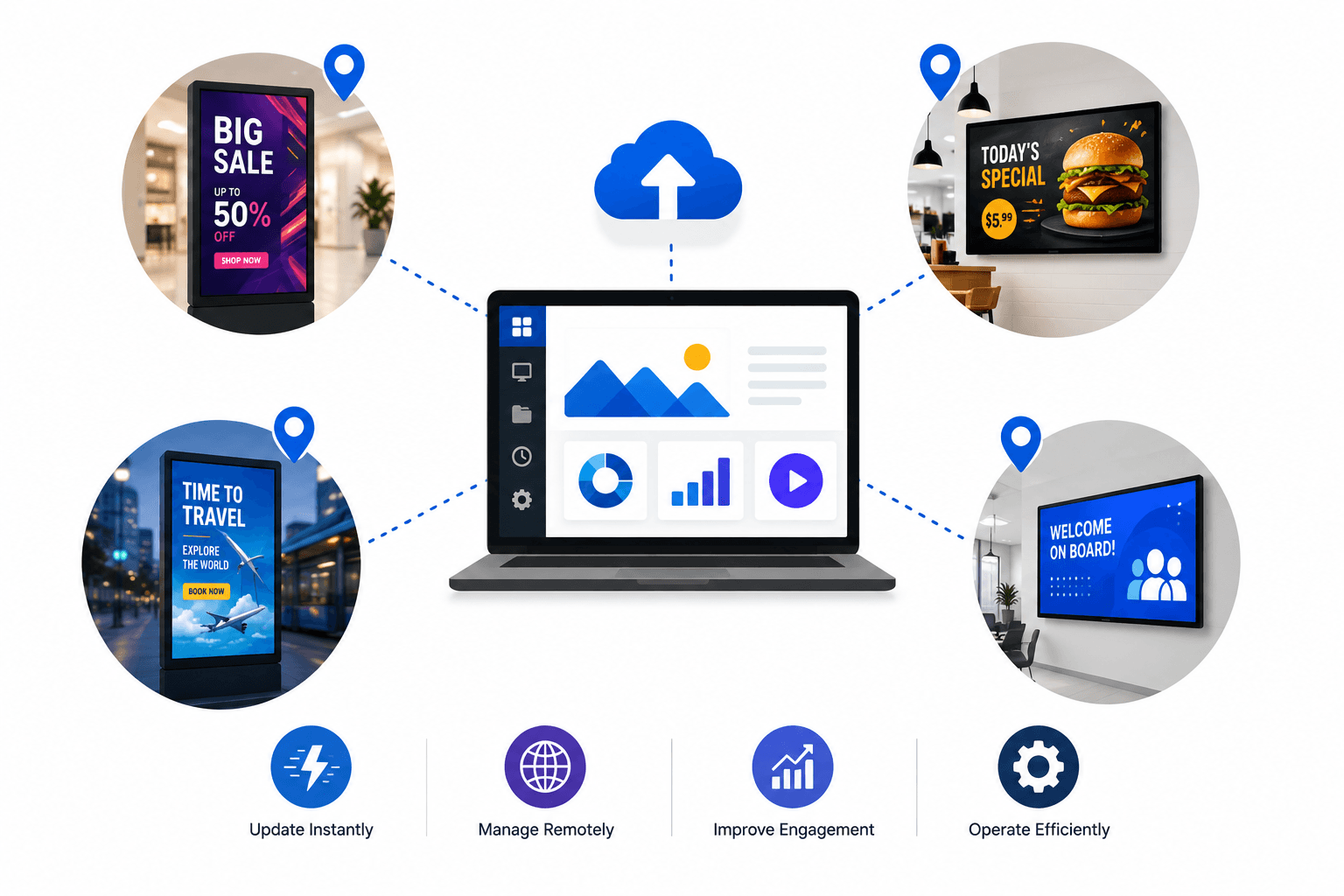
Digital signage is everywhere—from retail stores to corporate environments—but most businesses only see the final output: content displayed on screens. What often gets overlooked is the system that makes this possible. Without understanding how digital signage actually works, businesses risk choosing the wrong setup or underutilizing its capabilities. A clear view of the underlying structure helps in making more informed and scalable decisions. At its core, digital signage is not just a display tool but a connected system that brings together hardware, software, and content into a unified workflow.
Written by
Sidharth Gaikwad
Read Time
3 minutes
Posted on
04/20/2026
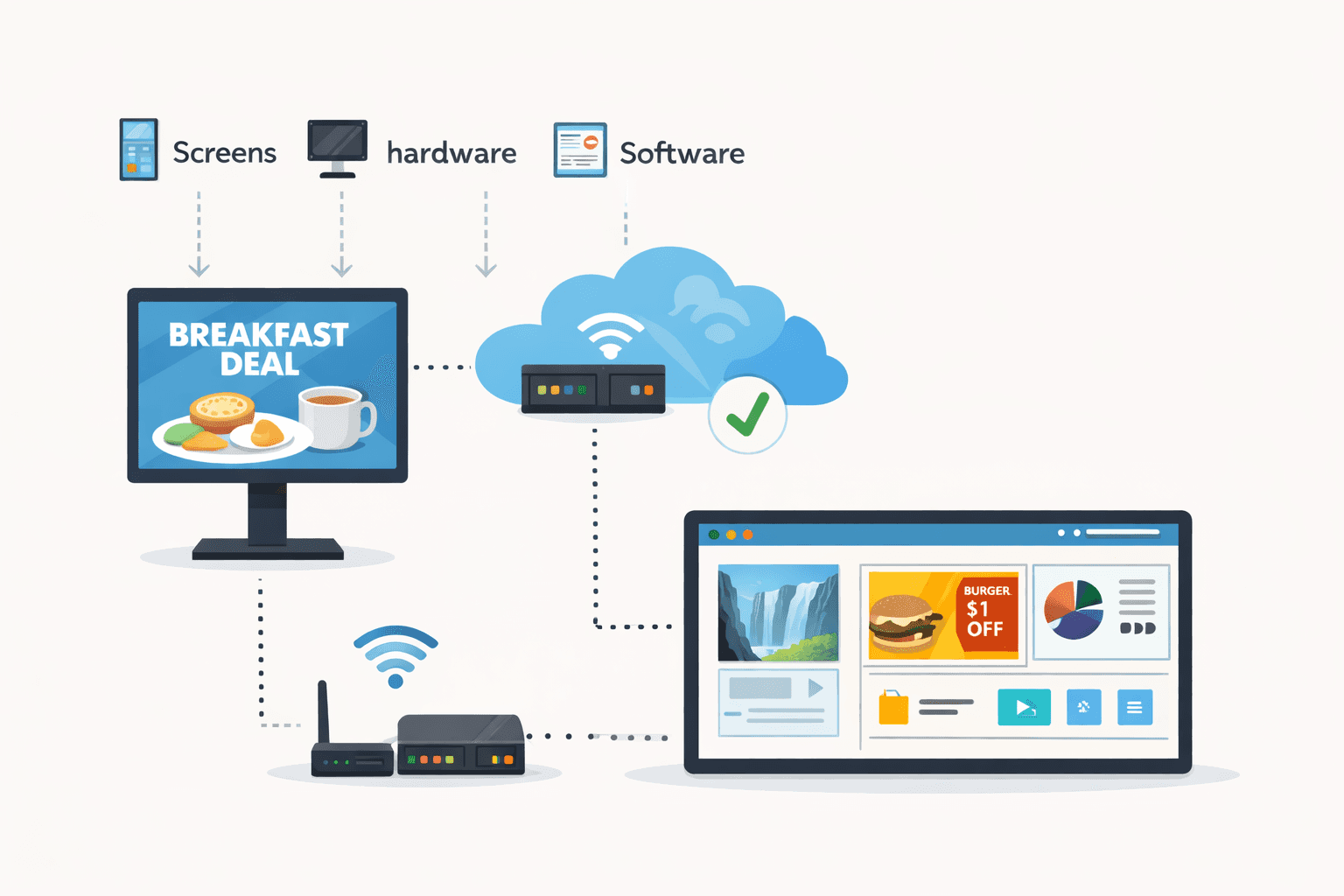
The Core Components of Digital Signage
Every digital signage setup is built on three fundamental layers: display screens, media players (or built-in hardware), and software that controls content. These elements work together to ensure that content is delivered smoothly and consistently across screens.
The display is the visible layer, but the real control lies in the backend systems that manage what appears and when.
The Role of Software in the System
Software is the most critical layer in any digital signage setup. It acts as the control center, enabling businesses to manage content efficiently across one or multiple screens.
Through the software, teams can create, schedule, and update content without needing physical access to each screen. This is what makes digital signage scalable and operationally efficient, especially for growing businesses.
If you're new to this layer, understanding what digital signage software actually is and how it functions will give you better clarity before evaluating platforms.
How Content Gets Delivered
Content delivery in digital signage follows a structured process. Businesses upload content to a platform, organize it into playlists, and assign it to specific screens or locations.
Once scheduled, the system ensures that content is played according to defined timelines. In more advanced setups, updates can happen in real time, allowing businesses to stay dynamic and responsive.
Cloud vs Offline Systems
Digital signage systems can operate either through cloud-based infrastructure or offline setups. Cloud-based systems allow real-time updates, remote access, and centralized control, making them ideal for businesses managing multiple screens or locations.
Offline systems, on the other hand, can function without constant internet connectivity but require manual updates and offer limited flexibility. While they may work for basic use cases, they often become restrictive as requirements grow.
Managing Multiple Screens
As soon as a business expands beyond a single screen, management complexity increases. Without a centralized system, updating content across multiple screens becomes time-consuming and inconsistent.
Modern digital signage platforms solve this by enabling centralized control, automated scheduling, and bulk content deployment. This reduces manual effort and ensures consistency across all locations.
Why Understanding the System Matters
Many businesses invest in digital signage without fully understanding how the system operates. This often results in inefficient workflows, poor software choices, and limited scalability.
Having a clear understanding of how digital signage works allows businesses to align their setup with long-term goals rather than short-term convenience.
This gap in understanding often comes from not fully grasping the role of the software layer in the system.
Where to Go Next
Understanding how digital signage works is the first step, but it only provides a high-level view of the system.
To make better technology decisions, the next step is to clearly understand what digital signage software is, how it works, and what role it plays in managing content, screens, and operations at scale.
Conclusion
Digital signage is not just about screens displaying content—it is a structured system built on software, hardware, and content working together seamlessly.
When businesses understand how these components interact, they are better positioned to make scalable, efficient, and future-ready decisions.
If you're exploring digital signage, the next step is to move beyond surface-level understanding and focus on the systems that truly drive performance.