The Shift from Display Screens to Business Growth Tools
How digital screens are driving measurable outcomes beyond visibility
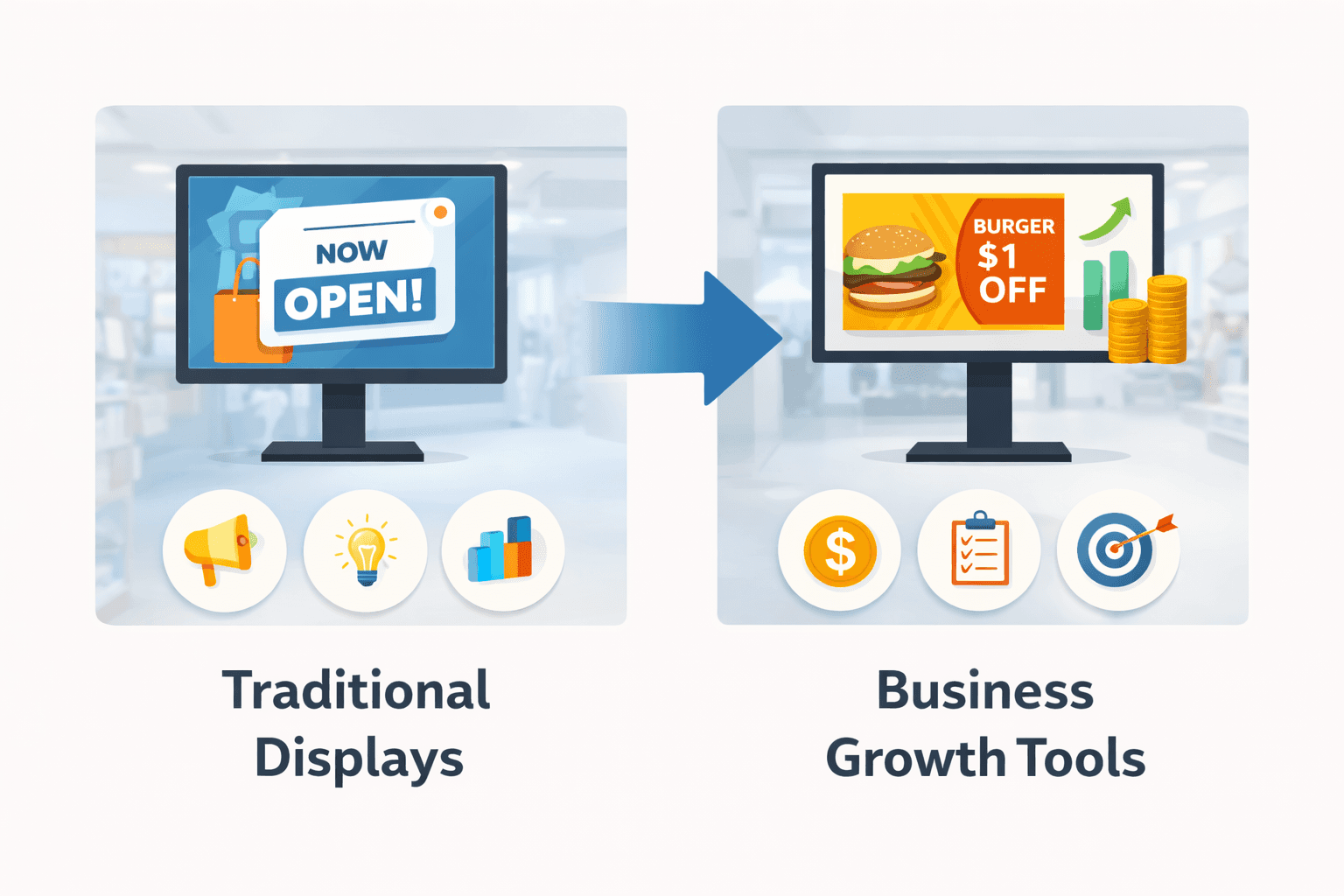
Digital screens were once seen as simple display tools used for announcements and branding. Today, that perception is rapidly changing. Businesses are no longer investing in screens just for visibility—they are using them as tools to influence customer behavior and drive measurable outcomes. This shift is redefining how digital signage is positioned within modern business strategy.
Written by
Sidharth Gaikwad
Read Time
3 minutes
Posted on
04/22/2026
The Traditional Role of Digital Screens
Historically, digital screens were used for basic communication.
This included:
Brand awareness
Static promotions
Informational content
While useful, this approach limited the overall value of digital signage.
What Has Changed in Recent Years
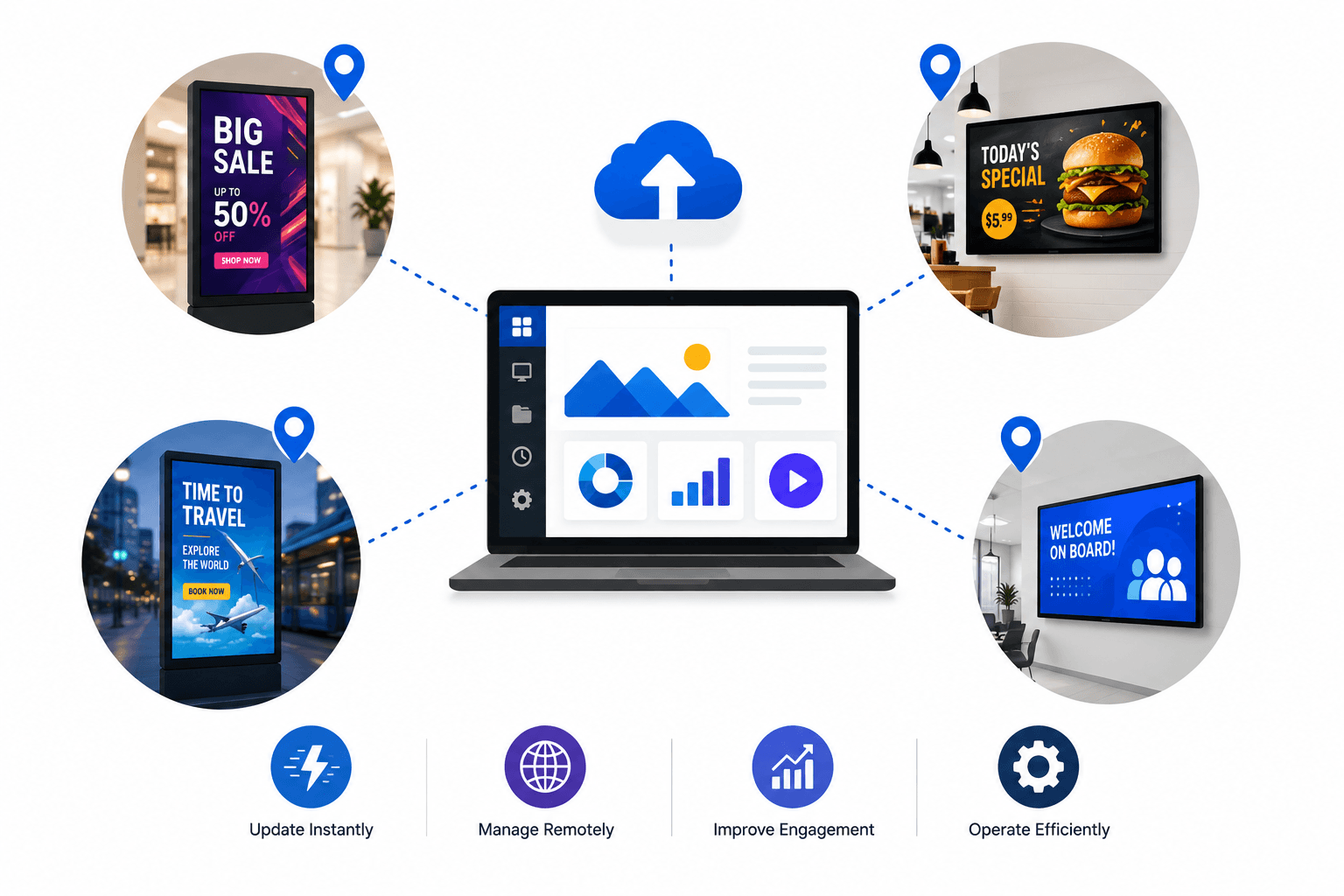
Advancements in technology and software have expanded what screens can do.\
Businesses can now:
Update content in real time
Target messaging based on context
Manage multiple screens centrally
This has transformed screens into active business tools.
From Visibility to Influence
Modern digital signage is not just about being seen—it’s about influencing decisions.
Screens now play a role in:
Driving purchase decisions
Highlighting key products
Increasing conversion at point of sale
This shift directly impacts revenue potential.
The Rise of Performance-Driven Content
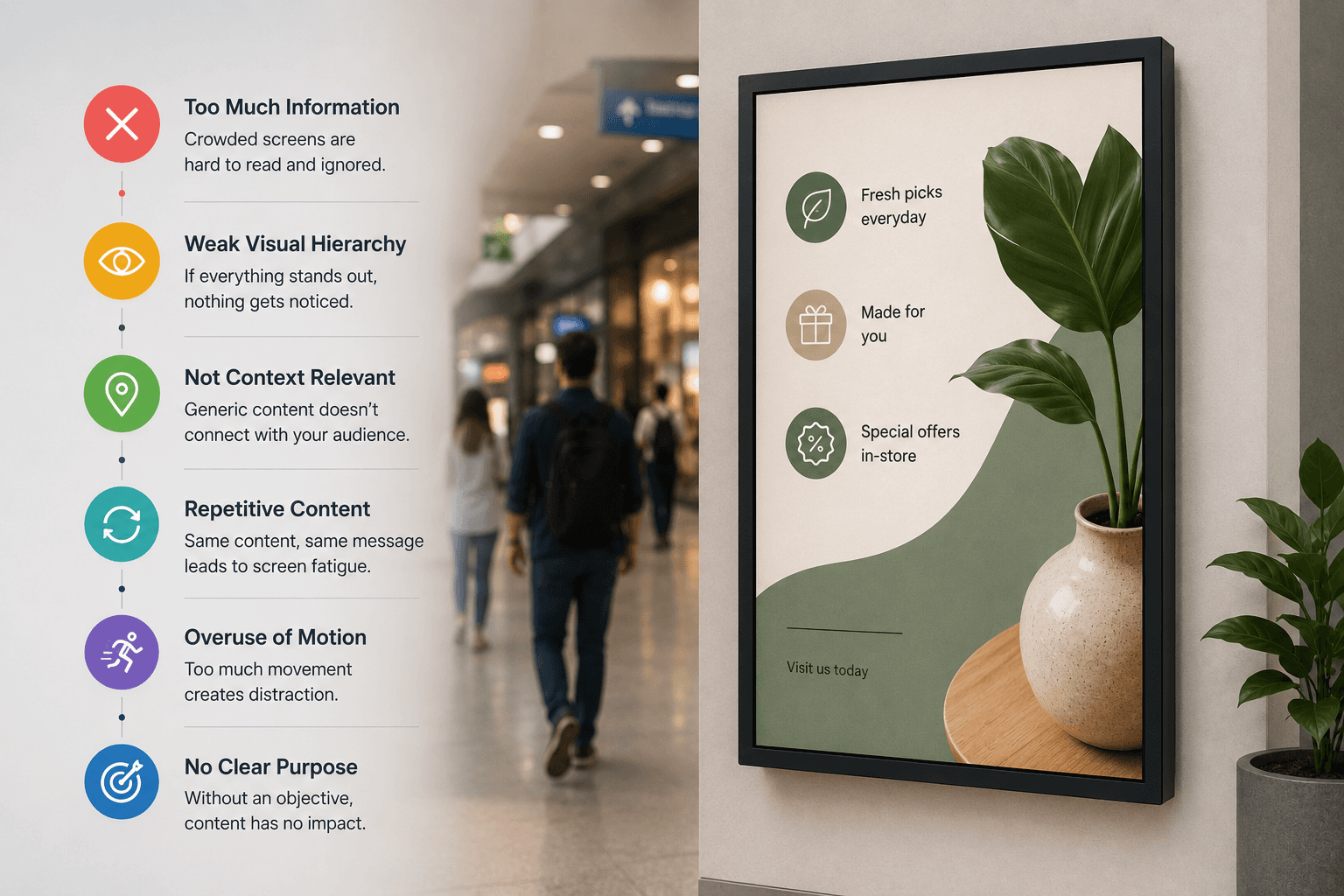
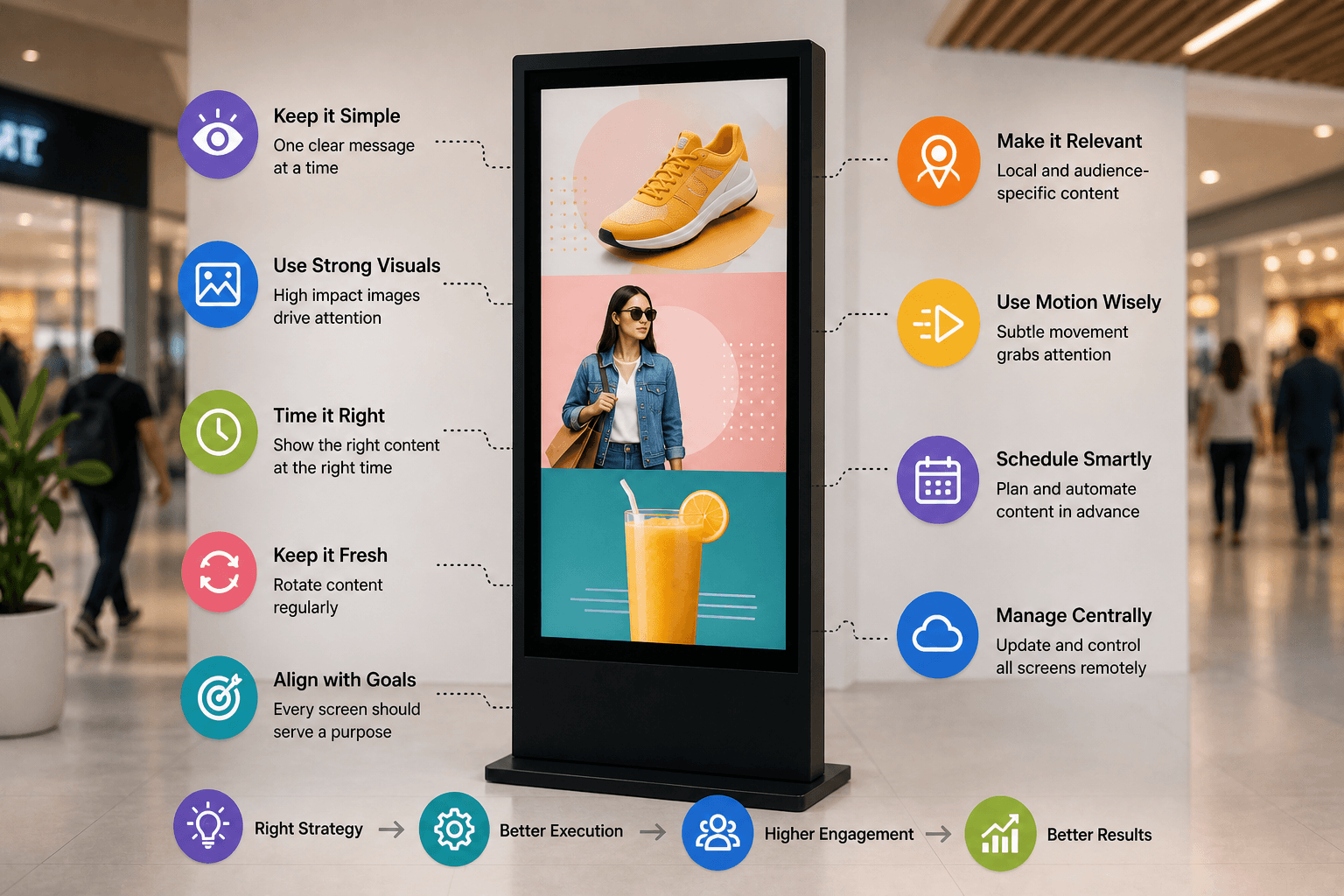
Content is no longer static or generic.
Instead, businesses focus on:
Data-driven messaging
Time-based promotions
Context-aware content
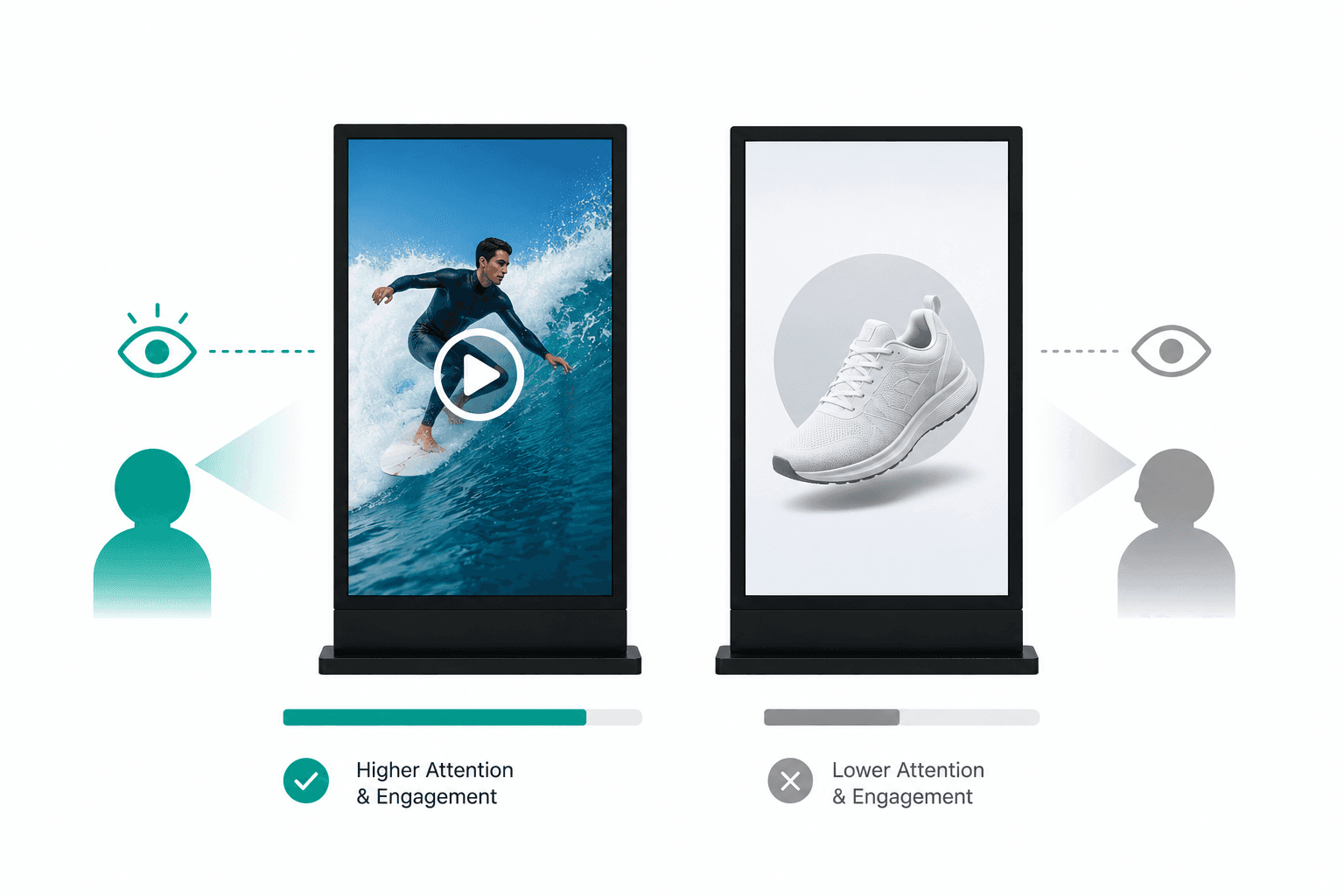
This improves engagement and effectiveness.
Why Businesses Are Re-evaluating Screens
As capabilities grow, so do expectations.
Companies now evaluate screens based on:
Business impact
Measurable outcomes
Return on investment
This is a major shift from earlier approaches.
Where Revenue Comes Into the Picture
At this stage, screens move beyond communication and start contributing to business performance.
They enable:
Promotion of high-margin products
Better in-store conversion
New monetization opportunities
Understanding how this works in practice requires a deeper look at the different ways businesses actually use screens to generate revenue.
Conclusion
Digital screens are no longer passive display tools—they are active drivers of business outcomes.
As technology evolves, their role continues to expand from communication to influence and revenue generation.
If you're evaluating digital signage today, the key question is not whether you need screens, but how effectively you can use them to drive measurable results.