Why Cloud Digital Signage Has Become the Industry Standard
How modern businesses are moving toward scalable, software-driven screen management
Digital signage has evolved from simple offline displays into connected, software-driven systems. Today, businesses are no longer just installing screens—they are building communication networks. At the center of this shift is cloud-based digital signage. While traditional and on-premise systems still exist, they struggle to meet the demands of modern operations. Cloud platforms, on the other hand, are designed for flexibility, scalability, and control.
Written by
Sidharth Gaikwad
Read Time
4 minutes
Posted on
05/06/2026
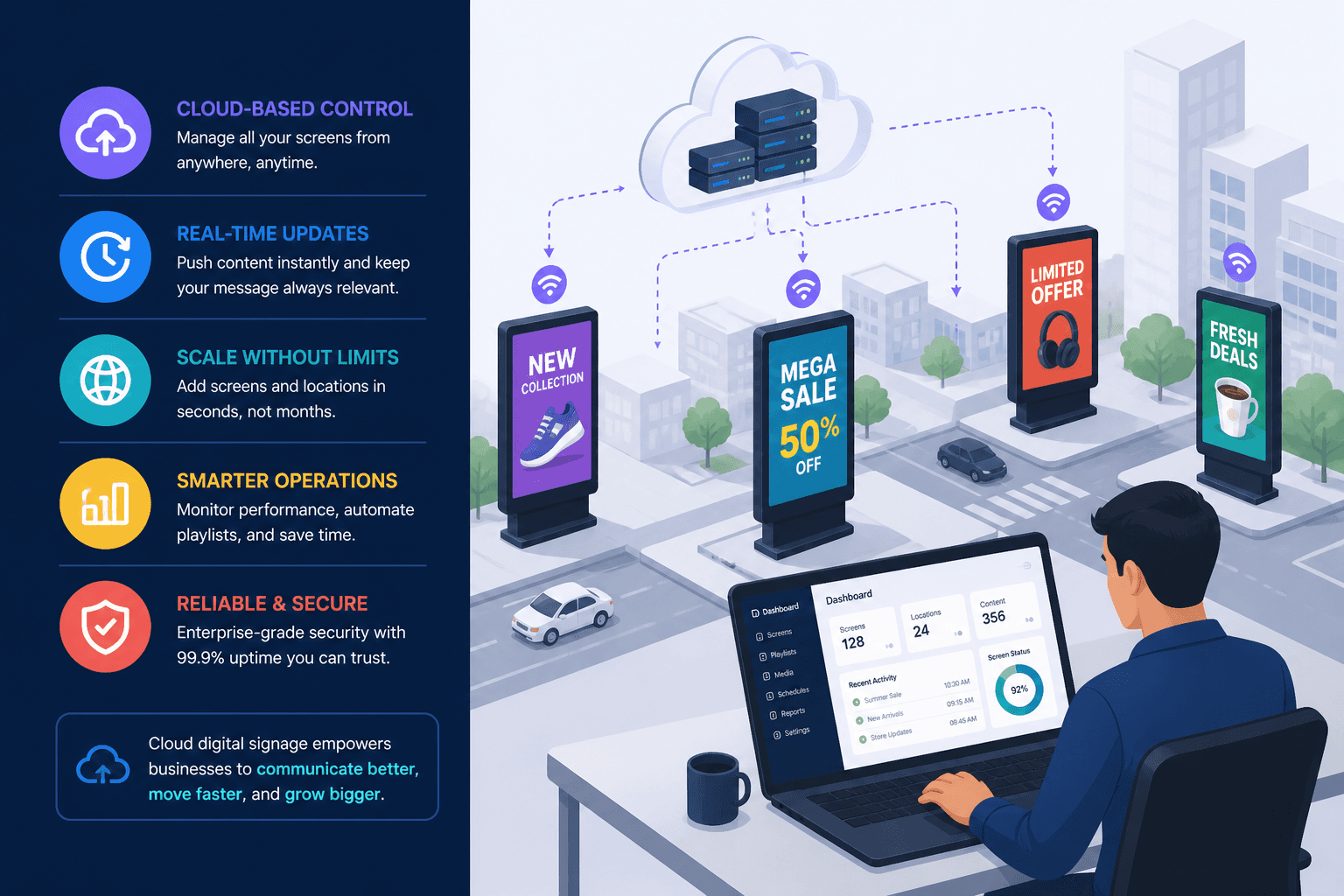
Centralized Control Across All Screens
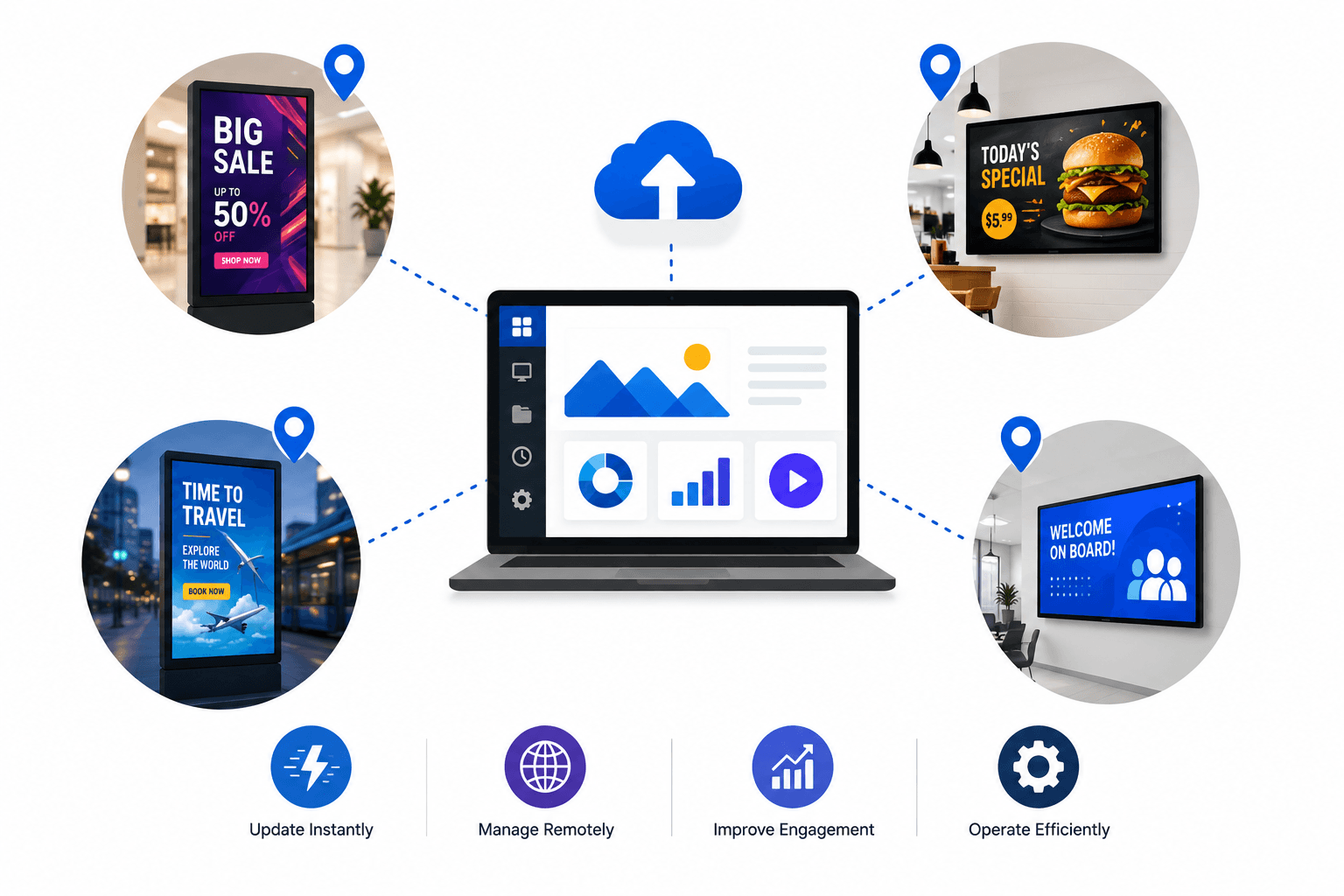
Cloud digital signage allows businesses to manage all screens from a single platform.
This means:
No need for physical access
Instant updates across locations
Consistent messaging across all displays
👉 This is made possible through a digital signage CMS, which acts as the control layer.
Real-Time Updates Drive Agility
Modern businesses need to move fast.
With cloud systems, you can:
Launch campaigns instantly
Update pricing and promotions in real time
Respond quickly to operational changes
This level of agility is not possible with manual or offline systems.
Scalability Without Infrastructure Complexity
As businesses grow, their signage networks expand.
Cloud platforms make scaling simple:
Add new screens without setup complexity
Manage multiple locations centrally
Maintain consistency across all displays
👉 These are core cloud signage capabilities that enable efficient growth.
Reduced Operational Effort
Cloud signage reduces dependency on manual processes.
Instead of:
USB-based updates
On-site management
Repetitive workflows
Businesses can:
Automate scheduling
Manage screens remotely
Control everything from one dashboard
Built for Multi-Location Businesses
Cloud systems are designed for distributed operations.
They allow:
Region-specific content
Centralized campaign control
Easy management across cities
This makes them ideal for retail chains, franchises, and growing businesses.
Where Traditional Systems Fall Short
Offline and on-prem systems still exist, but they come with limitations:
No remote access
Manual updates
Limited scalability
Higher operational effort
👉 These are common limitations of offline signage as businesses grow.
Conclusion
Cloud digital signage has become the standard because it aligns with how modern businesses operate—fast, distributed, and scalable.
While traditional systems may work in limited scenarios, cloud platforms provide the control, flexibility, and efficiency required for long-term growth.
If you're planning to scale your digital signage network, adopting a cloud-based platform like Flickerwall ensures you stay efficient, consistent, and future-ready.